
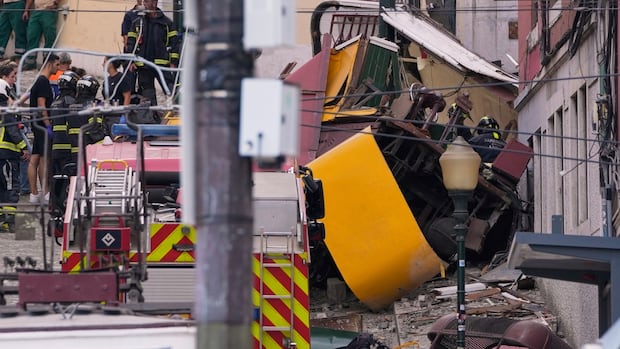
At least 15 people died and around 18 were injured Wednesday when Lisbon’s Gloria funicular railway car, which is popular with tourists and one of the city’s symbols, derailed and crashed, an emergency medical service spokesperson told reporters.
Authorities did not identify the victims or disclose their nationalities, but said some foreign nationals were among the dead. Five people were gravely injured, the spokesperson said.
“It’s a tragic day for our city.… Lisbon is in mourning; it is a tragic, tragic incident,” said Carlos Moedas, the mayor of the Portuguese capital.
Footage from the site showed the tram-like funicular, which carries people up and down a hillside in Lisbon, destroyed, and emergency workers pulling people out of the wreckage.
Portuguese President Marcelo Rebelo de Sousa lamented the tragic accident in a statement, expressing hope authorities would soon establish what caused the crash.
European Commission President Ursula von der Leyen also sent her condolences. “It is with sadness that I learned of the derailment of the famous Elevador da Gloria,” she wrote in Portuguese on X.
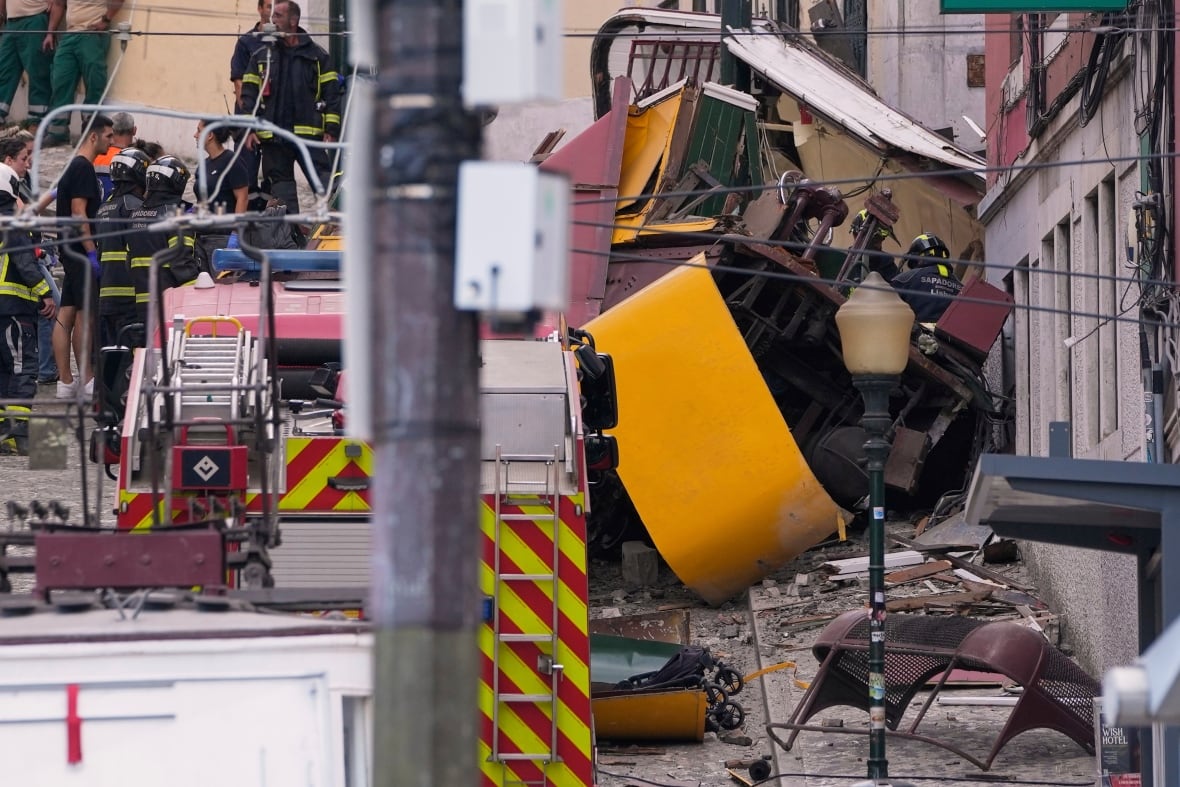 The funicular is operated by the municipal public transport company Carris. (Armando Franca/The Associated Press)
Police investigators were inspecting the site and the prosecutor general’s office said it would open a formal investigation, as is customary in public transport accidents.
The line, which opened in 1885, connects Lisbon’s downtown area near the Restauradores Square with the Bairro Alto (Upper Quarter), famous for its vibrant nightlife.
It is one of three funicular lines operated by the municipal public transport company Carris and is used by tourists, as well as local residents.
Carris said in a statement that “all maintenance protocols have been carried out,” including monthly and weekly maintenance programs and daily inspections.
The Gloria line transports around three million people annually, according to the town hall.
Its two cars, each capable of carrying around 40 people, are attached to opposite ends of a haulage cable, with traction provided by electric motors on the two cars.
Portugal — and Lisbon in particular — have experienced a tourism boom in the past decade, with visitors cramming the popular downtown area in the summer months.