
Loading
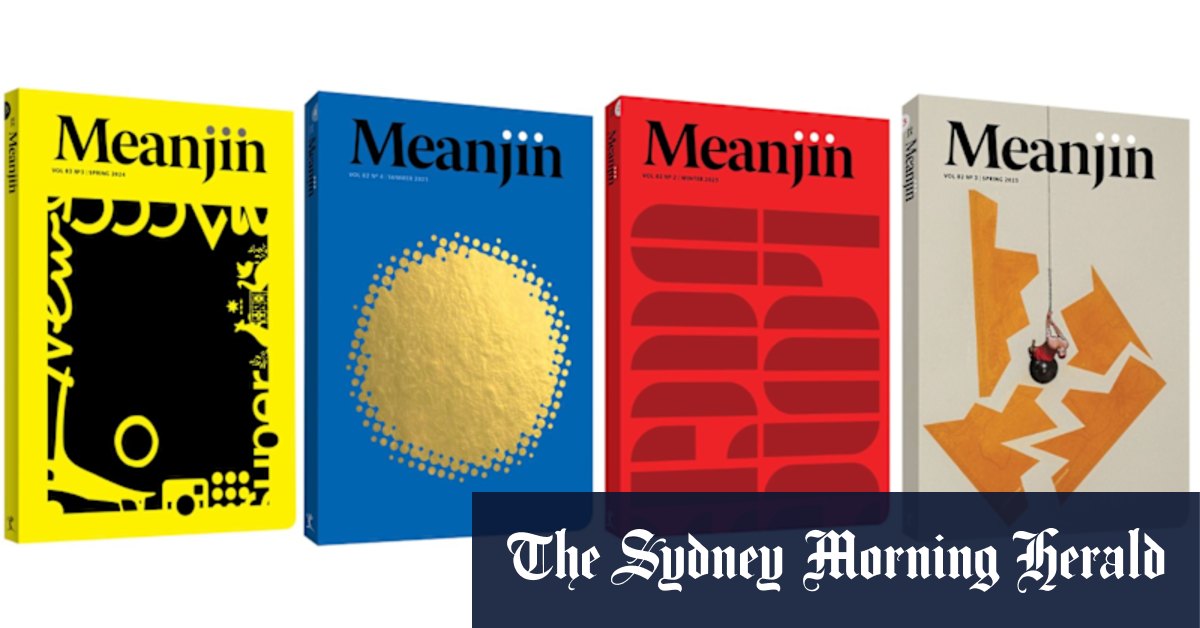
Meanjin has been a stalwart of the Australian literary scene for decades, having published authors including Helen Garner, Peter Carey, Michelle De Kretser, Alexis Wright and David Malouf.
It is the country’s second-oldest literary magazine. Southerly was launched in 1939.
Broadcaster and writer Jonathan Green, who edited Meanjin from 2015 to 2022, said the magazine had long struggled financially.
“There have been 12 editors of Meanjin and the great anxiety for all of those people was that the thing would die on their watch. It’s always been precarious,” he said.
“I don’t know the deep financial internals but in my years there the contribution from the university was small but significant and I can’t imagine a world in which the university couldn’t afford those two or so hundred thousand dollars a year … so I’m mystified as to why you would decide to this because it is an important piece of Australian creative culture.”
Author Sophie Cunningham edited Meanjin from 2009 to 2012. “There were times – years, if not decades, I think – when the founding editor Clem Christensen was paying for it out of his own pocket,” she said.
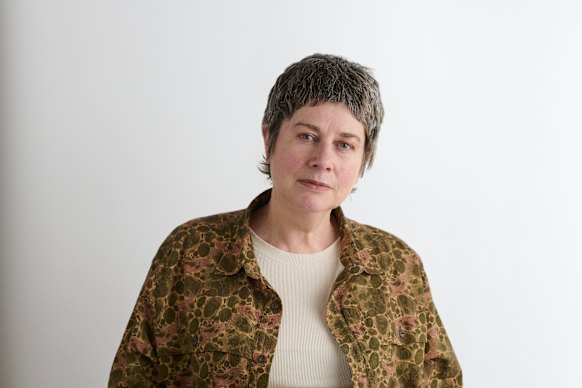
The writer Sophie Cunningham edited Meanjin from 2009 to 2012.
For Cunningham, the issue is whether the university has the will and desire to support the magazine. “If you compare the amount of money it would cost to keep Meanjin going for a year to the salaries that are now routinely paid at a senior management level of universities these days, you have to ask questions about the priorities of the university sector,” she said.
She argued that Meanjin was more than just a literary magazine. “It has always provided an amazingly rich archive not just of literature but of political thinking and indeed of design.
“One of the real privileges of editing the magazine – my last edition was the 70th anniversary edition – was seeing the ways in which it captured amazing snapshots of the culture during what was a fascinating 70 years. The 15 years of the journal since I left have continued that tradition.”
Green agreed. “It’s an important vehicle for writers but also a record of our literary imagination going back 85 years,” he said.
Figures from across Australia’s literary community were quick to condemn the move on social media. Jennifer Mills, shortlisted for the Miles Franklin award, described the loss of Meanjin as “devastating news for Australian writers and readers”, calling this a “foolish, shortsighted and destructive move by MUP”. Award-winning author Claire G. Coleman described the closure as “thoughtless cultural vandalism”.
Louise Adler, former publisher at MUP and head of Adelaide Writers’ Week, says every Australian author of note has been published in the magazine.
“Meanjin has been part of the cultural fabric of Australia for over 80 years. A succession of brilliant editors from Clem Christensen, to Judy Brett, to Jonathan Green have commissioned writing that has defined the country and given a platform to novice writers who’ve become household names,” Adler said.
“The support for literary magazines has steadily declined, whether in print or online. In the context of the University of Melbourne’s budget, Meanjin’s costs would be so modest as to be insignificant. Surely it’s not penny-pinching by an enthusiastic apparatchik?”
Loading
Meanjin is the traditional Aboriginal name for the Brisbane area, where the magazine was founded.
Meanjin moved to Melbourne in 1945 at the invitation of the University of Melbourne. As well as income from subscriptions, the magazine receives funding from Melbourne University, Creative Australia and the Copyright Agency. At the beginning of 2008, Meanjin became an editorially independent imprint of Melbourne University Publishing.
Veronica Sullivan, director and CEO of the Melbourne Writers Festival, says the magazine has played an immense role in Australian culture for decades, and has thrived under Anatolitis’ editorship.
“There are already very few places where writers can publish bold, boundary-pushing fiction, non-fiction and poetry for a wide readership, and be paid fairly for their work. Meanjin was one of those rare places, and its absence will leave a major gap,” she says.
“Its closure is a worrying sign of the growing pressure to commercialise art. Without it, our cultural life and collective imagination will undoubtedly be poorer.”
Meanjin has also always been significant when it comes to design, Cunningham says, citing the likes of WH Chong, Jenny Grigg, Stuart Geddes, Stephen Banham and Mark Davis.
In a statement late on Thursday, the University of Melbourne said it was not involved in the decision to close Meanjin and its council was only informed after MUP had made the decision.
The Booklist is a weekly newsletter for book lovers from books editor Jason Steger. Get it every Friday.