
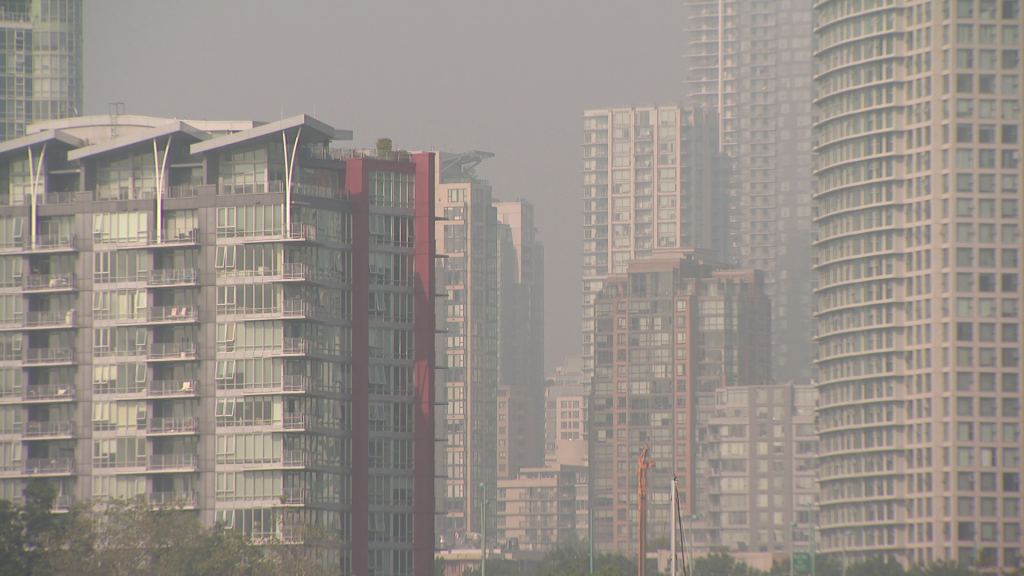
Air quality warnings for Metro Vancouver and the Fraser Valley remain in effect Thursday.
The Metro Vancouver Regional District issued the warnings Wednesday due to wildfire smoke.
“Wildfires contributing smoke to the region include those just east of Hope, near Whistler, and a large complex of fires in the Cariboo region, in addition to fires in the U.S.,” said an agency statement.
1130 NewsRadio Meteorologist Michael Kuss says Lower Mainlanders can expect the hazy conditions to stick around.
“[Wednesday] was really the first day of the season that the wildfire smoke deteriorated air quality significantly around Metro Vancouver,” said Kuss. “We are going to see at least haze around the area through the next three days, with air quality remaining in the ‘moderate range’ for a couple of those days. Pockets of heavier smoke still have the potential to develop. Especially on Friday and into early Saturday. “
But he says “there is an end in sight” for the smoky conditions.
“And that comes at the tail end of the weekend: weather gets cooler, but also a wetter weather pattern — not just for the south coast, but for much of the southern parts of British Columbia. And that bodes well for the wildfire fights across the province and into Washington state as well.”
Suzana Prpic, a senior manager in prevention services with WorkSafeBC, says employers and employees should check the air quality advisories daily and conduct a risk assessment.
“If the nature of your work requires workers to be outside, then look for ways to reduce the levels of physical exertion because physical exertion can increase air intake by a significant amount,” said Prpic.
She adds it’s important to ensure all heating, ventilation, and air conditioning systems are functioning properly.
Environment and Climate Change Canada (ECCC) says as smoke levels increase, so do health risks.
You may experience mild and common symptoms such as eye, nose and throat irritation, headaches or a mild cough. More serious but less common symptoms include wheezing, chest pains or severe cough. If you think you are having a medical emergency, seek immediate medical assistance,” the agency warned, adding that pregnant people, children, and people aged 65 and over are most likely to be affected.
ECCC encourages you to check in on neighbours or others in your care who may be more likely to be impacted by air pollution.
There are currently 154 wildfires burning in B.C., 10 of which started in the last 24 hours.
—With files from Joe Sadowski
Listen live to 1130 NewsRadio Vancouver every 10 minutes on the ones for weather updates. You can also follow @NewsRadioVAN and and Meteorologist Michael Kuss on X and subscribe to breaking news alerts sent directly to your inbox.