
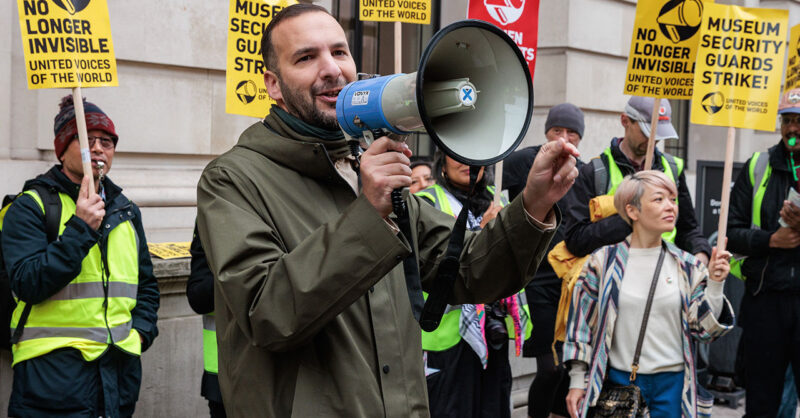
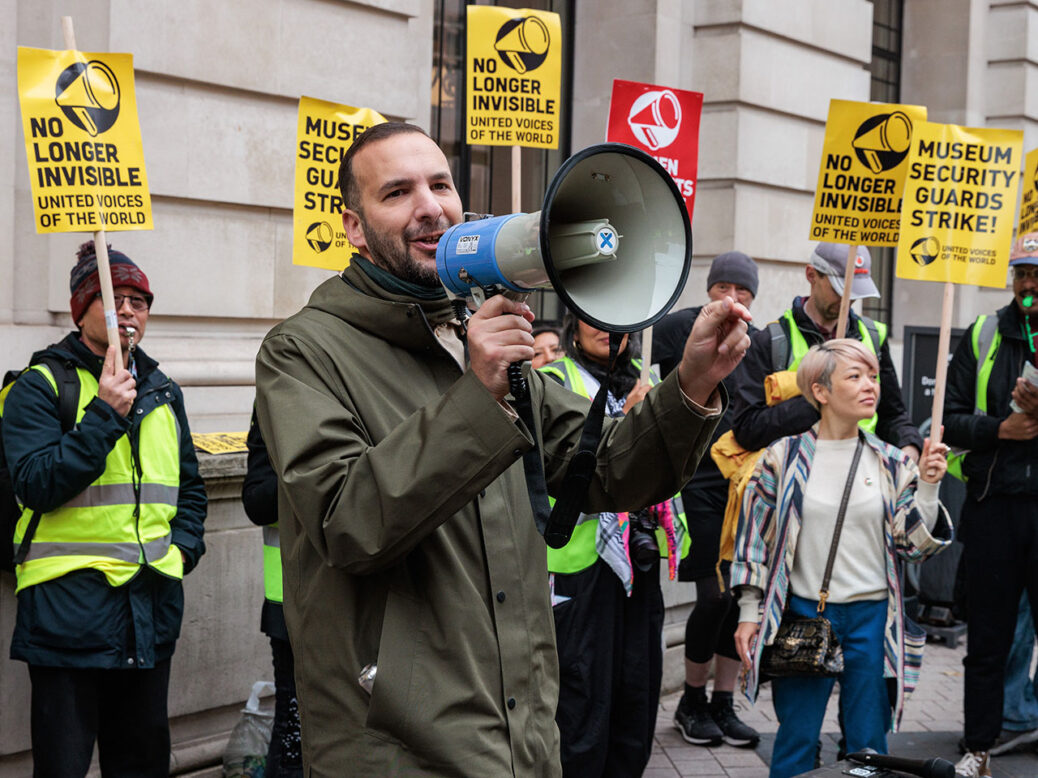
Photo by Mark Kerrison/In Pictures via Getty Images
Zack Polanski is so fetch.
In the classic Noughties high school flick Mean Girls, gossip baron Gretchen Wieners uses “fetch” to mean excellent. And the new leader of the Green Party has excelled at campaigning. In 2018, Jonathan Bartley and Siân Berry won the leadership with 6,329 votes. In 2021, Carla Denyer and Adrian Ramsay cinched it with just 5,062. As announced on Tuesday (2 September), 20,411 members voted for Polanski. Many had joined the party just to vote for him.
He beat the joint ticket of MPs Ellie Chowns and Adrian Ramsay by more than 65 percentage points. Polanski offered bolder policies that laid the blame for Britain’s malaise squarely on wealth inequality. He campaigned with videos posted directly to TikTok. When, in an odd radio moment, Ramsay tried to politician his way out of answering whether he liked Polanski, Polanski said simply that he liked Ramsay.
But Zack Polanski is also so fetch.
Everyone knows the true queen bee of Mean Girls is Rachel McAdams’s Regina George, and she snaps “Stop trying to make fetch happen! It’s not going to happen!” Fetch isn’t excellent; it’s something you’re trying too hard to actualise. And for all his qualities, there is something unconvincing about Polanski, and something of the excitement around him smells like wishful thinking. The left is saying “We have a populist now!” suspiciously soon after it was lamenting “We need a populist!” You wonder if the wagon has foregone the stallion, if the label preceded the product, if there wasn’t much more to the populist recruitment process than the dragging of a trawler net through Dalston’s vegan hotspots.
Beating Farage “at his own game” is no small task. In the polls, Reform now enjoy almost as much support as Labour and the Conservatives combined. Farage has more TikTok followers than all other members of parliament combined. And, above all, Farage is a supremely gifted communicator. Last week, Chris Deerin reported from a press conference in Scotland: “Farage was Farage – loud, supremely confident, willing to take on all-comers, his answers slick and polished yet also somehow earthy and straightforward. It’s a real skill.” Polanski, at least for now, is a long way from that.
Even compared to the lesser moments of the right populists, Polanski leaves something to be desired. Boris Johnson probably does not relish the memory, but at least there are trace elements of farce to his promise that “Voting Tory will cause your wife to have bigger breasts and increase your chances of owning a BMW M3.” Polanski’s 2013 claim about the possibility of enlarging women’s breasts with hypnotherapy, shared after his victory by Labour’s press office, was apparently in earnest. He said, “This is an extremely new approach, but I can see it becoming popular very quickly, because it’s so safe and a lot cheaper than a boob job.”

Subscribe to The New Statesman today from only £8.99 per month
Polanski will also be competing for votes against Jeremy Corbyn’s nascent party. The inner circle of Your Party architects are far from perfect: they still spend too much time pondering “Colombia as a model”, and studying the South African socialist movement “Abahlali baseMjondolo”. Such studies are endearing, but their results are unlikely to endear the resulting party to the British electorate, who live in a country that resembles Colombia as much as a rock resembles a cow. But their leader has genuine populist bona fides. If he is no comedian, Corbyn at least has his own well-honed style of preacherly magnetism. And he has close to 100 per cent name recognition in the UK. As leader of the Labour party, he won 12.8 million votes in the 2017 general election and made Labour numerically the largest political organisation in Europe. Having signalled willingness to partner with Corbyn, Polanski will struggle to be distinct from him. The Green Party may have been unhappy being treated like junior partners when they last teamed up with Corbyn. But it is hard to see how they could be anything but that if they renew the alliance.
What, indeed, is the evidence for Polanski’s “eco-populism”? Or his charisma? Why is it thought he can out-“rabble rouse” Farage? Have you seen the guy? I mean that in two ways. First, have you seen that he is a friendly and pleasant but quite mild charismatic presence? Second, have you actually seen him? Does he flood, really flood, your news feed? Have your non-political friends heard of him? It is not totally clear what made him the left’s answer to Nigel Farage. Maybe I missed it – but you don’t miss it with Farage. “Eco-populism” is over-egged and under-stuffed.
If it is a case of one lobby journalist saying something and the rest repeating it, then such credulity is a shame. It may well now be that left populism is the only hope of left power. But that means it has to take on – and beat – right populism. “Eco-populism is over-egged and under-stuffed. Effort, thought and imagination should be put into picking strong fighter. We know the terrain. Perry Anderson mapped out in February that the three grievances to be owned are “inequality, oligarchy and factor mobility”. And the right’s advantage is that the left cannot “finesse the problem of immigration… Nowhere has a politically coherent, empirically detailed, candid answer yet been spelled out.” And those are just the problems of getting elected. There are also questions as to how a populist left would bring off its stated goals once in power. How would a British government stall climate change, help Gaza, or tax wealth? No solution is articulate here either.
Not yet, anyway. After his tremendous victory, Polanski has all the time and influence he could hope for to build the Greens into a formidable power. The party is today much stronger than at any point in its history. The future is wide open. It may yet flower green. That could be so fetch.
[Se also: What is Zack Polanski’s next move?]
Content from our partners