
Video of a deadly stabbing on Charlotte’s light-rail system — in which a male passenger appears to slash the neck of a passenger — has stunned viewers across the nation.
It has also sparked intense political debate across all levels of government from Charlotte to Raleigh to Washington and beyond.
The incident has led to questions about decisions made by officials in North Carolina’s criminal justice system. Charlotte’s mayor and transit leaders have come under fire. And it’s become a new storyline in what is expected to be a hard-fought Senate race in this battleground state.
Everyone from President Donald Trump to the state auditor has weighed in.
Here are answers to some basic questions about the incident — and why it’s receiving so much attention from political leaders.
Q: What happened?
The incident happened on Aug. 22. Police say a female passenger entered a light-rail train and took a seat in front of a male passenger. Minutes later, without any apparent interaction, he pulled out a pocketknife, stood and slashed her in the neck, investigators say. Passengers screamed and scattered as she collapsed. The incident was caught on surveillance video.
Q: Who is the victim?
The victim is Iryna Zarutska, police said, a 23-year-old Ukrainian who lived in Charlotte. Zarutska, a native of Kyiv, entered the U.S. through a program called “Uniting for Ukraine,” according to U.S. Citizenship and Immigration Services.
 This undated photo posted to Instagram on June 9, 2025, by Iryna Zarutska shows a picture of herself. (Iryna Zarutska via AP)
The program, created by the Biden administration after Russia invaded Ukraine in 2022, offered a pathway for Ukrainians to stay in the U.S. temporarily. Zarutska came to the U.S. in August 2022, federal officials said. She was “hoping for a new beginning,” according to a GoFundMe account launched after her death.
Russ Ferguson, the U.S. attorney for North Carolina’s Western District, told reporters Tuesday that Zarutska quickly settled into the Charlotte community. She worked at a senior center, worked at a pizzeria, took care of animals, and had recently moved in with her partner, Ferguson said in a press conference.
Q: Who is the suspect?
Decarlos Brown Jr., 34, faces state and federal murder charges for Zarutska’s death. He has been arrested more than a dozen times and suffers from mental health issues, his mother told WSOC-TV in Charlotte. She told WSOC that she sought psychiatric help for Brown after he started to say “weird things,” but that she had to kick him out of her house after he became aggressive toward her.
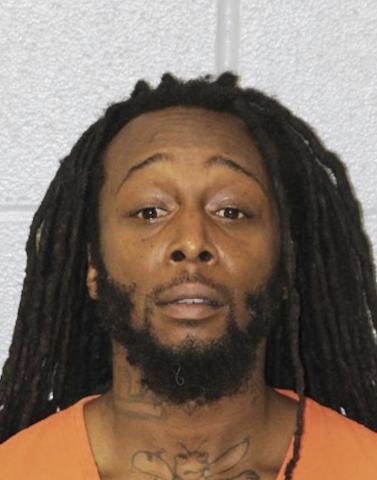 This booking photo provided by the Mecklenburg County Sheriff’s Office on Tuesday, Sept. 9, 2025, shows Decarlos Brown Jr., who is charged with the fatal stabbing of a Ukrainian refugee. (Mecklenburg County Sheriff’s Office via AP)
In January, Brown was arrested after repeatedly calling 911 from a hospital, claiming people were trying to control him. A judge released him without bail.
On Aug. 29, days after his stabbing arrest, a judge in Charlotte ordered Brown committed to a prison mental hospital for up to 60 days, so that he could be reviewed for a determination of whether he’s mentally fit to stand trial.
Q: If the suspect was already facing charges, why was he free?
Brown has been charged with multiple crimes in the past. Some charges were dismissed but others ended in convictions, court records show, including for several felonies related to thefts committed in 2013 and 2014, which landed him in prison from 2015 to 2020. One of those convictions was for an armed robbery.
Since his release from prison, court records show a 2022 financial dispute with the government over a $2,500 bond forfeiture and the allegation of misusing the 911 system earlier this year, but no allegations of serious crimes until the alleged murder last month.
When he was arrested earlier this year over the 911 call, he was released from jail with no bail, on a promise to appear back in court. That’s a common procedure for low-level crimes, but the decision is now coming under scrutiny due to the fatal outcome.
Q: Why is the Charlotte stabbing getting so much attention now?
The Aug. 22 incident is getting lots of attention now in large part because of the gruesome video, which was only released on Friday.
Its release comes at a time when the Trump administration is ramping up its efforts to crack down on violent crime in some U.S. cities. Trump deployed the National Guard to Los Angeles in June, sent troops to Washington, D.C., last month and has threatened to send them to Chicago as well.
Zarutska isn’t the only person to be fatally stabbed on public transit this year or even in August. Police in Tulsa, Oklahoma, said last month that a man sat behind a stranger on a public bus before “slicing her throat” in an unprovoked and random attack on Aug. 3.
Q: What does the killing have to do with North Carolina’s U.S. Senate race?
The video has emerged amid a high-profile U.S. Senate race in North Carolina, considered a battleground state for both parties in next year’s midterm elections. And politicians have used the incident as an opportunity to blame opponents and push their own agendas.
U.S. Sen. Thom Tillis, R-NC, isn’t seeking reelection. Michael Whatley and Don Brown, who are seeking the GOP nomination for the seat, say Democratic policies played a role in the homicide — singling out former Gov. Roy Cooper, who’s considered the frontrunner for the Democratic nomination.

Trump, who has endorsed Whatley in the race, has also weighed in. He said Cooper is to blame for the stabbing, writing on social media that “her blood is on the hands of Democrats who refuse to put bad people in jail, including Former Disgraced Governor and ‘Wannabe Senator’ Roy Cooper.”
No governor in North Carolina, or in any other state, has any say over who goes to prison. They do have some power on who gets out because they can issue pardons or commutations. Cooper did neither in this case. In a statement to the press, the White House pointed to the state Task Force for Racial Equity in Criminal Justice that Cooper created by executive order in 2020. The White House noted that the group’s report called on the criminal justice system to eliminate cash bail and promote alternatives to arrest.
The Cooper campaign pushed back on Republican criticism, noting that the task force had no legal authority over any criminal cases or whether an individual was released early from prison.
“This was a heartbreaking, despicable act of evil and Iryna Zarutska’s family and loved ones are in our prayers,” Cooper’s campaign said in a statement, adding: “Roy Cooper knows North Carolinians need to be safe in their communities; he spent his career prosecuting violent criminals and drug dealers, increasing the penalties for violence against law enforcement, and keeping thousands of criminals off the streets and behind bars.”
U.S. Rep. Deborah Ross, D-NC, joined in Tuesday to point the blame at Republicans — saying more money needed to be pumped into local police departments to respond to violence and prosecute criminals.
“It’s completely shameful that the Trump administration has proposed gutting millions in funding for the Department of Justice, FBI, and other federal entities that help local law enforcement respond to crime,” Ross said. “It’s time for Republicans in Congress to work with Democrats to fund government agencies and ensure our local communities have the federal support they need to protect public safety.”
Q: What is the Task Force for Racial Equity in Criminal Justice, and why are Republicans focused on it?
For weeks, the killing received little attention — outside of local media — until Republicans seized on it in hopes of attacking Cooper. Trump’s comment followed similar remarks by Whatley, who also blamed the murder on Cooper’s support of the racial equity task force.
Cooper created the group in response to national outcry over police brutality. In May 2020, a Minneapolis police officer was recorded on video choking a Minnesota man named George Floyd to death. Cooper created the task force less than a month later, appointing two fellow high-ranking Democrats to lead it: Josh Stein, who was then the attorney general and is now governor, and Anita Earls, a state Supreme Court justice who is up for reelection in 2026.

Earls and Stein worked with police officers, judges, prosecutors, defense attorneys, civil rights activists, professors and others on the task force to come up with a set of recommended reforms to policing, the courts and prisons — plus broader topics such as improved mental health services for people before, during or after any time spent behind bars.
Republicans were highly critical of the group. Most of its recommendations, which required support from the GOP-led state legislature, have never been enacted.
Q: What do we know about allegations of ‘soft-on-crime’ policies?
U.S. Attorney General Pam Bondi on Tuesday issued a statement about the case, blaming “failed soft-on-crime policies that put criminals before innocent people.” She didn’t identify which policies she was talking about. U.S. Sen. Tom Cotton (R-Arkansas) explicitly blamed Cooper’s 2020 task force for having “kept Zarutska’s killer on the streets.”
However, the racial equity task force didn’t release its first report until December 2020, after Brown had already been released from prison. And while the task force did make some recommendations on sentencing reform and bail reform, those suggestions haven’t been approved by the Republican-led legislature.
Tillis, who lives outside of Charlotte, issued a statement on “the tragic consequences when weak-on-crime judges and prosecutors fail to hold violent, repeat offenders accountable.”

Court records show that both of Brown’s legal issues in the five years since his release from prison are ongoing. The 911-misuse charge remains pending under current District Attorney Spencer Merriweather, a Democrat, who also has separately raised the amount Brown owes for the bond from $2,500 to $3,084.31, citing interest. Court records also show Mecklenburg County sheriff’s deputies tried to repossess Brown’s property to cover the debt in 2023, but the deputies said they couldn’t find anything.
Most of Brown’s criminal record is from a period from 2011 to 2014, during which time he was arrested numerous times, culminating in his prison stint. At that time the top elected prosecutor in Charlotte was Andrew Murray, a Republican, who Trump would later appoint in 2017 to be the lead federal prosecutor in the Western District of North Carolina.
Trump noted Brown’s prior criminal history in a video statement released by the White House Tuesday, saying Zarutska “was slaughtered by a deranged monster who was roaming free after 14 prior arrests.”
Murray, who now serves as the elected district attorney for Henderson, Polk and Transylvania counties following his federal service in the first Trump administration, told WRAL in an interview Tuesday that he didn’t remember Brown from those cases more than a decade ago.
“All I can tell you is I tried to find justice in the community when I was DA,” Murray said. “Tried to follow the facts and certainly get convictions where they were warranted.”
Q: Are Stein and Earls also being criticized?
Stein and Earls are also receiving criticism for their roles on the task force Cooper created. Politics are also a motivator here. Earls’ reelection bid next year is viewed as the next-most-important race on the 2026 ballot, behind the U.S. Senate race. Republicans currently hold a 5-2 majority on the state Supreme Court. Democrats are hoping to flip it back in 2028, starting by defending Earls’ seat next year.
The NCGOP wrote on social media Tuesday that “Earls’ life’s work has been to undermine law enforcement and coddle criminals.”
Earls, a longtime civil rights attorney and the only Black justice on the state’s highest court, has often said her brother’s killing — for which no one was ever convicted — is one of the driving forces behind her legal career.
Stein, meanwhile, has used the Charlotte stabbing to call on the state legislature to approve his budget proposal. Republican leaders are at an impasse over a new state budget, which was due by July 1. Stein’s plan contains larger raises and signing bonuses for state employees, including state law enforcement officers, than GOP lawmakers have proposed.
“We need more cops on the beat to keep people safe,” Stein wrote on social media Monday. That’s why my budget calls for more funding to hire more well-trained police officers. I call upon the legislature to pass my law enforcement recruitment and retention package.”
Q: How are Republican lawmakers and other officials responding?
Republican lawmakers have previously made it clear they will not pass the Democratic governor’s budget, with its higher raises for state law enforcement officers and others. They’ve also called on Stein to shut down the racial equity task force.
Senate leader Phil Berger said Monday that he’s working on legislation to shut down the task force and ban any future governor from starting similar task forces. Such a move would likely be met with legal challenges. Similar attempts have been criticized as an unconstitutional violation of the separation of powers between the executive and legislative branches.
The GOP-led House Oversight and Accountability Committee is also probing the matter.
“Our investigators are aggressively pursuing the failures that led to the murder of Iryna Zarutska in Charlotte,” committee leaders said in a post on social media. “Her death was 100% preventable, and we will leave no stone unturned until justice is served and safety is restored in NC.”
Republican State Auditor Dave Boliek said Tuesday that he plans to investigate the safety of the Charlotte Area Transit System. He’s expected to focus on private security, metrics and data used by CATS to monitor safety, and the CATS safety and security budget.
Q: What do Charlotte leaders say?
State lawmakers have a long history of tussling with individual cities, particularly Charlotte. House Speaker Destin Hall indicated more attempts to encroach on local control could be coming.
During an appearance on Fox News Tuesday, Hall blamed the incident in part on “left-wing defund-the-police policies” in Charlotte. He criticized Democratic local officials, calling them soft on crime, and said Brown should have been behind bars. Hall said he would look into Charlotte’s budget, local pretrial procedures, and the magistrate who released Brown on a promise that he would appear in court on charges he faced prior to the murder charge.
“He never should have been on the train that night,” Hall said.
Charlotte has increased security along its transit lines in response to the fatal stabbing, Mayor Vi Lyles said in a letter to the city’s residents. The Democratic mayor’s letter was also critical of the court system, echoing some of the critics of the city’s response.
Lyles called the killing “a tragic failure by the courts and magistrates,” saying the city’s officers arrest people who are then quickly released.
Lyles has also called for bipartisan solutions to repeat offenders and getting people treatment for mental illness.
Edwin Peacock III, one of the city council’s two Republicans, is calling on Charlotte to crack down on people who haven’t paid to ride. Leaders of Charlotte’s transit system told city leaders that they don’t believe Brown purchased a ticket to ride the train the night of Zarutska’s death, WSOC reported.
In an Aug. 29 video posted to social media, Peacock talked about his experience riding the train — saying no one checked his ticket. “Would consistent fare checks or a stronger presence [of law enforcement] help prevent crime and disorder?” Peacock said. “I believe the answer is yes.”
Charlotte City Council elections are scheduled for November, and the stabbing — and how to prevent future crimes on the rail system — could become a top issue for candidates.
The Associated Press contributed to this report.