
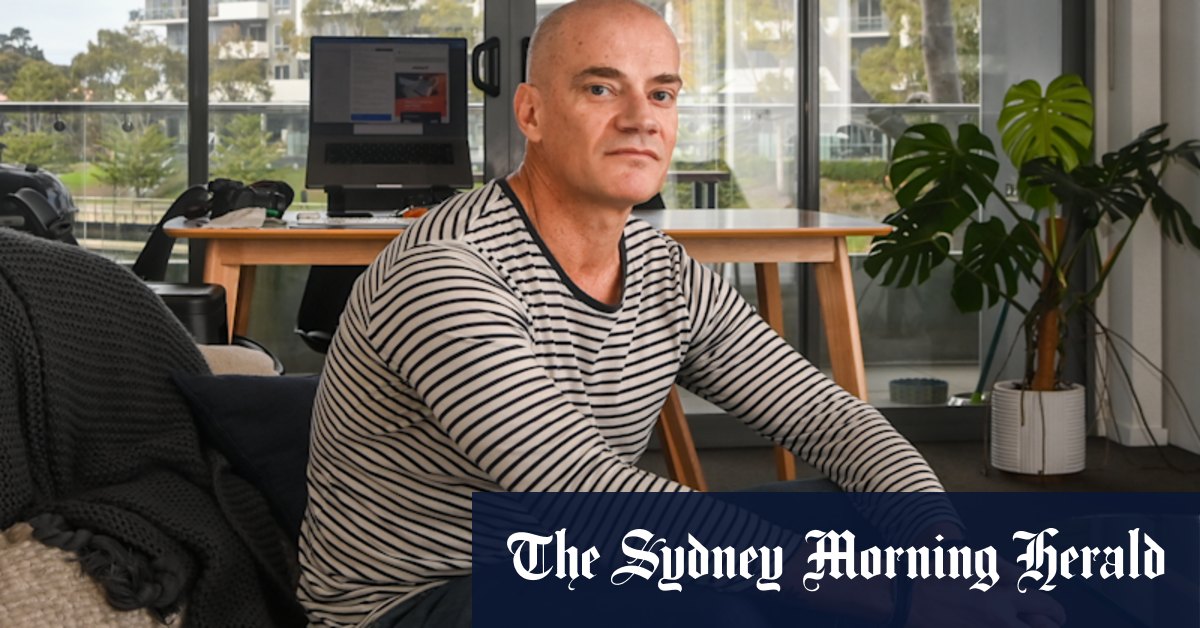
While Flowers was told he could borrow $200,000, the total would not let him buy a home that suited his life. “It’s not practical for me to buy a property in a regional area or small apartment – I have kids I want to see every day.”
A 2024 report by Swinburne University of Technology found about 508,000 people aged 55-plus were at risk of “non-supported housing precarity” in 2019-20 – neither poor enough to qualify for housing assistance nor wealthy enough to buy.
“The problem is, after they go through that first hurdle of being approved by the government, they have to find finance from the bank … which introduces its own restrictions about not lending to older people,” say report co-authors Dr Piret Veeroja and Professor Wendy Stone.
“The governments can provide the settings, regulations and the motivation for the finance sector to reduce its discrimination against older people … really bringing the financial sector on board is a necessary part of the puzzle,” Stone says.
Stone says shared equity schemes can work well for some, but older applicants they’ve spoken to who may be eligible face more complex hurdles.
Stone says the aged pension rate is “set on the assumption that people don’t have that large housing cost in retirement”.
“But it’s impossible to afford a mortgage or find anything that’s affordable in a private market on that payment,” she said.
Sally Tindall, Canstar’s data insights director, says the government could “work out a scheme … [where] the bank is happy to take on additional risk for someone over 55.”
She says government is canvassing solutions, including a reverse mortgage program and abovementioned housing initiatives, but says Help to Buy is “probably geared towards younger Australians”.
“It could be a good avenue for all Australians, but more needs to be done,” she says. Tindall says the low uptake of the Family Home Guarantee, which offers 2 per cent deposit and requires a bigger loan, suggests it is not fit for purpose.
“People over 55 who don’t have a steady stream of income and an exit strategy are not passing the banks’ serviceability test, and the banks can’t waive those tests because it’s a lot more risk for them.”
When ex-police officer Naomi Oakley, 56, divorced nine years ago, she had no savings and was raising three children on one wage. After years of saving, she had $70,000; she applied for a home loan and was rejected. She was devastated.
Loading
She eventually purchased a three-bedroom unit in Skye, outer south-eastern Melbourne – further from the city than she wanted and far from family and support networks.
“I don’t go out for dinner and … getting my hair done is a luxury – you have to give up those small things to have a loan at my age,” Oakley says. “I also think, ‘oh god, I’m in my mid-50s, will I get ill before I pay it off?’ But you just have to be positive.”
A federal government spokesman says Labor’s Help to Buy scheme “will help Australians get into home ownership with as little as a 2 per cent deposit, and a much smaller mortgage – an important option for those who might need a shorter mortgage term”.
“For older renters, we’re making renting more secure with 80,000 long, five-year lease rentals and through our Better Deal for Renters, which is ending no-grounds evictions and rent bidding,” he adds.
Brendan Coates, a retirement income expert at Grattan Institute, says Help to Buy is only useful for wealthier renters on the brink of purchasing.
“It’s useful for older renters who will often have a deposit but won’t have enough time left in the workforce to pay off the loan,” he says. “Most renters have less than $100,000 in savings – there’s no way they can buy a home, particularly if they’re approaching retirement.”
Raising rent assistance by 50 per cent for singles and 40 per cent for couples should be a priority, Coates says.
Shadow Minister for Housing and Homelessness, Andrew Bragg, said: “The only way to increase home ownership is to boost housing supply. Under the Coalition, Australia was averaging 190,000 new homes per year. Under Labor, we’re barely hitting 170,000 new homes per year.
“Labor’s Home Guarantee Scheme is almost useless for many mature first home buyers who will be told ‘no’ by their lender.”
Flowers hopes he can eventually buy something, even if it’s to leave to his kids.
“I grew up hearing about Australia the lucky country – doesn’t feel too lucky to me, and it won’t be like that for our children.”