
Hostage release options include Hamas surrendering, negotiations with individual captors, and military rescue
As Israel’s war in Gaza nears its second year, the questions grow more urgent: How long can the fighting continue? What obstacles does the army face on the ground? And what are the prospects for the hostages’ release?
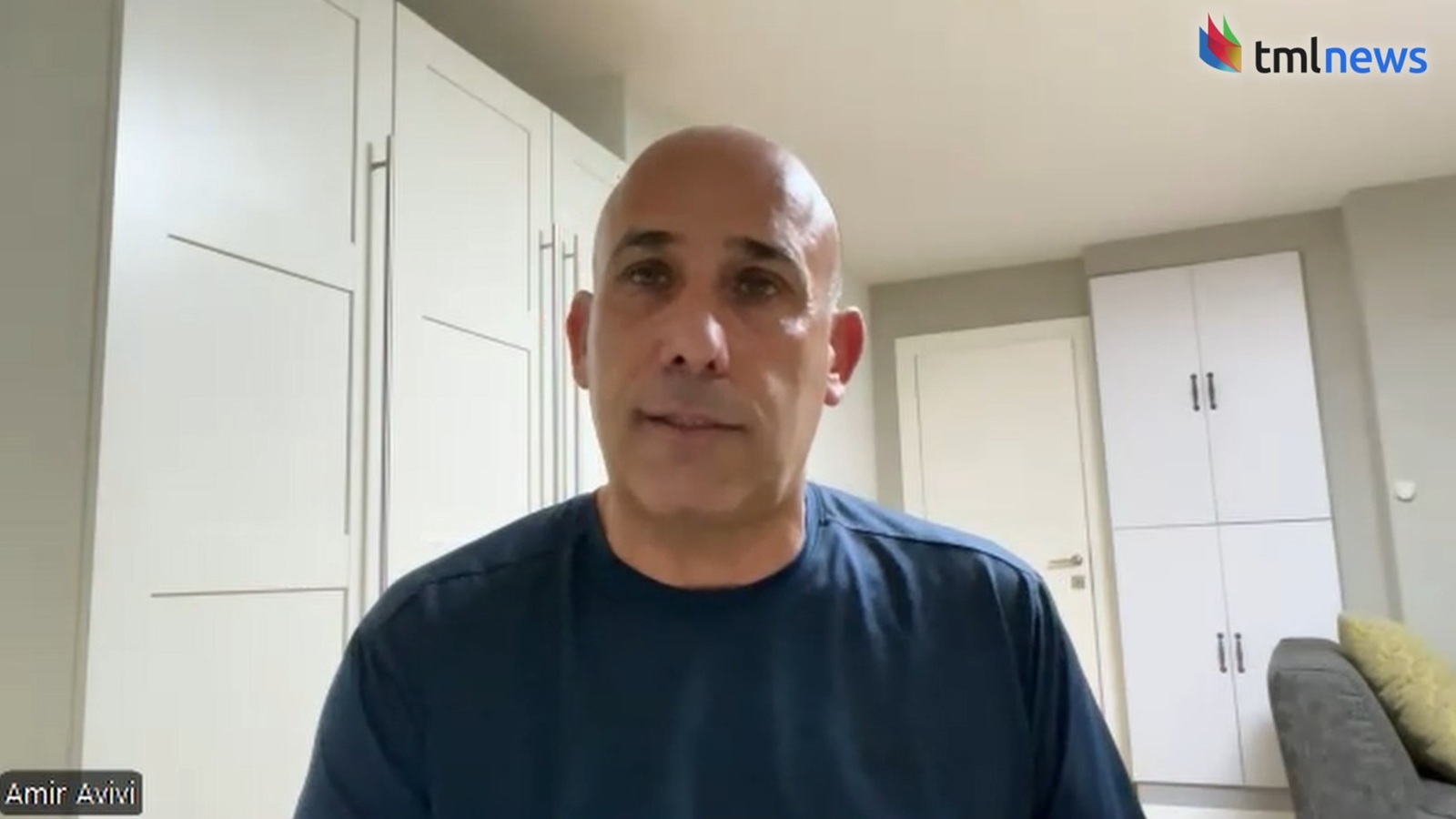
I sat down with Brig. Gen. Amir Avivi, the chairman and founder of the Israel Defense and Security Forum, and asked about the progress and the future of this historic war on multiple fronts.
When Avivi was asked why, after nearly two years of war and almost a thousand IDF casualties, the fighting is taking so long, he replied that “the war is complicated because it is being fought on seven fronts and to an extent we haven’t seen in the history of Israel.”
Every area is autonomous. The fact that you take over a certain area doesn’t really impact other areas.
He pointed to Hamas’ extensive tunnel network, describing it as a “city underground. There is no center of gravity.” He contrasted it with other enemies: “It’s not Iran or even Hezbollah, where you can find a clear center of gravity, hit it, and then win. Every area is autonomous. The fact that you take over a certain area doesn’t really impact other areas.”
Avivi explained that Israel must therefore systematically take control of all of Gaza and destroy the underground infrastructure where thousands of terrorists are hiding. The tunnels, he said, contain weapons, headquarters, and communication rooms, enabling fighters to survive underground for long periods, which makes the task especially challenging.
He added that the tunnel system also affects the pace of maneuver. Moving quickly above ground is not possible, he said, because terrorists could emerge from tunnels behind the troops, complicating the fighting.
Avivi also noted that at the beginning of the war, Israel had to commit major forces to preventing conflict in the north, while also dealing with the West Bank, and at the same time, facing shortages of munitions.
He said the IDF also had to keep forces ready for a possible large-scale war with Hezbollah, leading the army to shift north to fight in Lebanon, then Syria, and later in Iran. According to Avivi, only now is Israel perhaps able, for the first time, to focus entirely on Gaza.”
“And even now, our enemies are thinking how to revive this multi-front war—maybe by launching an attack of the Palestinian Authority in Judea and Samaria, or even trying to mobilize Israeli Arabs to join—because they see that we are moving toward a decisive win in Gaza and are thinking how to try and stop that,” Avivi said.
We couldn’t do things simultaneously. We had to fight each time in a certain area.
Addressing the issue of a lack of troops and the exhaustion of existing soldiers fighting such a long war, Avivi responded that Israel’s shortage of forces has mainly affected the pace of operations. “We couldn’t do things simultaneously. We had to fight each time in a certain area,” he said, while stressing that “the Israeli army is very strong, very resolute.”
He acknowledged the strain on reservists after such a long conflict but added that “they also want to win decisively.” Avivi urged that the focus not remain only on Israel’s difficulties but also on the state of its enemy. He described the other side as “broken, weak, with no leadership, no way to smuggle weapons, no industries.”
At the same time, Avivi highlighted Israel’s growing strength. He said that in recent years, the country’s military industries have been “booming, producing cutting-edge technologies and capabilities.” He noted that every four months, new recruits are brought in and that motivation to join combat units is “skyrocketing.” As a result, he said, the regular army now has “many, many fresh soldiers” who have not been worn down by long years of fighting.
“And you know,” Avivi added, “they want to defend their country.”
I noted that realpolitik is now shaping events, pointing out that “President Trump has said he had enough.” The message seems clear: “Get the war over.” I then asked Avivi how quickly that could happen.
Avivi responded that the Trump administration seems to be giving the message to “win the war fast, not just get it over with.” He contrasted it with the previous administration, saying its approach was about “de-escalation, stopping the war by making Israel lose the war. We’re not going to lose the war. We’re going to win the war.”
He said it is natural that both Prime Minister Netanyahu and President Trump “want to move faster toward a decisive win. And I think it will happen in the coming months, and I’m glad that there is this pressure.” According to Avivi, both leaders share the same interest: to achieve a decisive victory and then sign peace agreements.
In the Middle East, you cannot move toward the expansion of the Abraham Accords without winning first in Gaza
“In the Middle East, you cannot move toward the expansion of the Abraham Accords without winning first in Gaza,” he said. For that reason, Avivi explained, Israel and the US both want to win the war first, and only then turn to normalizing relations, pursuing peace agreements, and possibly sovereignty in major areas of Judea and Samaria.
I asked if this is the most dangerous stage of the war, pointing out that many homes are booby-trapped, Hamas is prepared for what lies ahead, and Israel faces the risk of losing both soldiers and hostages.
Avivi responded that the army has already conquered “40% of Gaza City. The army is controlling more than 75% of the whole Gaza Strip.” He said that the ability to advance so far without heavy losses shows that “the army developed very sophisticated technologies and techniques and capabilities.”
According to Avivi, the IDF has drawn important lessons over the past two years, including how to handle the tunnel network. What once seemed impossible is now being addressed systematically, leveraging multiple capabilities. He noted that within the last month or two, “the Israeli army took over three-quarters of the Gaza Strip completely, conquered it, cleared it almost entirely.” Gaza City, he added, presents the same type of enemy and tunnels, though in a denser environment.
We’re going in, and it will end with a decisive win and with the destruction of this terror organization in the Gaza Strip
He acknowledged that the final battle will be tough. “Yes, it’s the last struggle. So they probably will fight with their back against the wall,” he said. But Avivi described Hamas as a weakened force—without leadership, without the ability to resupply, and with sinking morale. “I understand that it’s a game over,” he said. “We’re going in, and it will end with a decisive win and with the destruction of this terror organization in the Gaza Strip.”
I asked Avivi to describe to the public the size of Gaza City and areas where Hamas is embedded. Avivi replied that “Gaza City has a lot of buildings above ground, but also underground. There’s a vast net of tunnels underground, headquarters underground.” When asked about the scale, he said that there are “thousands of terrorists with RPGs, booby-trapped houses. And it’s really a challenge to develop techniques that will make sure that the soldiers are safeguarded.”
He described the complexity of operating in a city that still holds some 800,000 civilians. The army, he said, is making extensive preparations to transfer them to a humanitarian zone so they are not caught in the fighting. By doing this, he explained, Israel seeks to minimize collateral damage.
According to Avivi, Israel is setting up distribution centers for humanitarian aid, establishing hospitals, and bringing in tents to create a zone that can sustain large numbers of people and provide civilians with the necessary aid. “Once they move,” he said, “we’ll have in the city only Hamas. And then the army will be able to operate much more freely in order to deal with this.”
Avivi added that “the big challenge we have is how to safeguard the hostages. And really, it’s a complicated issue.” He outlined three possible scenarios.
In the first, Hamas would recognize defeat. At that point, he said, it could agree to stop fighting, surrender the hostages, and, in exchange, be granted safe passage into the Sinai Peninsula to leave Gaza alive.
A second possibility, he explained, is a total collapse and chaos—Hamas falling apart without any organized decision-making or controlled surrender. In that case, he said the army “will have to go into the areas where the hostages are, surround them and conduct a negotiation with the kidnappers themselves—not Qatar, not Egypt—with specific kidnappers who are holding specific hostages. Tell them, that’s it, it’s game over, Hamas is gone, we are controlling Gaza. Now give us the hostages, take some money, and get out of Gaza.”
Avivi added that in many situations, the hostages will likely be freed through military operations. He pointed out that Israel already knows of 28 hostages who are dead, and in those cases, “rescuing them militarily doesn’t endanger them.”
He concluded that the outcome may involve a mix of approaches. “Israel is not going to stop until we bring all our hostages back, but also eradicating Hamas and creating the terms that never again there will be a terror army in the Gaza Strip,” Avivi said.
When asked about the political divisions between the army, the prime minister, and the cabinet, and whether this internal friction has created difficulties, Avivi answered that “people don’t tend to understand the biggest strengths of the Jewish people. We argue a lot. We have a lot of opinions, and this is what makes us so sophisticated, out-of-the-box kind of thinking.”
There is no daylight at all between the government and the army when it comes to the question of reaching the goals of war
He said that cabinet meetings are important forums where people speak openly, and that the chief of staff always makes his position clear. “There is no daylight at all between the government and the army when it comes to the question of reaching the goals of war,” he stressed, noting that everyone agrees Hamas must be eradicated, a new reality created in Gaza, and the hostages returned.
He explained that disagreements are over methods and timetables, not objectives. The army looks at matters from its military perspective, while the government has other concerns. “The army is not under pressure from Trump. The army doesn’t think about elections. The army doesn’t think about politics. It thinks about military issues,” Avivi said.
He emphasized that once the cabinet makes a decision, the army carries it out fully. “We are going to destroy Hamas. We’re going to take over Gaza City. And the army is 100% focusing on reaching the goals that were set by the Israeli government,” he said.
When asked about Gazans who say they face medical problems and cannot afford to move, and what the army is doing to assist them, Avivi replied that “the army is building field hospitals. The army is cooperating with many, many international organizations. It’s enabling other countries to bring aid—even bring it directly through the air—and building more zones of distribution directly to the Gazans themselves with the American companies.” He said Israel is working in multiple ways to balance the fight against Hamas with a humanitarian effort to care for civilians.