
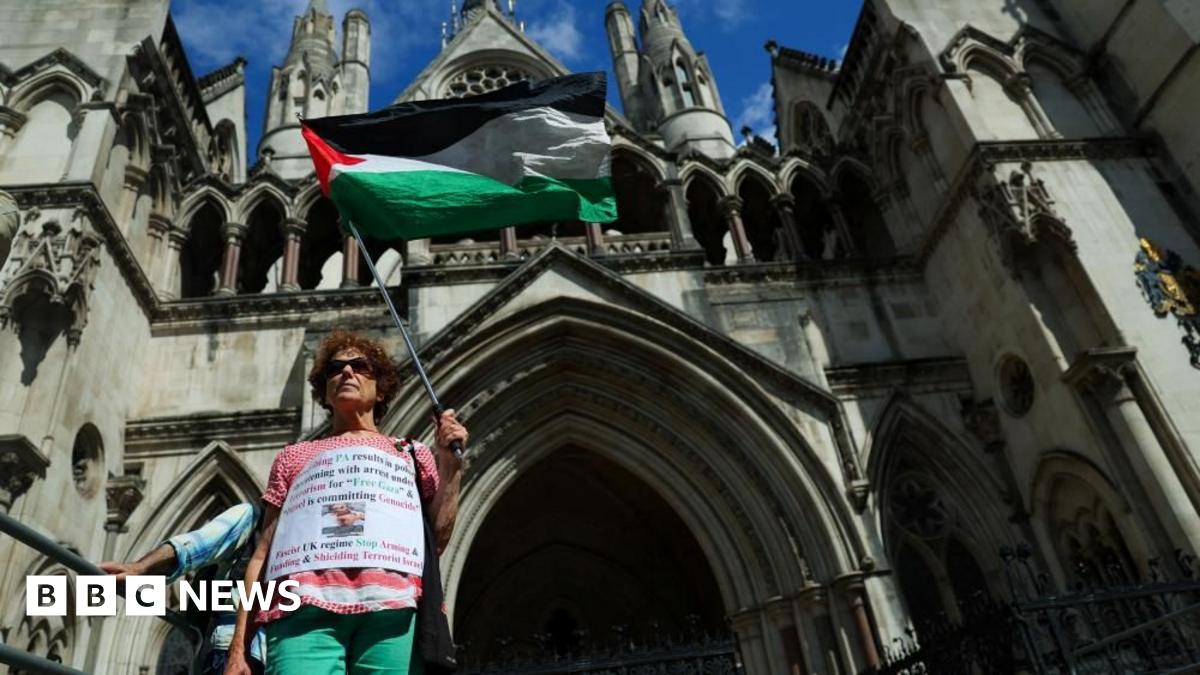
Ms Ammori’s lawyers said the ban was having a “chilling effect” on legitimate protest.
Many of the people arrested since the ban had been holding signs reading: “I oppose genocide, I support Palestine Action”.
The court was told that one man in Leeds had been detained under terrorism powers for holding up a copy of an item in the satirical magazine Private Eye which had lampooned the ban.
In another case, a 77-year-old woman from Keighley, West Yorkshire, was held over a placard that read: “I support NON-VIOLENT PALESTINE ACTION to oppose VIOLENCE AND GENOCIDE.”
Blinne Ní Ghrálaigh KC, also for Ms Ammori, added: “Dozens and dozens of people have been arrested for protesting, seated and mostly silent protest. Your task is to decide whether these are proportionate restrictions on free speech.”
The court heard that the government’s internal assessment of Palestine Action, drawn up by the secret Joint Terrorism Analysis Centre inside MI5, had concluded that the majority of its activity did not cross the legal threshold for a ban.
However, the UK’s legal definition of terrorism also encompasses the use of serious criminal damage to advance a cause.