
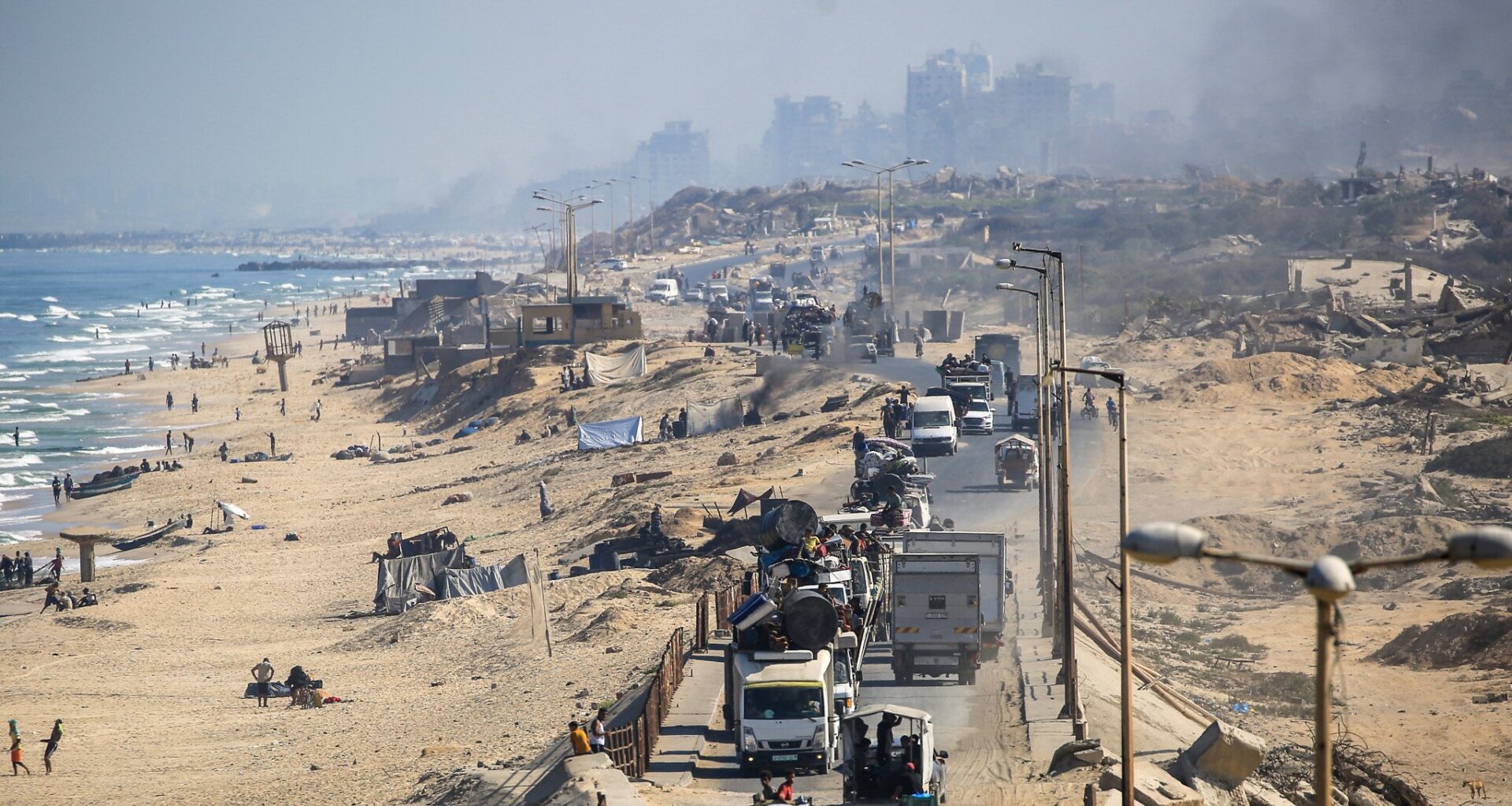
Israeli strikes were said to kill 34 people across the Gaza Strip on Thursday, most of them in Gaza City, where the military is forging ahead with preparations for an offensive to conquer the northern Gaza city that has left many of its residents unsure of where to turn to next.
According to medics and the Hamas-run health authorities in the Gaza Strip, 22 people were killed in Gaza City, and an additional 12 in the central and southern parts of the enclave.
Seven of those killed were searching for food when they were hit, health officials said.
The Hamas figures could not immediately be be verified and do not differentiate between civilians and gunmen.
On Thursday morning, Palestinians in the relatively unscathed Al-Naser area of Gaza City were having to decide whether to stay or go, after the IDF dropped leaflets warning that troops would soon take control of the western neighborhood.
Get The Times of Israel’s Daily Edition
by email and never miss our top stories
By signing up, you agree to the terms
The warning came less than a day after the military said it would increase its strikes on Gaza City in the coming days with the intention of “targeting Hamas’ terror infrastructure, disrupting its operational readiness, and reducing the threat to our forces as part of preparations for the next stages” of the offensive.
As part of its preparation, the military has ordered the roughly one million people residing in Gaza City to evacuate the area. On Thursday, as some families continued to stream out of their homes, heading either westward towards the center of the city and along the coast, or south toward other parts of the shattered enclave, others were either unwilling or unable to leave.
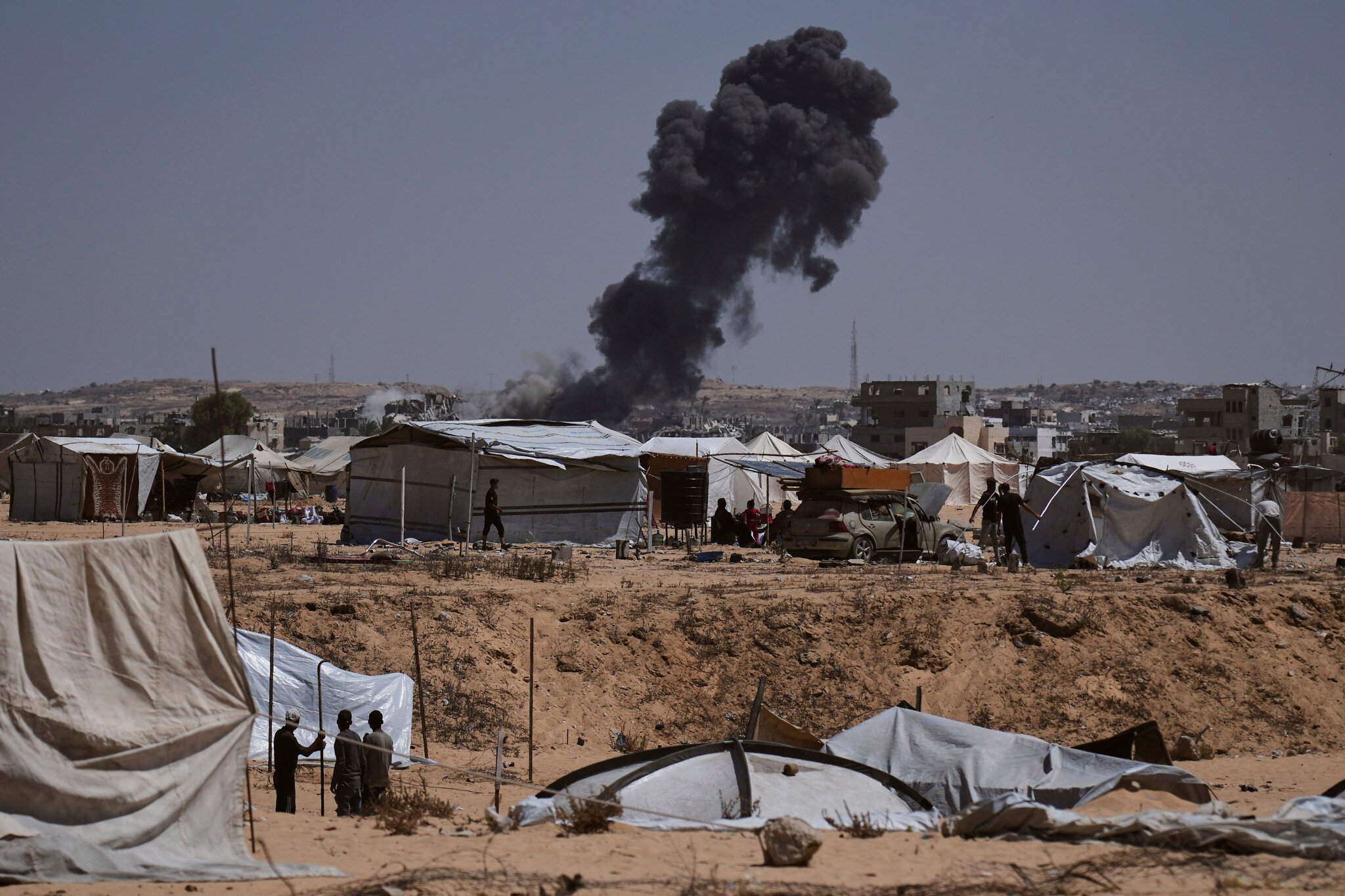
Smoke rises from an Israeli army bombardment in Khan Younis, in the southern Gaza Strip, September 11, 2025. (AP Photo/Abdel Kareem Hana)
“It has been almost two years, with no rest, no settling down, not even sleep,” said Ahmed Al-Dayeh, a father, as he and his family prepared to flee the city in a truck pulled by a motorcycle, laden with some of their belongings.
“Our life revolves around war,” he said. “We have to go from this area to that area. We can’t take it anymore, we are tired.”
“We don’t have enough money, enough to flee. We don’t have any means to go south like they say,” said Abu Hani, who was attending the funeral of a friend who was among those killed in Thursday’s strikes.
Amid its preparations for the offensive, the IDF said on Thursday that it has expanded its operations on the outskirts of Gaza City’s Sheikh Radwan neighborhood and the Kafr Jabalia area in recent days.

Troops of the IDF’s 162nd Division operate in the northern Gaza Strip, in an image published on September 11, 2025. (Israel Defense Forces)
During the operations, the 162nd Division’s forces located and destroyed dozens of Hamas sites, including booby traps, weapon depots, and two tunnels spanning hundreds of meters, the military said.
In addition, the IDF says dozens of terror operatives were killed by the forces and in strikes, including a platoon commander in Hamas’s Sheikh Radwan Battalion and the commander of a Nukhba Force cell who invaded Israel during the October 7 onslaught.
This video published by the IDF on September 11, 2025, shows the demolition of a Hamas tunnel in Gaza City. (Israel Defense Forces)
In total, five IDF divisions, made up of tens of thousands of troops, are set to participate in the Gaza City offensive, the army has said. Among those is the IDF’s 36th Division, which the IDF said on Thursday had been withdrawn from Khan Younis, in southern Gaza, after several months in order to prepare for the upcoming campaign.
In an overview of the division’s activities, the military said its forces had demolished dozens of kilometers’ worth of Hamas tunnels; razed hundreds of Hamas military infrastructures; established the so-called Magen Oz corridor splitting east and west Khan Younis; and eliminated hundreds of terror operatives, including some who participated in the October 7 onslaught.
Meanwhile, Prime Minister Benjamin Netanyahu held a high-level meeting on Thursday to discuss the possible “voluntary emigration” of Palestinians from the Gaza Strip, the Times of Israel learned from one of the attendees.
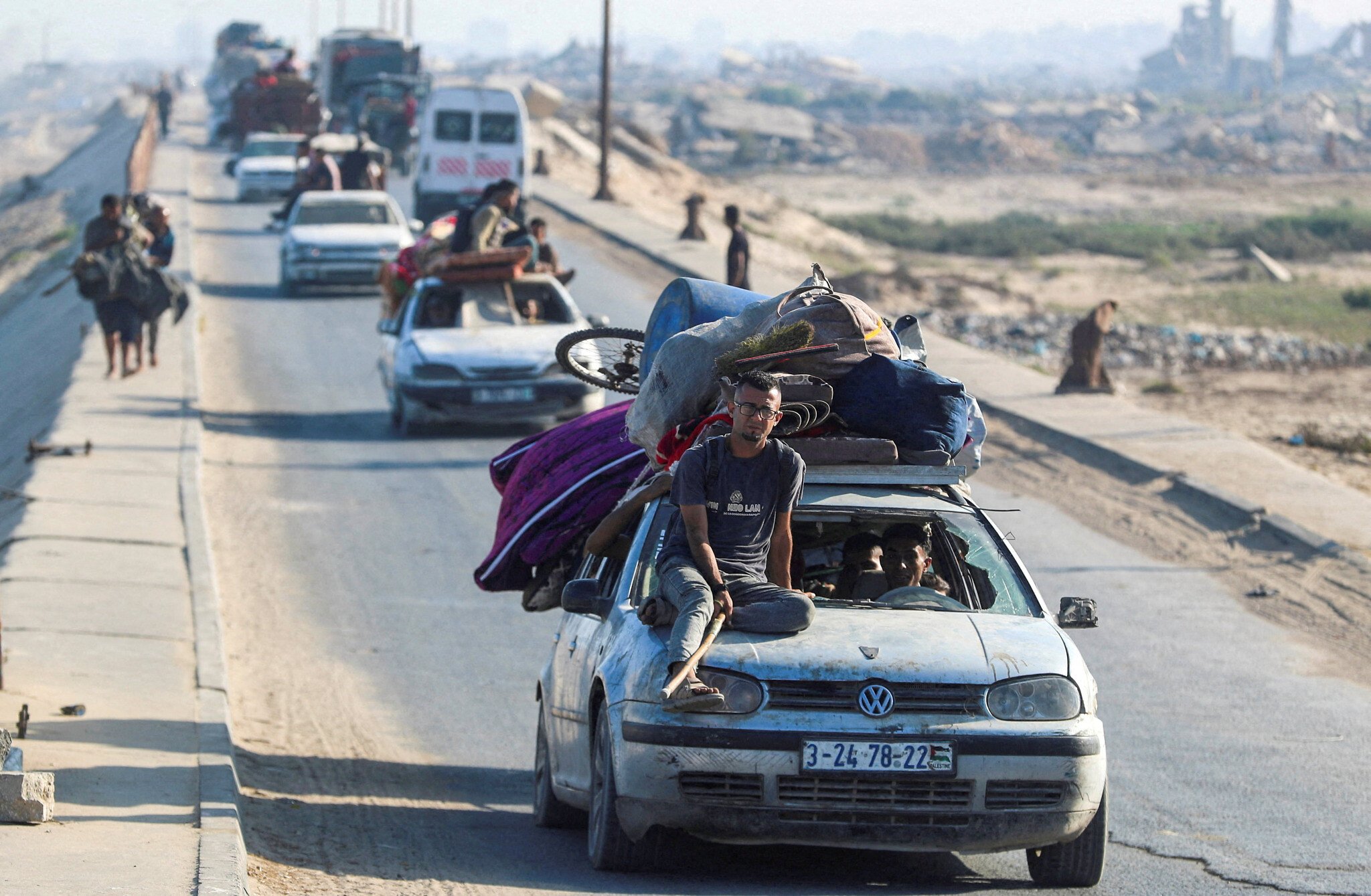
Displaced Palestinians, fleeing northern Gaza due to an Israeli military operation, move southward after Israeli forces ordered residents of Gaza City to evacuate to the south, in the central Gaza Strip, September 11, 2025. (REUTERS/Mahmoud Issa)
Among those attending were senior defense officials and cabinet ministers.
The forum was discussing a plan presented by the defense establishment that would enable Gazans to begin leaving the war-torn Strip as early as October by air and sea, Channel 13 reported.
The Prime Minister’s Office did not respond to a request for comment.
Channel 12, publishing what it said were leaks from the meeting, said Finance Minister Bezalel Smotrich was skeptical about the prospects of any countries agreeing to take Gazans in, and argued that the plan was not worth spending money on if the Gazans would be back home in a year. Netanyahu responded that Israel wouldn’t spend much on the plan, but that Israel should move it forward.
“Do it,” said National Security Minister Itamar Ben Gvir. “It’s the mission of the hour.”
Science and Technology Minister Gila Gamliel reportedly argued that Israel should push Egypt to take in the Gazans. “You try,” responded Netanyahu dismissively.
Defense sources told Channel 13 that Israel was in talks with a number of African countries about receiving Gazans, but that no agreement has been reached as of yet.
Last month, Israel was reported to be in talks with South Sudan about the possibility of resettling Palestinians from the Gaza Strip to the war-torn East African country, although Juba denied that this was the case, calling the reports “baseless.”
You appreciate our journalism

You clearly find our careful reporting valuable, in a time when facts are often distorted and news coverage often lacks context.
Your support is essential to continue our work. We want to continue delivering the professional journalism you value, even as the demands on our newsroom have grown dramatically since October 7.
So today, please consider joining our reader support group, The Times of Israel Community. For as little as $6 a month you’ll become our partners while enjoying The Times of Israel AD-FREE, as well as accessing exclusive content available only to Times of Israel Community members.
Thank you,
David Horovitz, Founding Editor of The Times of Israel