
Photo by Nordin Catic/Getty
When alarming things happen, the world looks for a villain. Two days after the shock shooting of right-wing activist and Trump ally Charlie Kirk at a Utah University event, the police have only just arrested a suspect and we know next to nothing about them or their motivations.
So in the absence of information about the individual who carried out the attack, the right-wing ecosystem – politicians and journalists on both sides of the Atlantic – have found a target for their outrage, fear and horror: British university student George Abaraonye, president-elect of the Oxford Union.
Abaraonye is in no way implicated or connected with the attack. His supposed crime is a more abstract one. In a WhatsApp group for Oxford Union members, he responded to the shooting with the message: “Charlie Kirk got shot, let’s fucking go.”
It should go without saying that this message is tasteless in the extreme. It is heartless, appearing to celebrate a murder that has left a woman without a husband and two young children without a father. It makes a mockery of political violence – a force which, once unbottled, is indiscriminate and liable to escalate.
Abaraonye himself seems to realise this. That is no doubt why he made the comment in what he thought was a private space. He deleted the message and admitted he “reacted impulsively”. “Those words did not reflect my values,” he told The Times. “To be clear: nobody deserves to be the victim of political violence. Nobody should be harmed or killed for the views they hold.”
And that should be the end of it. A young student, barely out of his teens, says something rash and ill-advised in a WhatsApp group of people he thinks he can trust. He doesn’t even post it on social media, for the entire world to see. But it was leaked – and at a time of heightened tension following a tragedy, the internet bands together to try to ruin his life.
Because that is what the voices of the right are doing. The voices who deem themselves crusaders of free speech and so often rail against the idea that someone’s personal views should cause them to be fired or shamed or even too robustly criticised. In the past two days, there have been calls for Abaraonye to resign from the Oxford Union (which is not, despite its name, the official student union of Oxford University, but rather a private debating society – and has published a statement condemning his comments). There have even been calls for him to be expelled from Oxford outright – again, from commentators on the right who make their money lambasting woke lefty snowflakes who can’t handle speech they disagree with. National newspapers are poring over his grades and opining that he should never have been let into Oxford to study PPE in the first place. In a development that is both ugly and inevitable, his race has become part of the attacks against him, with suggestions he owes his place to diversity application policies (as though a white student would never say anything controversial or provocative).

Subscribe to The New Statesman today from only £8.99 per month
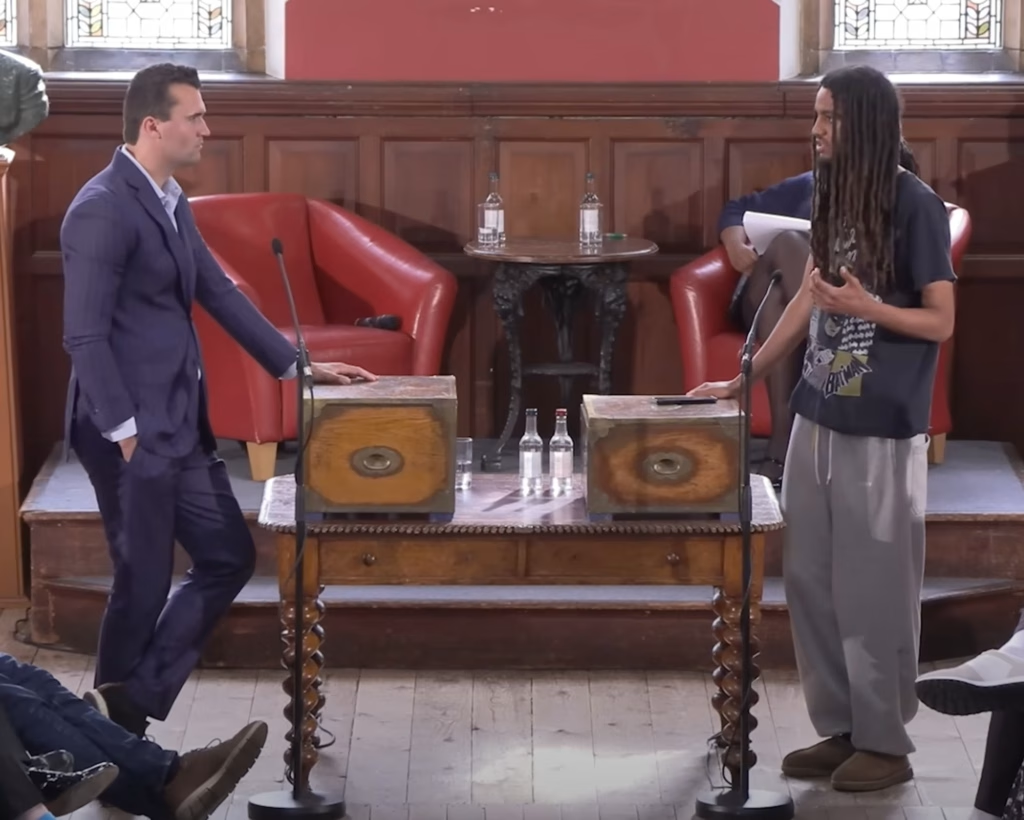
Is this a proportionate response to someone who said something in a WhatsApp group that some people don’t like? The argument that Abaraonye deserves this because of the unique prominence of the Oxford Union in political discourse just shows our perverse national obsession with the internal workings of Britain’s elite universities and the need from the right to demonise those who dare go there. A few years ago, the actual Education Secretary of the United Kingdom was up in arms about a tiny group of Oxford students voting to take down a portrait of the Queen from their common room. A young person having a provocative viewshould not be treated as national news, wherever they go to university.
More pertinently, what would these same commentators be saying if it had been a comment denouncing trans rights, or immigration, or attempts to tackle racism that had sparked such outrage and got a student into trouble? We know the answer. Here in the UK we have had a summer of protests and vandalism, of flags painted on roundabouts and harassment of migrants waiting for their asylum claims to be protests – all of which, we have told again and again, is “free speech”. Even if vulnerable communities find it not just offensive, but intimidating and hostile. Free speech means accepting that no one has a right not to be offended.
This is was Charlie Kirk’s own philosophy, the philosophy he espoused to millions when criticised for his comments – whether demonising immigrants, spreading conspiracy theories, suggesting raped children should be forced to give birth, calling for “a Nuremberg-style trial” for doctors who provide gender-affirming care, accusing the Democrats of hating America, calling abortion worse than the Holocaust and saying gun deaths were a cost worth paying for the second amendment.
There is no justification for his murder, no justification for political violence or for the view that some speech is so dangerous it must be stopped with a bullet. The hypocrisy of his tribe on the right, who stayed quiet or dismissed the many instances of violence against left-wing figures in the US (the brutal attack on Nancy Pelosi’s husband, pipe bombs sent in the mail to Democratic politicians, the plot by right-wing militia to kidnap Michigan governor Gretchen Whitmer, the arson attack on the home of Pennsylvania Governor Josh Shapiro, not to mention the 2021 storming of the US Capitol) is a topic for another time.
But if Kirk could say everything he did, in public, repeatedly, and be lauded for it, why is it so terrible for a student at a university thousands of miles away to express a crude opinion regarding his death? Isn’t accepting that people have views you might find abhorrent what free speech is supposedly all about?
[See also: Charlie Kirk and America’s Age of Lead]
Content from our partners