
Unlock the White House Watch newsletter for free
Your guide to what Trump’s second term means for Washington, business and the world
The writer is director of regional security at the International Institute for Strategic Studies
“Has Israel become the new Iran?” is not the debate the enthusiastic architects of the Abraham Accords envisioned playing out across the Gulf region following Tuesday’s Israeli attack in Qatar. However exaggerated and fleeting this sentiment may seem, it shows the lasting impact of the Gaza catastrophe.
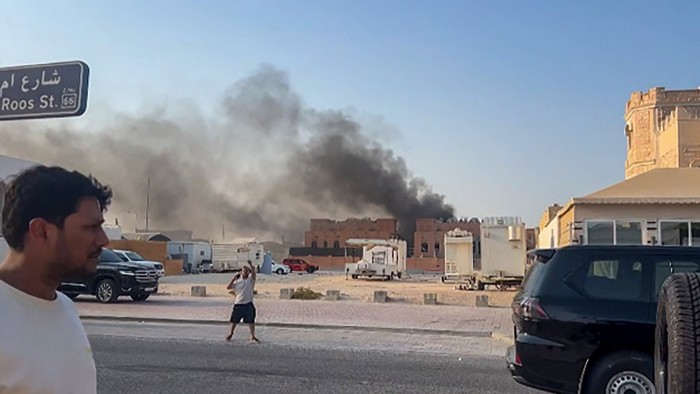
US officials once proudly took credit for preventing the regionalisation of Israel’s war against Hamas and Iran. Yet, for the second time in three months, a Gulf state has faced the material consequences of the wholly mismanaged two-year war that is now radiating across the Middle East. In June, Iran fired a volley of missiles at a US base in Qatar. On Tuesday, Israel fired missiles into the headquarters of Hamas in an upscale residential district of Doha, hoping to kill its political leadership while they reportedly met to discuss the latest US ceasefire proposal.
Despite the apparent failure of the operation (no senior Hamas leader seems to have died) and unanimous condemnation of the strike, Israeli Prime Minister Benjamin Netanyahu has remained unapologetic. The attack, like the continuing Israeli campaign in Gaza City, is the latest evidence that Netanyahu has discarded diplomacy in favour of force and abandoned Israeli hostages in favour of the illusory goal of completely destroying Hamas. On top of the six people killed in Doha, Tuesday’s missile attack’s probable casualties will be any future negotiations, Qatar’s willingness to serve as a mediator, the remaining Israeli hostages and many more Palestinian civilians.
Netanyahu may pay a domestic price for this failed gambit, but his spin-doctors insist that the mere shock will erode Hamas’s morale and can force it to cave. This is a profound misunderstanding of extremist organisations which, even when faced with defeat, will find narratives to justify perpetual resistance. Hamas ceased to be a capable military organisation long ago. It may lob a rocket at Israel but it has lost cohesion, capabilities, leadership, supply lines and allies. What it still has — hostages, a grip on parts of Gaza and much of its population — it owes to Netanyahu’s machinations, territorial maximalism and his refusal to discuss a viable framework for Gaza’s future.
Still high from his lightning campaign against Iran, Netanyahu seems to have embraced hit anything you can, anywhere you can think of. Fortress Israel may well be ostracised for a few years, but in time and thanks to US cover, enemies and partners will accept new realities on the ground. But a different future may be in the making. Israel is now seen as a source of insecurity in the Gulf. It is less interested in regional integration and keener to establish its fortress through military intervention wherever it chooses to strike. This goes against the Gulf states’ need for regional stability to advance their ambitious economic and infrastructure plans.
Crucially, the US seems unwilling to do much about it. While Donald Trump seemed irritated by the Israeli strike and reassured Qatar it won’t happen again, Israeli officials have already warned that there will be more such attempts. Turkey and Egypt have reason to worry and have conveyed their alarm to Washington.
Global sympathy may warm Qatari hearts but will not erase the nascent feeling of insecurity. After all, Doha hosted Hamas at Washington’s urging, funded it with Israeli facilitation and mediated talks with everyone’s approval. For Qatar, these moves were meant to amount to an implicit security guarantee. Cultivating the US and hosting its biggest base in the Middle East was supposed to deliver an explicit one.
The UN Security Council has already met to discuss the attack and legal action could be taken at the International Court of Justice. Qatari leaders will press their case directly with embarrassed US officials, subtly reminding Trump of the reassurances made during his May visit. But the main lever resides in cross-Gulf co-operation. Saudi and Emirati leaders rushed to Doha to express their support and described Israel’s action as “heinous” and “treacherous”. Qatar may demand more than just statements of solidarity from its Gulf partners, including suspension of diplomatic relations with Israel.
Riyadh is relieved that it resisted US entreaties to normalise ties with Israel. The present risk of dealing with Israel far outweighs its potential benefits. Even the UAE, arguably Israel’s closest partner in the region, is appalled by its behaviour. Tensions have been brewing for months and their leaders are now estranged. The lack of a viable plan for Gaza, the repeated statements about annexation and new settlements in the occupied West Bank, and now the strike have made Riyadh and Abu Dhabi feel taken for granted. The UAE has already cancelled Israeli participation in the Dubai Airshow in November.
Uncomfortably for everyone, all this raises questions about the credibility of the US as the region’s security overlord. If it won’t defend its allies and can’t keep Israel in line, then perhaps the Gulf states’ reliance on Washington needs rethinking. What once seemed a distant prospect has become more likely thanks to Israeli intransigence. This is what strategic failure looks like.