
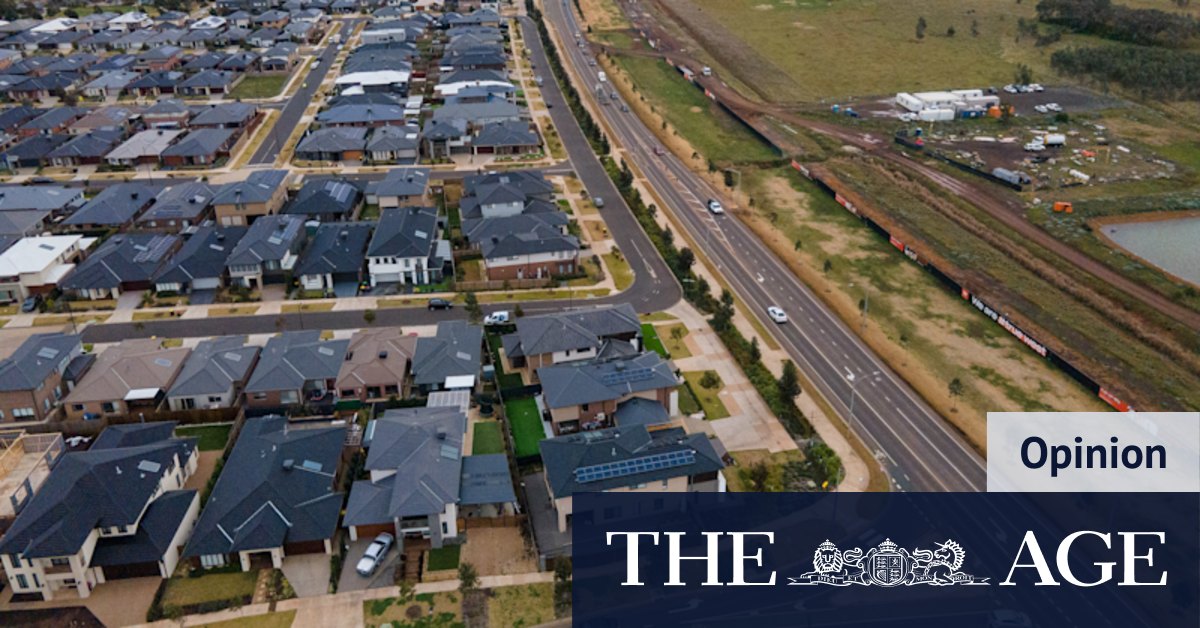
There is no easy way in or out of Thornhill Park, almost 10 years after the first residents moved in. A freeway interchange was included in the original plans but was never built, so motorists must merge into traffic on a 110km/h road, and perform a U-turn further along the freeway.
Loading
It’s easy to form the view that these places are unsalvageable. But we need to salvage them.
You might not realise from the seat of an outdoor table on a fashionable high street, or through the window of an office tower on Collins Street, but there is a city bigger than Canberra out there.
Melbourne’s bulging growth corridors are the fastest growing part of the country, even as the Allan government tries to arrest the city’s decades-long habit of sprawl with a housing density overhaul in inner and middle Melbourne.
According to Australian Bureau of Statistics data released in late August, the City of Wyndham, in Melbourne’s outer south-west, experienced the highest population growth of any council area in Australia in the past five years. The neighbouring City of Melton ranked third.
The appeal is obvious to anyone who doesn’t have a spare million to buy in an established suburb.
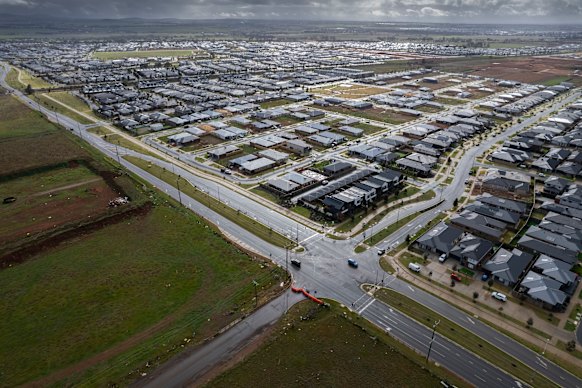
The suburb of Thornhill Park this month.Credit: Jason South
The median lot price in Melbourne’s greenfields was $399,000 in the last quarter. These suburbs provide home buyers of modest means affordable access to a freestanding house.
So it was pleasing to visit a new suburb last week that gave me a glimmer of hope that the fringes don’t have to be a door-to-door disaster.
This suburb, Aintree, is halfway between Mount Atkinson and Thornhill Park.
Loading
Aintree has emerged out of the standard greenfields model and yet feels more liveable than any other similar suburb in Melbourne.
Its streets are walkable and cyclable, with a generous network of on-road and off-road bike lanes. There are competition-grade soccer pitches and cricket ovals.
There is housing diversity, not just a monotonous glut of three- and four-bedroom freestanding houses squeezed onto 350-square-metre blocks (although there are plenty of those).
Apartments and townhouses take prominence around the town centre, which is lively, with a supermarket, a handful of restaurants, a wine bar, green grocer, Indian grocer, a gym and a barber.
Loading
This might sound so-so and so-what to anyone who lives in an established suburb such as Sunshine or Glen Waverley, but in the greenfields, where commercial centres have a track record of struggling to take off, it’s a coup.
Aintree’s centre has thrived because its population has grown at a rate that exceeded even the developer’s expectations.
Ten years after the first houses started to pop up in empty paddocks there, the estate has 5000 homes and an estimated population of 12,000. The fast rate of growth isn’t an accident.
Aintree’s developer, Woodlea, made two strategic decisions early that helped it dodge the common failures of other greenfields developments.
It targeted owner-occupiers, not overseas investors, in its sales strategy. This, Woodlea calculated, would draw in families and first home buyers who were invested in the community, rather than absentee landlords looking for a return.
It also partnered with a private educator, Bacchus Marsh Grammar, to build a school campus early in the suburb’s development, rather than wait for the state to build one.
Woodlea made a buy now, pay later deal with the independent school, granting them the title to the land but waiting for the school to reach capacity before paying for it.
Aintree isn’t without growing pains. But most of them stem from planning failures no developer can control.
Loading
Getting out of the estate in the morning is a nightmare. The car park at nearby Rockbank station fills up early, and parked cars spill for hundreds of metres along the sides of Leakes Road.
There is an off-road path for those who want to avoid the early scramble for a park, but no signalised crossing to the station. Pedestrians and cyclists must make a dash across two lanes of heavy traffic to get there.
But Aintree’s encouraging example is important. The fringes need a model for better development.
Melbourne still has a 10-year pipeline of greenfields plans yet to be written before the city’s urban growth boundary is eventually built out.
It’s not much time, but hopefully time enough to learn from the failures of the past.
Adam Carey is senior city reporter for The Age. He has held previous roles including education editor, state political correspondent and transport reporter.
Get a weekly wrap of views that will challenge, champion and inform your own. Sign up for our Opinion newsletter.