
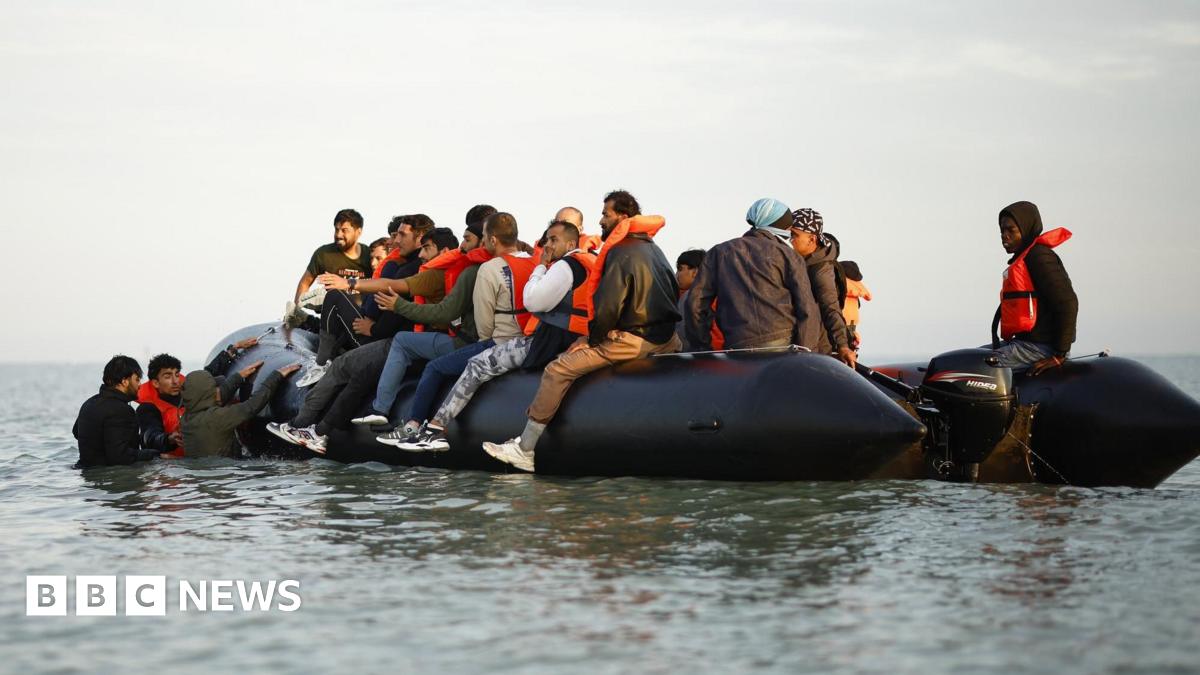
People targeted by the sanctions include those who supply fake documents and finance small boats, as well as “middlemen” who push money through Hawala networks, an informal system for organising money transfers often used by smugglers.
Sir Keir is under growing pressure to stem the flow of migrants reaching the UK, after pledging to “smash” people-smuggling gangs ever since the general election campaign a year ago.
Earlier this month, he signed a “one in, one out” deal with France to return migrants to France for the equivalent number of legal asylum seekers, subject to security checks.
In the first six months of this year, more than 20,000 people crossed in small boats, an increase of nearly 50% on the previous year, according to Home Office data.
On Monday, shadow home secretary Chris Philp said the number of people entering the UK illegally was causing a “public safety crisis” for women and girls.
“The truth is you don’t stop the Channel crossings by freezing a few bank accounts in Baghdad or slapping a travel ban on a dinghy dealer in Damascus,” Philp said in a statement.
Also on Monday, Reform UK leader Nigel Farage said that people protesting outside a hotel used to house asylum seekers in Essex were “genuinely concerned families”.
Bottles and flares were thrown towards police during the demonstration, which Downing Street condemned.
“I don’t think anybody in London even understands just how close we are to civil disobedience on a vast scale in this country,” Farage said in a speech on Monday.
The government says that the new sanctions will target immigration crime gangs “where traditional law enforcement and criminal justice approaches cannot reach”.
Home Secretary, Yvette Cooper, said the new sanctions regime is a “decisive step in our fight against the criminal gangs who profit from human misery”.
“It will allow us to target the assets and operations of people-smugglers wherever they operate, cutting off their funding and dismantling their networks piece by piece,” she said.