
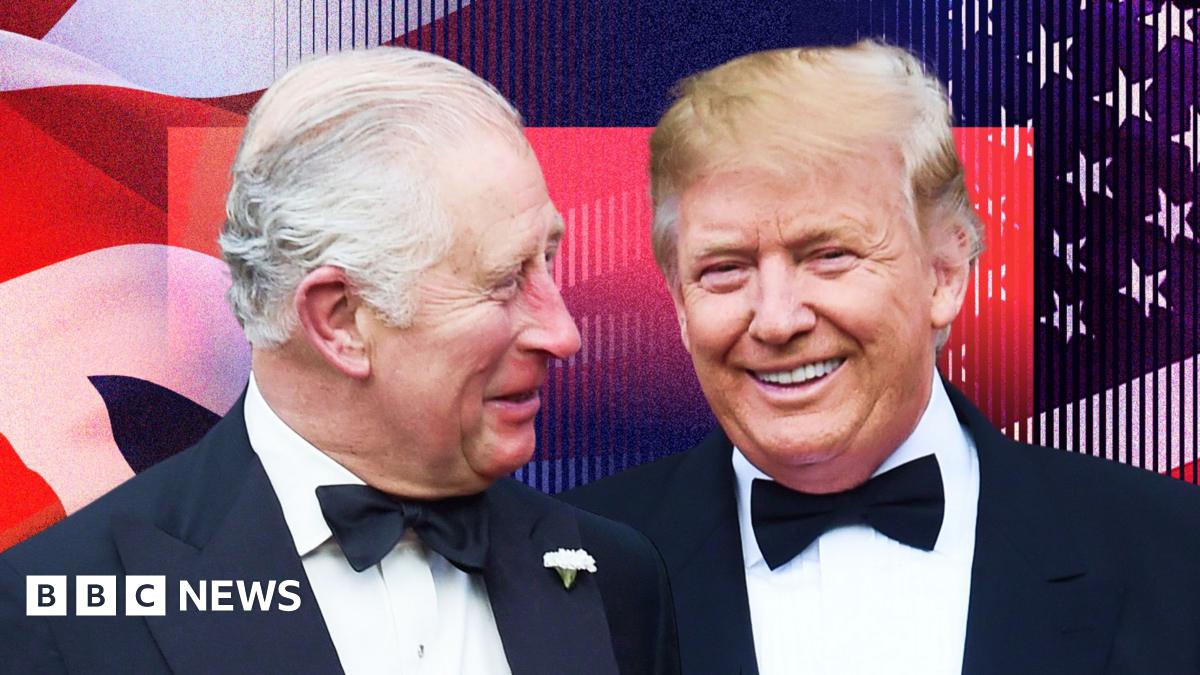
But how will King Charles handle his sometimes unpredictable guest in Windsor? Can he be the Trump whisperer?
“Trump loves the monarchy and the Royal Family. It’s a potential diplomatic ace card for the UK government,” says Anna Whitelock, professor of history of the modern monarchy at City St George’s, University of London.
This attraction to royalty will give the King a “rare advantage” in dealing with Trump, who usually expects to have the upper hand, says Prof Whitelock.
Sir Anthony Seldon, biographer of the UK’s prime ministers, agrees. The King can benefit from Trump’s “palpable enthusiasm” for the royals, he says.
“At the same time, King Charles is in the most delicate of positions. His own known views, on the environment, and standing up for democracy and the rule of law in Europe, are a long way apart from the president’s,” says Sir Anthony.
“He will, I am sure, be scrupulously correct and civil,” he adds. In essence, the King will stick to the script given to him by the UK government.
The government will certainly hope that this week’s royal schmooze-fest will make a positive impression on Trump, creating a feelgood factor for the UK.
It’s an unusual and carefully crafted state visit. There’s a crammed schedule squeezed into a day and a half, most of it dedicated to royal spectacles. Windsor is being used like a royal theme park.
With fears over security and protests, there won’t be any cheering crowds and no public procession, like the one recently enjoyed by France’s President Emmanuel Macron. Instead, it will be helicopters and closed events, including the carriage ride, which will wind its way inside the Windsor estate.
A YouGov poll over the summer showed opinion divided on whether Trump’s visit should go ahead, external, with slightly more wanting it cancelled.
And the nearest thing to the public that the president will see will be the staff working at the banquet.