
On September 15, 2008, legendary investment bank Lehman Brothers collapsed, filing for bankruptcy with $US639 billion ($962 billion) in assets and $US619 billion in debt.
The event, caused by the investment bank’s heavy involvement in the subprime mortgage crisis, triggered financial shockwaves far beyond the US.
Like a precarious stack of dominoes, more banks – such as the Royal Bank of Scotland and HBOS – went out of business.
 Investment bank Lehman Brothers was a pillar of Wall Street but crumbled on September 15, 2008.. (AP Photo/Seth Wenig) (AP)
But the fallout from the banking disaster went far beyond the boardrooms of Wall Street.
The debts that governments took on to save banks still afloat and to restore confidence in communities worried another Great Depression was upon them saw trillions upon trillions of dollars borrowed.
The US – the world’s biggest economy – lost its gold standard Triple A rating as interest rates fell to zero in major global economies.
There was also the shattering impact on millions of jobs.
Lehman Brothers laid off 25,000 staff, but the figure was only a taste of what happened over following months as the banking crisis grew into the Great Recession. An estimated 8.7 million Americans lost their jobs in finance and other sectors of the economy.
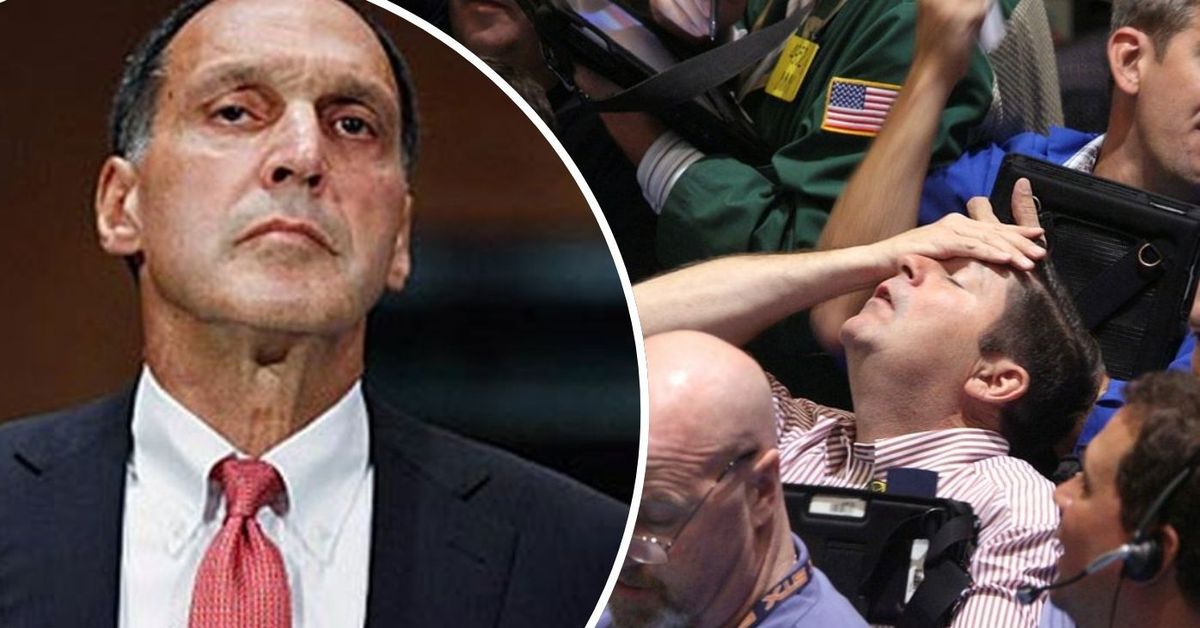
 Traders in the New York Mercantile Exchange, on Tuesday, September 16, 2008. (AP Photo/Seth Wenig) (AP)
The eyes of a distraught public and angry investors fell on the top Lehman Brothers executives responsible for the disaster.
The firm’s chief executive Richard Fuld came in for particular scrutiny.
The suave banker, regarded as a pillar of the Wall Street establishment, became known as the “the most hated man in America”.
Muld steered Lehman right into the face of an epic storm.
Between 2000 and 2007, Lehman’s assets had more than tripled to $US691 billion. And its borrowing ratio, known as leverage, jumped to 40 times its shareholders’ equity in the company. In layman’s terms, the company had relatively little capital to protect against trouble.
 Former Lehman Brothers chief executive Richard Fuld.
An investigation by US regulators also found Lehman Brothers also got away with using accounting gimmicks to mask how much money it borrowed.
Despite public outrage at the behaviour of the Wall Street fat cats, no senior banking bosses were ever prosecuted over the industry’s staggering collapse.
Fuld consistently played down his role in the crisis, instead blaming the US government, regulators and unfounded rumours about Lehman Brothers.