
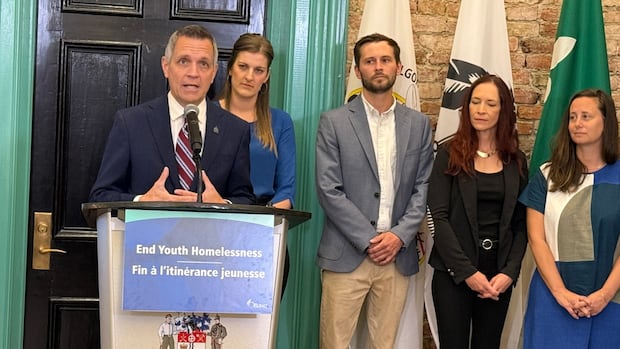
Ottawa Mayor Mark Sutcliffe pledged to end youth homelessness in the capital city within five years at an announcement Tuesday morning.
The announcement did not include specific actions the city plans to take to achieve that goal but Sutcliffe said the 2026 budget, which is currently being planned, will include investments to that end.
“No matter the reason, it is our goal to make sure that any young person who ends up in a shelter has the immediate support and assistance they need to find a safe and stable home,” he said.
“Ending youth homelessness is the first step toward ending all homelessness,” Sutcliffe said, pointing to how half of chronically homeless adults first experienced homelessness before they were 16.
There are currently between 50 and 100 homeless youths in Ottawa, according to Sutcliffe, who said part of his goal is to establish a system to divert youths from the shelter system.
Sutcliffe’s pledge is a “doable goal,” said Kaite Burkholder Harris, executive director of the Alliance to End Homelessness.
“When we say the word end, it means that homelessness is rare, brief and doesn’t happen again. In other words, people don’t get stuck. Unfortunately right now … people are stuck,” she said at the announcement.
Sutcliffe’s plan would not call on funding from other levels of government, he said.
He would also serve as a judge at a “hackathon” — a collaborative problem-solving event — at the University of Ottawa, where students and community partners will design solutions to prevent youth homelessness, he said.
Ali Campbell, a vice president with the homeless shelter Shepherds of Good Hope, welcomed Tuesday’s announcement.
“Although we focus on adult homelessness here, we know that youth who experience homelessness are more likely to experience homelessness later on in their life,” she said.
Rideau-Vanier Coun. Stéphanie Plante said the announcement underscores what advocates have been saying “the whole time.”
“We have to invest in prevention. We have to get people the minute they end up in the shelter system,” she said.
People should only have to be in a shelter for two weeks “max,” she added.