
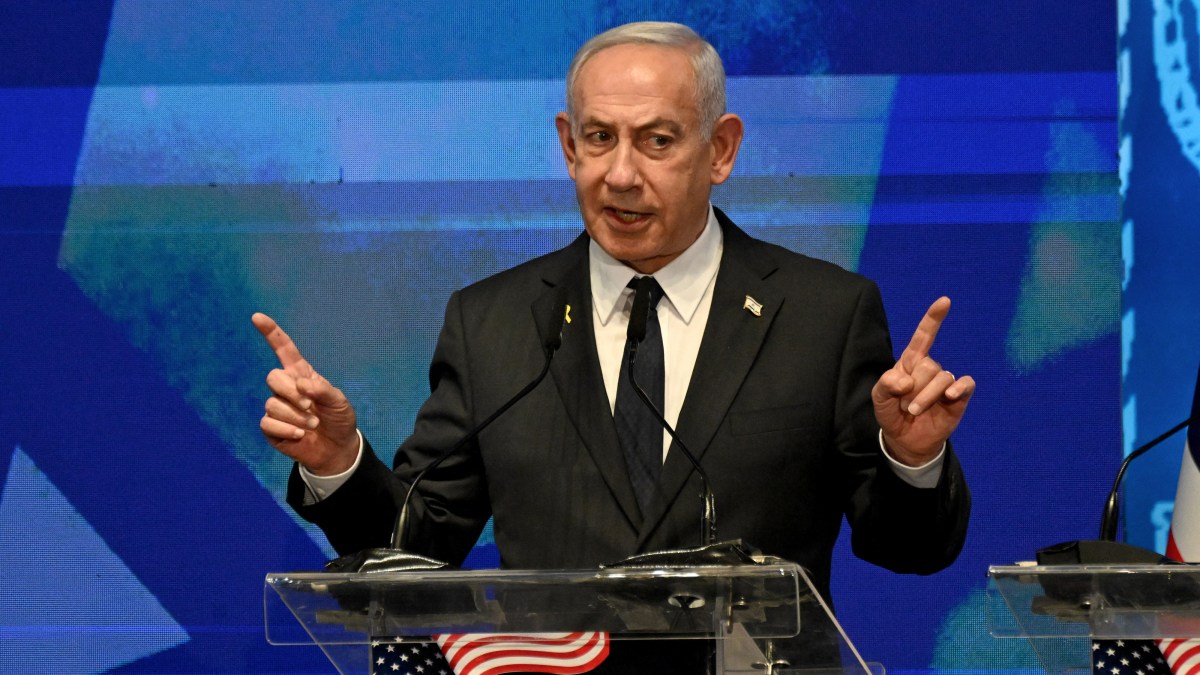
Binyamin Netanyahu is the Great Houdini of the modern Middle East. Just as the escapologist found seemingly impossible ways of wriggling out of chains while underwater, so the Israeli prime minister manages to get out of the tightest corners again and again.
Last week it seemed as if the game was up: an Israeli strike on Hamas operatives in Qatar, the first Israeli military strike on a non-enemy state since Operation Entebbe in Uganda in 1976, seemed to anger President Trump. Had Netanyahu trapped himself — and his American patron — in a cycle of forever wars?
Was the Doha episode and the long-flagged military move on Gaza City the end of Netanyahu’s run? The beginning of an era of isolation for Israel? It seemed that way for a while. The Doha emergency summit to express solidarity with Qatar looked as if it could sabotage the Abraham Accords, the process designed to normalise relations between Israel and the Arab states.
• Israel’s assault on Hamas hideout forces thousands to flee Gaza City
The Israeli strike on Qatar certainly renewed doubts about Netanyahu’s ultimate ambitions: was he trying to replace Iran as the regional hegemon? After all, the glue of the Abraham Accords was a shared fear of Iran; now Israel was hitting out at targets across the region — Yemen, Lebanon and Syria among them.
And yet that protest meeting ended up with no practical measures against Israel. The supposedly furious Trump sent his secretary of state, Marco Rubio, to Jerusalem to read the riot act to Netanyahu. That ended with a friendly tour of the city.
The most pointed criticism from Rubio was not against Netanyahu but those European countries — Britain and France among them — which are planning to formally recognise Palestinian statehood at the United Nations next week. Rubio’s verdict: “The only impact it actually has is to make Hamas feel more emboldened.” Cue a broad smile from the Israeli prime minister.
As long as the Trump-Netanyahu axis holds, the talk of the isolation of Israel will not amount to much. Sir Keir Starmer’s pledge to join France in upgrading the status of the Palestinians was framed as a threat to Israel: that is, recognition of Palestine could be put off should Israel agree to a ceasefire in Gaza.
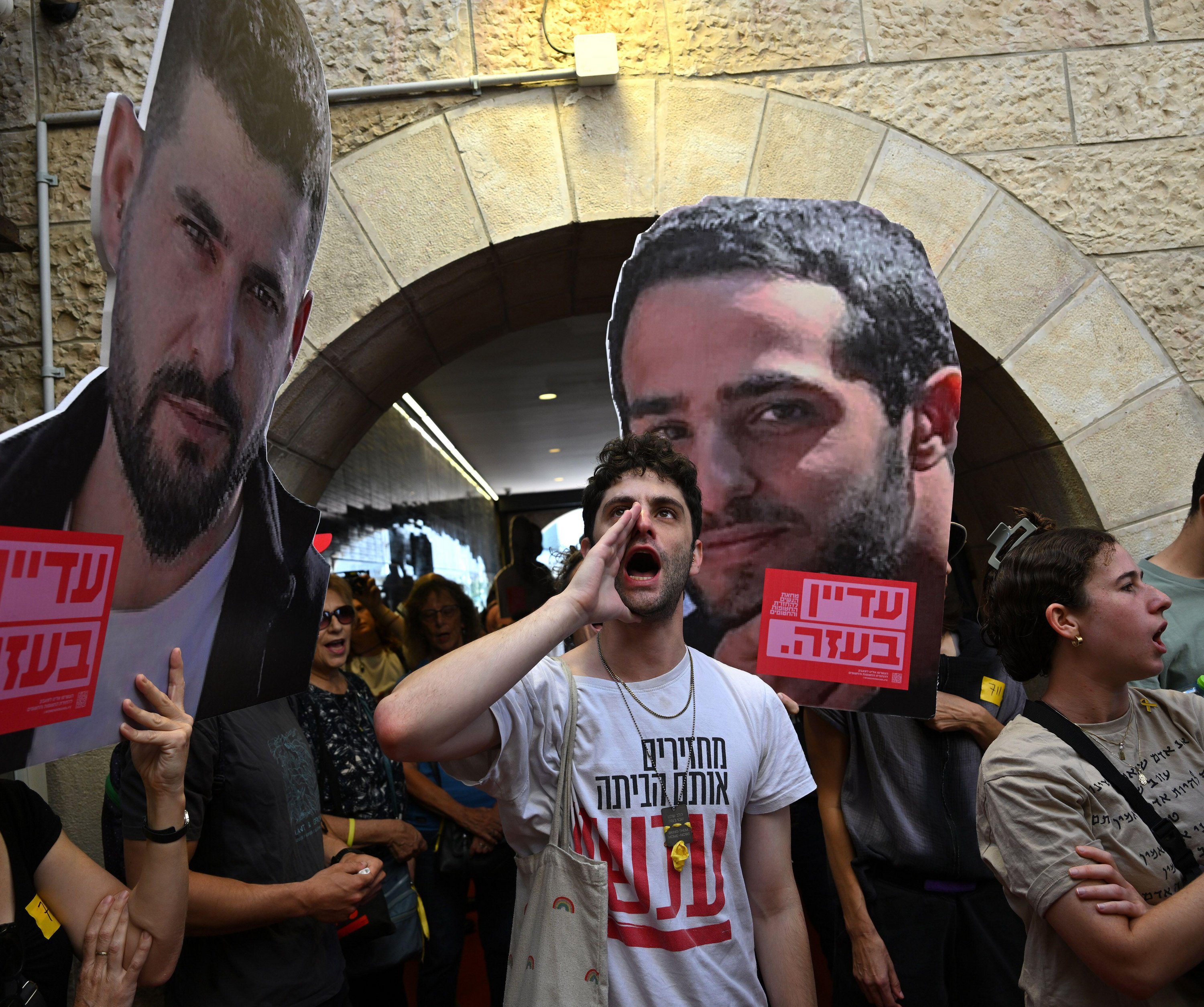
Families of hostages held by Hamas call for an end to the war
DEBBIE HILL/UPI/ALAMY
On Tuesday Israeli tanks rolled into Gaza city. The Israeli military reckons it will take until the end of 2025 to occupy the city and destroy Hamas infrastructure. That’s still shorter than many pessimists were predicting. And Trump’s backing is in place — he has just fired off a social media message warning Hamas against using hostages as human shields. Netanyahu will have read that as a sign that Trump is in the battle until 2026.
The Israeli journalist Amit Segal makes a comparison between Netanyahu’s situation a year ago and the present. Then, Israel was being warned against going to war with Hezbollah. “Israel looked like a battered truck that had entered a one-way street against the traffic,” he writes. “It was the punchbag of the Middle East.” Now, after a spate of intelligence-led victories, Israel had turned into “a neighbourhood bully that needs restraint”. Netanyahu knows which image he prefers. Suddenly he has options.

Marco Rubio went to Jerusalem to read the riot act to Netanyahu but ended up being taken on a friendly tour of the city
NATHAN HOWARD/POOL/AFP VIA GETTY IMAGES
But he has to hang on to friends. A crucial role will be played by the Saudi crown prince, Mohammed bin Salman, whose views on the Palestinian future will be taken seriously by Trump. The big diplomatic goal of the Trump presidency will be the entry of the Saudis into the Abraham Accords. The prince is no friend of Hamas (hence his present silence) but neither is he ready to accept the constant displacement of the Palestinians. Trump’s support for Netanyahu may be tempered next year by lobbying from the prince.
Equally, Netanyahu should not be too dismissive of European clamour for more humanitarian help to Gaza. Israel would be upset by a snub from Eurovision — many Europeans are threatening to boycott the contest if Israel participates — but Netanyahu would be more worried about the economic hit if the European Union ends up partially suspending its association agreement on trade with Israel.
Houdini’s lesson for Netanyahu: move quickly and credibly if you want to wriggle free from diplomatic chains.