
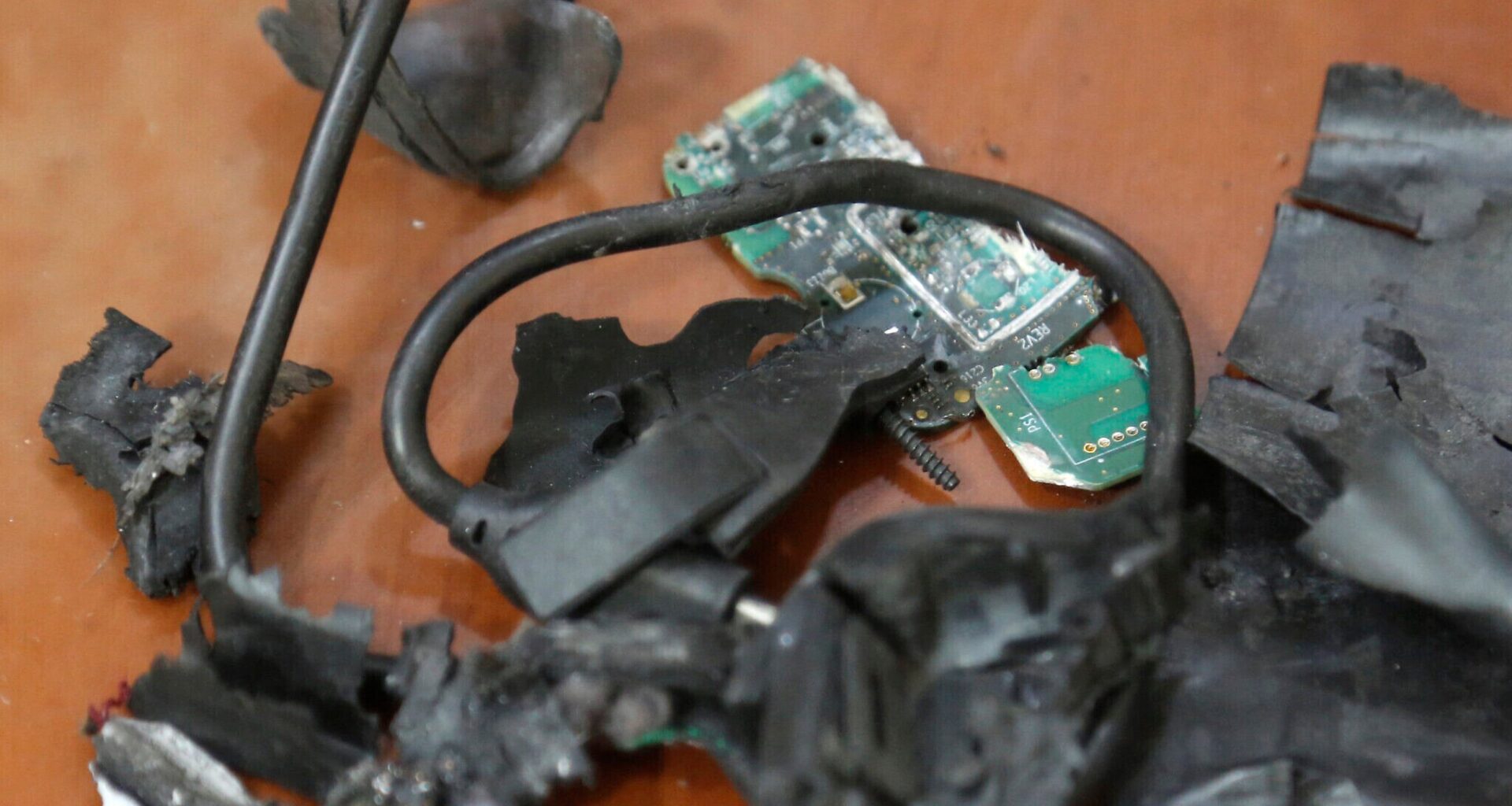
Zainab Mustarah once spent her days running an events planning firm in Beirut. But for the last year, she has been in and out of surgery to save the remnants of her right hand and both eyes, maimed when Israel detonated booby-trapped pagers in Lebanon.
On September 17, 2024, thousands of pagers carried by members of Lebanese terror group Hezbollah exploded simultaneously, followed the next day by booby-trapped walkie-talkies.
Thirty-nine people were killed and more than 3,400 wounded, including children and other civilians who were near the devices when they blew up but were not members of the Iran-backed group, according to Lebanese tolls that did not differentiate between civilians and members of the terror group.
While it is not known how many Hezbollah members were injured, a Hezbollah official told Reuters a week later that the attacks put 1,500 of the group’s fighters out of commission due to their injuries, with many having been blinded or had their hands blown off.
Mustarah, now 27, was one of the wounded. She told Reuters she was working from home when the pager, which belonged to a relative, beeped as if receiving a message. It exploded without her touching it, leaving her conscious but with severe wounds to her face and hand.
Get The Times of Israel’s Daily Edition
by email and never miss our top stories
By signing up, you agree to the terms
Media reports have detailed that the pagers and sent message were designed in a way that required operators to hold the device with both hands in order to press two buttons simultaneously, setting off the blast. However, the pagers were also designed to explode anyway, a short time after the messages were sent.
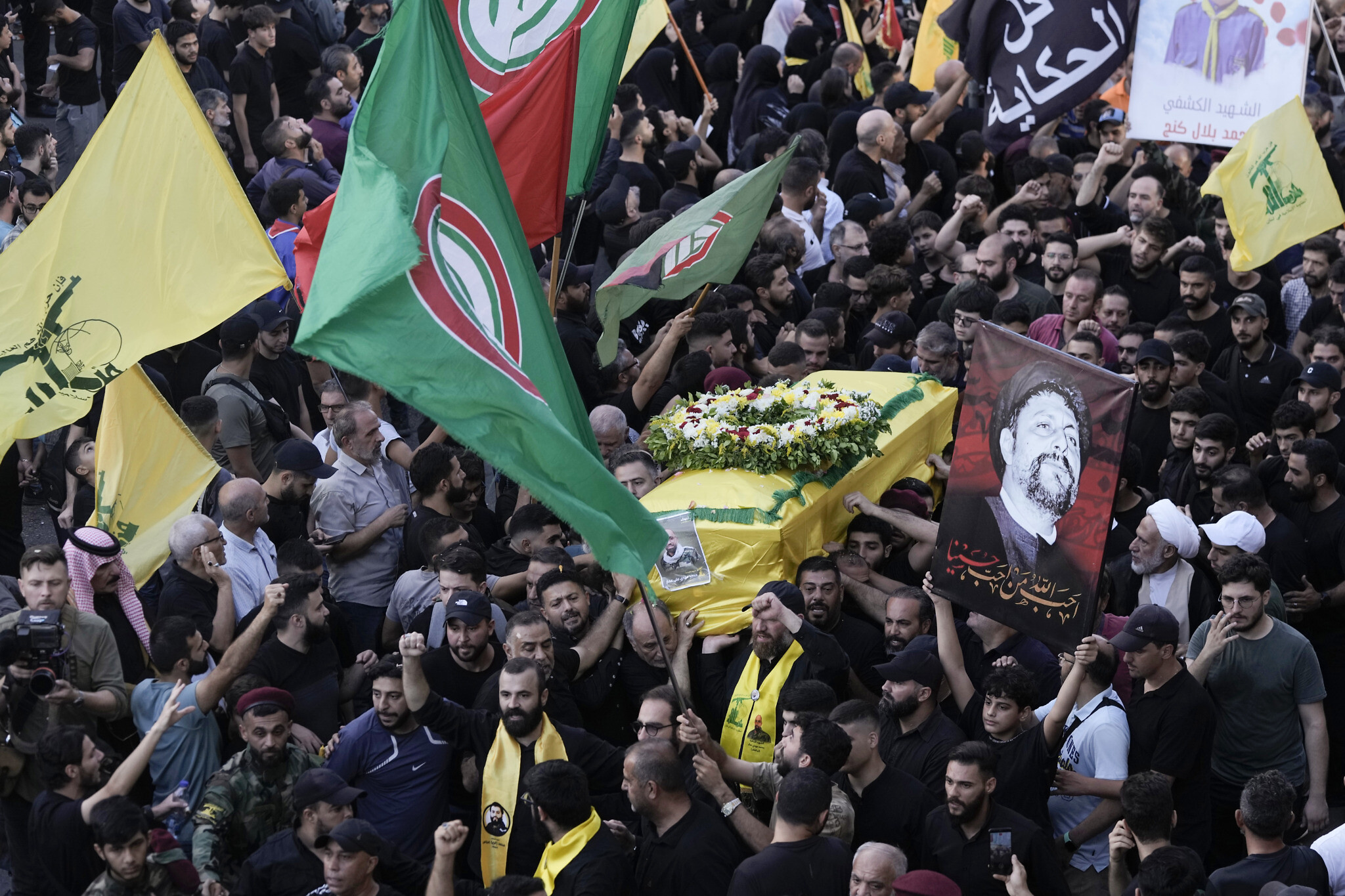
Hezbollah fighters carry one of the coffins of four fallen comrades who were killed after their handheld pagers exploded, during their funeral procession in the southern suburb of Beirut, Lebanon, September 18, 2024. (Bilal Hussein/AP)
‘Shocking attack’
Her last year has been a flurry of 14 operations, including in Iran, with seven cosmetic reconstruction surgeries left to go. She lost the fingers on her right hand and 90 percent of her sight.
“I can no longer continue with interior design because my vision is 10 percent. God willing, next year we will see which university majors will suit my wounds, so I can continue,” she said.
The exploding pagers and walkie-talkies were a decisive development in an escalating conflict between Israel and Hezbollah that began in the wake of the devastating Hamas-led invasion of Israel on October 7, 2023. Hezbollah started firing across the northern border in support of Hamas, drawing Israeli retaliation. The fighting eventually escalated into a full-blown war that left the terror group badly weakened and swaths of Lebanon in ruins.
A Reuters investigation found that Israel had concealed a small but potent charge of plastic explosive and a detonator into thousands of pagers procured by the group.
They were carried by fighters, but also by members of Hezbollah’s social services branches and medical services.
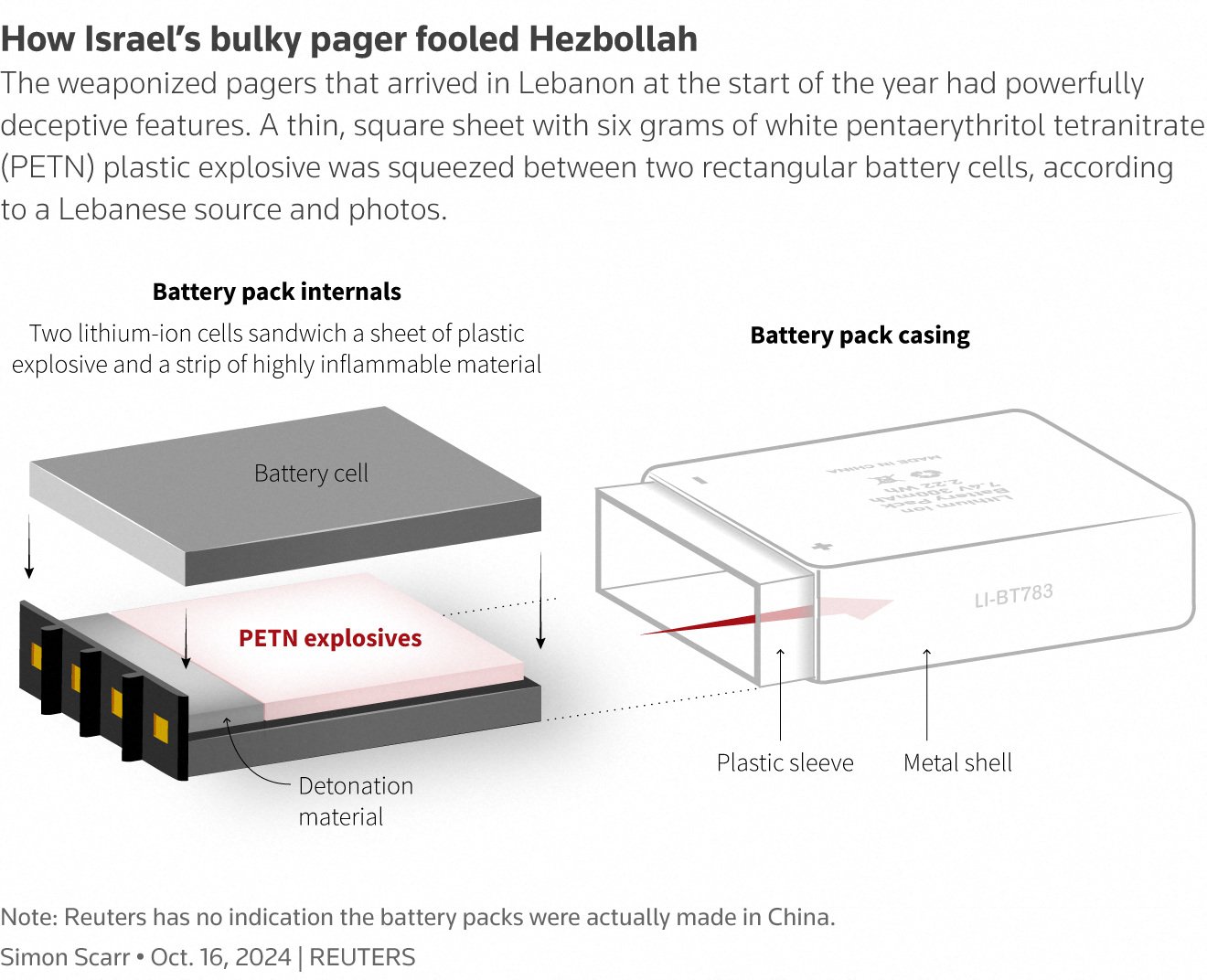
The weaponized pagers that arrived in Lebanon had powerfully deceptive features. (Reuters graphic)
The United Nations High Commissioner for Human Rights, Volker Türk, said at the time that the explosions were “shocking, and their impact on civilians unacceptable.”
He said simultaneously targeting thousands of people without knowing precisely who was in possession of the targeted devices, or where they were, “violates international human rights law and, to the extent applicable, international humanitarian law.”
Hospital staff wounded
Mohammed Nasser al-Din, 34, was the director of the medical equipment and engineering department at Al-Rasoul Al-Aazam Hospital, a Hezbollah-affiliated facility, at the time of the pager blasts. He said he had a pager to be easily reached for any maintenance needs there.
At the hospital on September 17 last year, he spoke by phone with his wife to check in on their son’s first day back at school.
Moments later, his pager exploded.
The blast cost him his left eye and left fingers and lodged shrapnel in his skull. He lay in a coma for two weeks and is still undergoing surgeries to his face.
He woke to learn of the killing of Hezbollah leader Hassan Nasrallah in a barrage of Israeli strikes on Beirut’s southern suburbs, a turning point for the group and its supporters.
But Nasser al-Din did not shed a tear — until his son saw the state he was in.
“The distress I felt was over how my son could accept that my condition was like this,” he said.
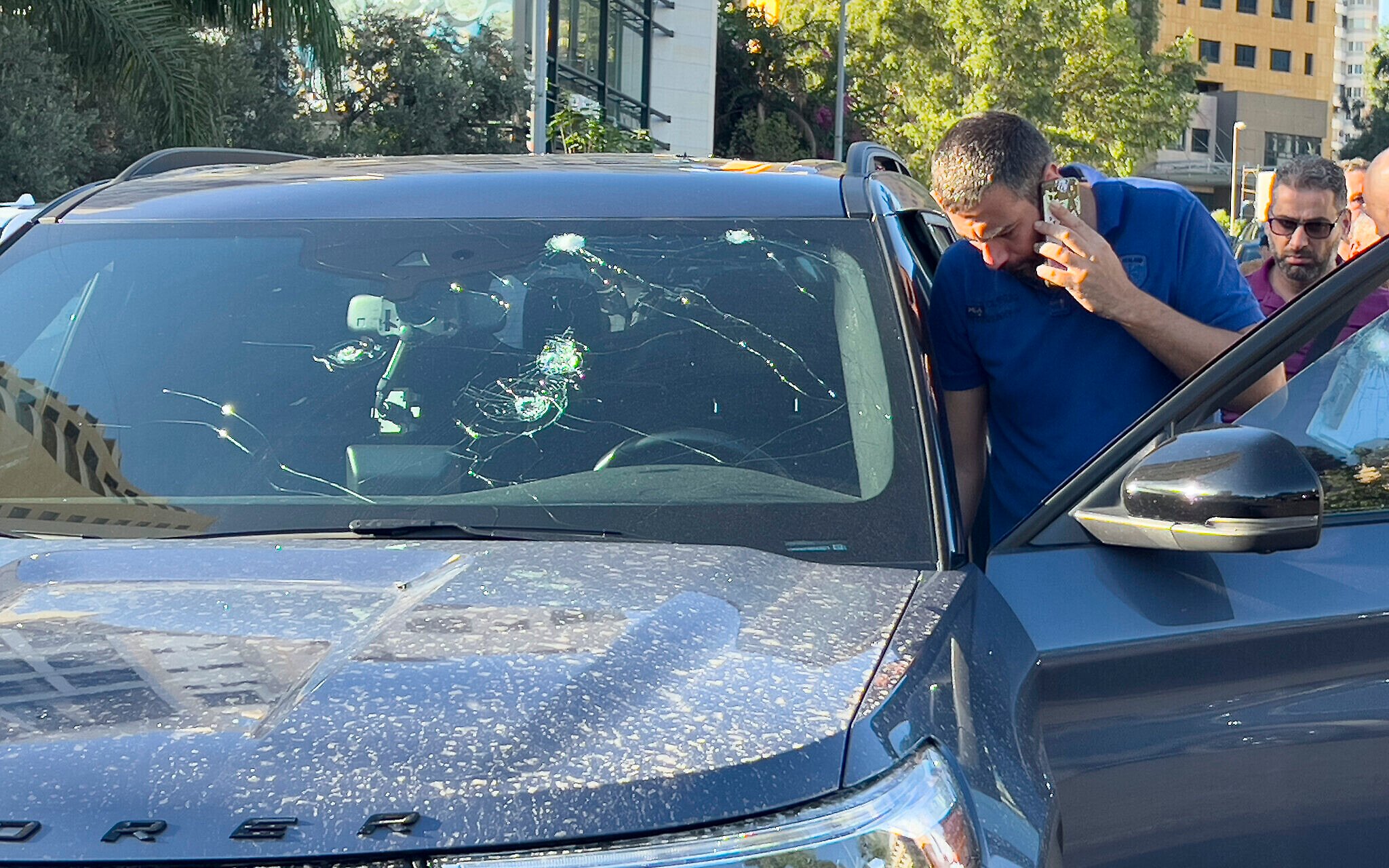
Police officers inspect a car inside of which a hand-held pager exploded, in Beirut, Lebanon, September 17, 2024. (AP/Hussein Malla)
Elias Jrade, a Lebanese member of parliament and eye surgeon who conducted dozens of operations on those affected, said that some of the cases would have to receive lifelong treatment.
“There were children and women who would ask, what happened to us? And you can’t answer them,” he told Reuters.
Is The Times of Israel important to you?
If so, we have a request.
Every day, even during war, our journalists keep you abreast of the most important developments that merit your attention. Millions of people rely on ToI for fast, fair and free coverage of Israel and the Jewish world.
We care about Israel – and we know you do too. So today, we have an ask: show your appreciation for our work by joining The Times of Israel Community, an exclusive group for readers like you who appreciate and financially support our work.
Already a member? Sign in to stop seeing this
You appreciate our journalism

You clearly find our careful reporting valuable, in a time when facts are often distorted and news coverage often lacks context.
Your support is essential to continue our work. We want to continue delivering the professional journalism you value, even as the demands on our newsroom have grown dramatically since October 7.
So today, please consider joining our reader support group, The Times of Israel Community. For as little as $6 a month you’ll become our partners while enjoying The Times of Israel AD-FREE, as well as accessing exclusive content available only to Times of Israel Community members.
Thank you,
David Horovitz, Founding Editor of The Times of Israel