
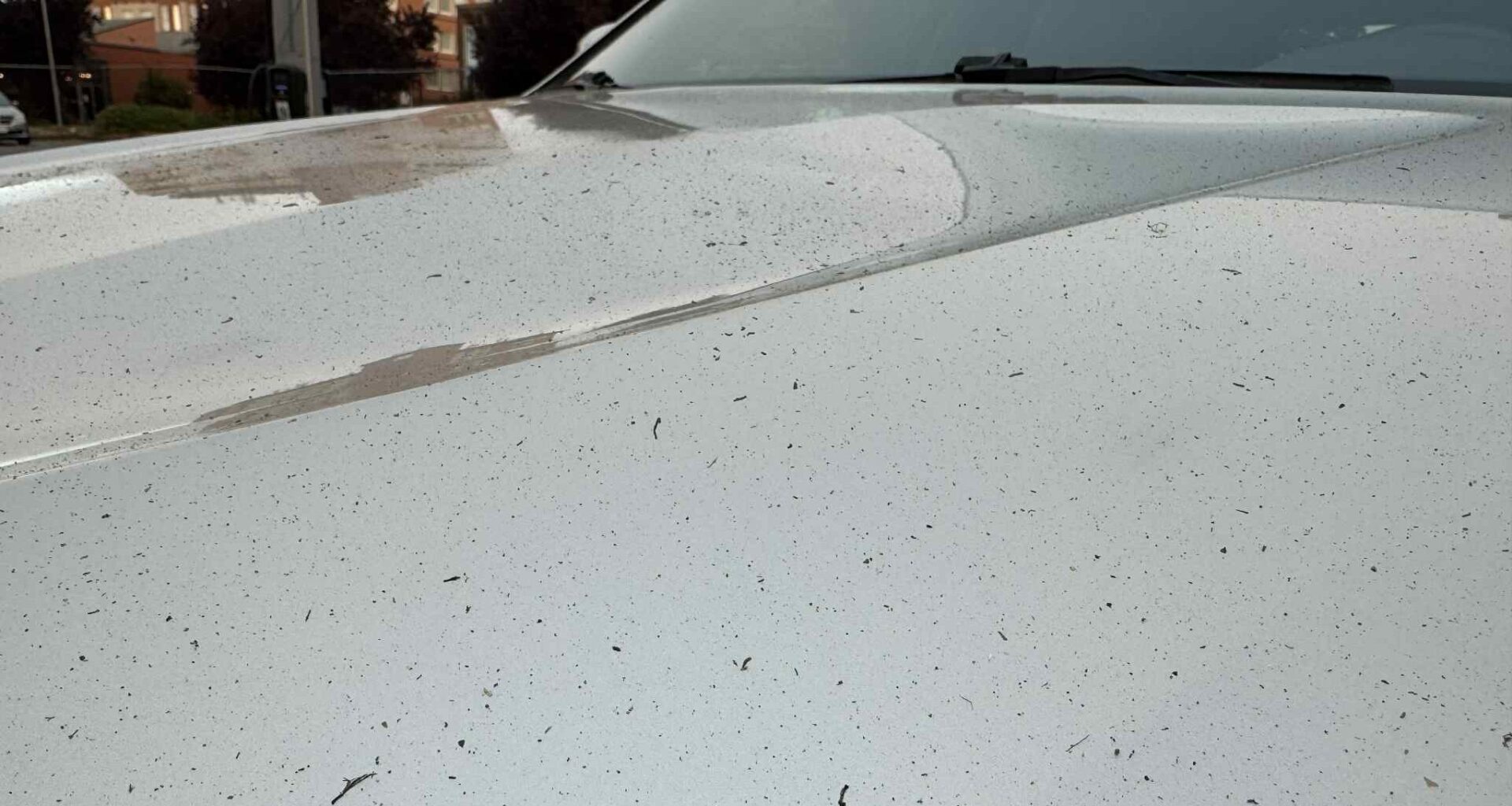
Many residents of Greater Victoria woke up to find a layer of ash covering their homes and cars, and while some speculated it could have come from the nearby Mount St. Helens volcano in Washington, the United States Geological Survey says that’s not the source.
On Tuesday, the USGS issued a notice saying that strong winds were picking up volcanic ash from Mount St. Helens, which last erupted in 1980.
While ash could be found in the local area, the USGS tells CHEK News that it’s highly unlikely the ash would’ve travelled as far as Greater Victoria.
It adds that the ash people are seeing on Vancouver Island on Wednesday is different from volcanic ash, and is instead “classic of forest fire ash.”
“If you crush it between your fingers, it should resemble ash from a campfire or fireplace. And it should dissolve in water,” said Holly Weiss-Racine, a geologist with the USGS Cascades Volcano Observatory, in an email Wednesday.
“Volcanic ash is teeny tiny rock fragments. It is abrasive and doesn’t dissolve in water,” she added.
“Also, Mount St Helens ash is a light gray colour and would be extremely fine like flour or baby powder,” said Weiss-Racine.
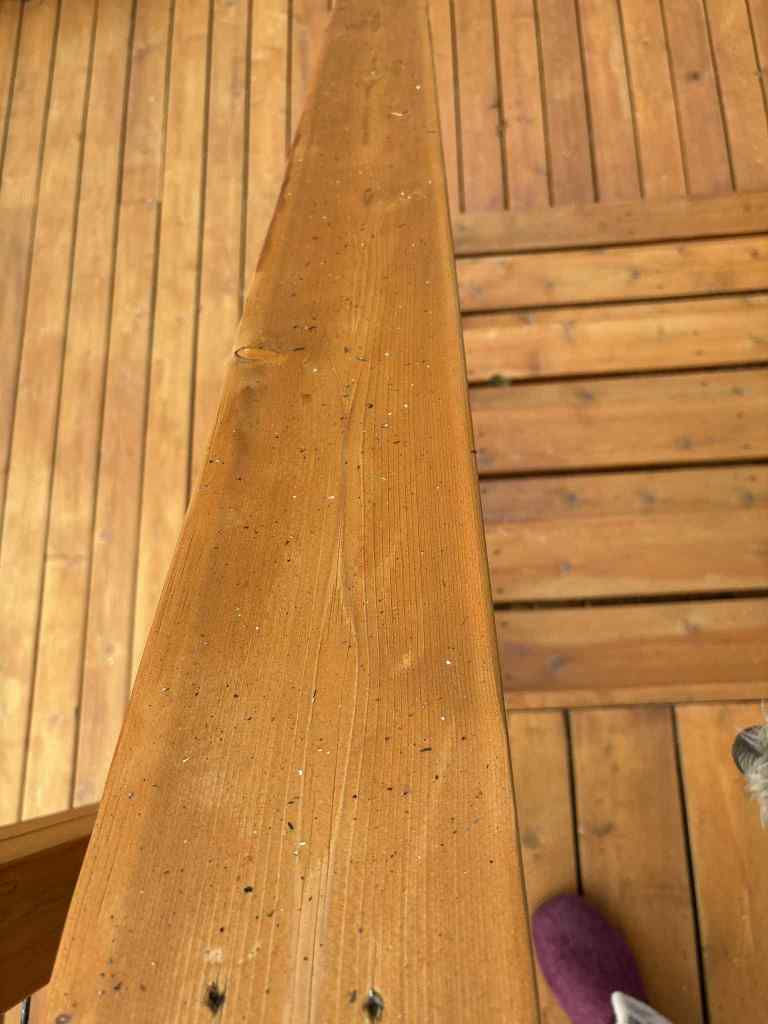 Ash is seen in Greater Victoria on Sept. 17, 2025.
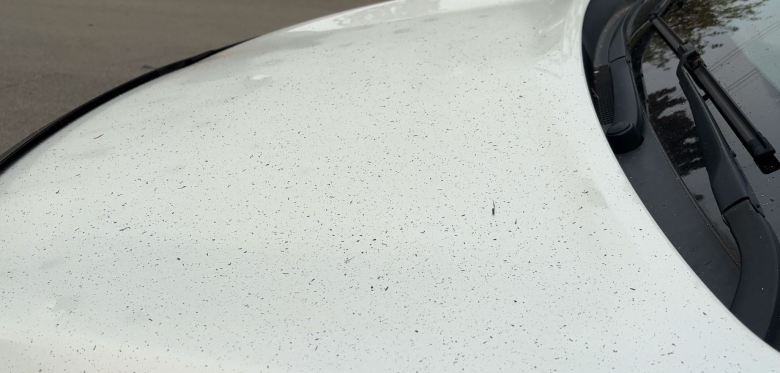 Ash is seen on the hood of a car in Victoria on Sept. 17, 2025.
A result of wildfire?
Canada’s interactive FireSmoke map, shows a layer of smoke coming from the Bear Gulch wildfire in Washington, located west of Seattle in the Olympic National Forest, early Wednesday morning.
The wildfire measures nearly 4,900 hectares as of Sept. 17.
Meanwhile, B.C.’s Air Quality Health Index for its stations in Victoria and the West Shore are reporting a “moderate” health risk in the two areas Wednesday.
The scale runs from one to three (low risk), four to six (moderate risk), seven to 10 (high risk) and very high risk for anything higher than a 10.
On Wednesday morning, the stations in Victoria and the West Shore were ranked at a four, the low end of “moderate risk.”
At a moderate risk, people do not generally need to change their outdoor behaviour, unless they are experiencing symptoms like throat irritation or coughing. If you are experiencing symptoms, you may want to consider rescheduling strenuous outdoor activities, according to the province.
CHEK News has reached out to Environment and Climate Change Canada for further details.
READ MORE: