
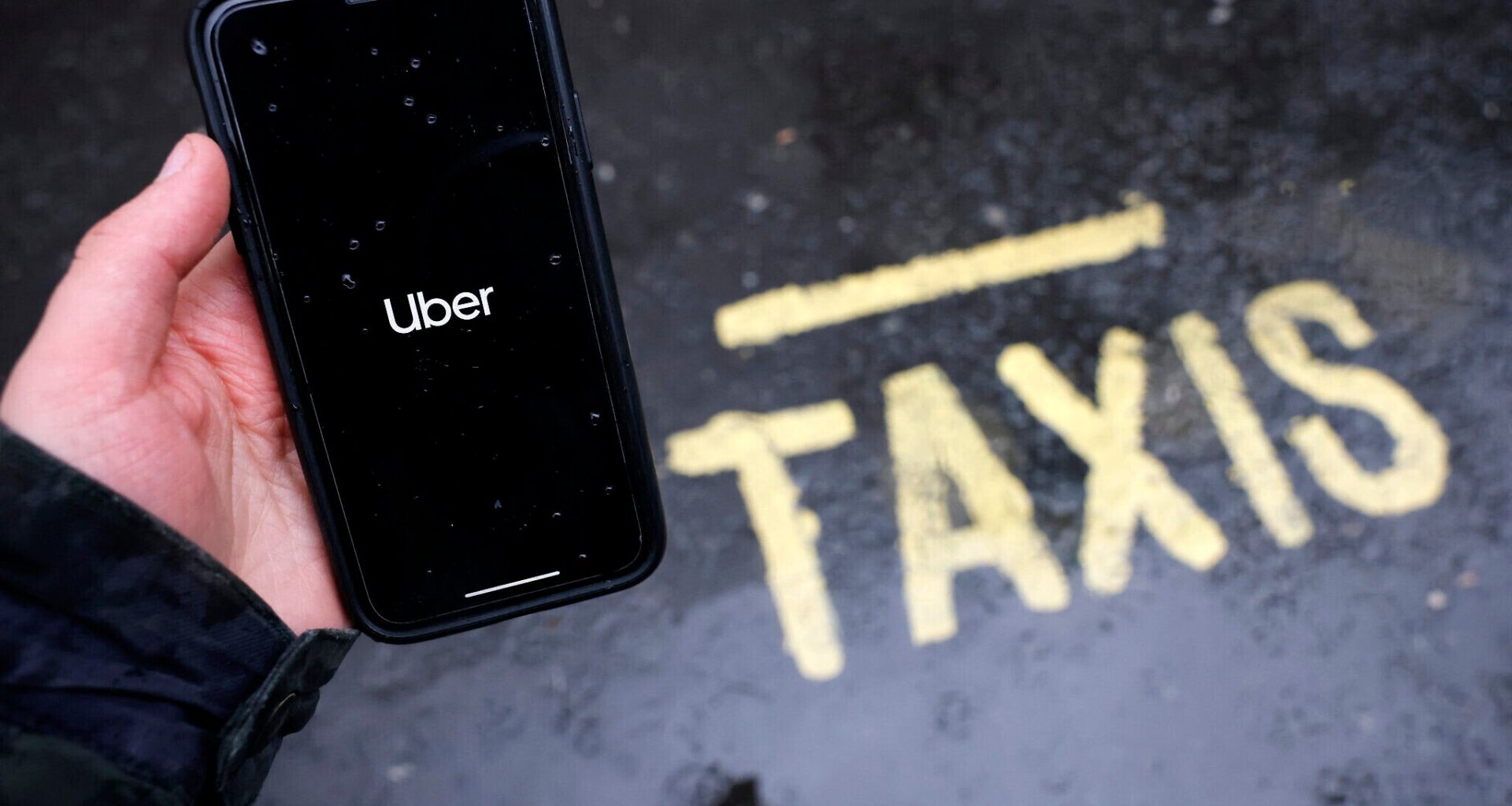
The Transportation Ministry is working to allow international ride-hailing giant Uber to enter the Israeli market as soon as the beginning of 2026, Transportation Minister Miri Regev said.
The decision could open the door to the legalization of thousands of unrecognized black-market drivers, and would severely disrupt the taxi sector, which had successfully lobbied to keep Uber and other ride-hailing services out of Israel in the past.
“The time has come for there to be Uber in the State of Israel,” Regev told the public broadcaster Kan on Tuesday. “We travel abroad, we all see how Israelis use Uber.”
Uber is an app that connects riders with drivers, and also provides services like food delivery, freight, and other on-demand mobility solutions. Unlike with taxis, it allows anyone with a car to pick up riders, often at rates significantly lower than standardized taxi prices.
Regev said she had instructed the director general of her ministry several months ago to try to reach an agreement with taxi industry leaders about Uber’s entry into the market. However, she added, that matter would not be left to taxi union heads.
Get The Times of Israel’s Daily Edition
by email and never miss our top stories
By signing up, you agree to the terms
“I don’t need to reach agreements with them,” Regev said. “The decision is that there will be Uber in the State of Israel. Now the question is how to do it.”

Transportation Minister Miri Regev holds a press conference about disrupted Israeli Railway service, in Tel Aviv on August 21, 2025. (Avshalom Sassoni/Flash90)
“At the end of the day, what interests me is the Israeli citizen,” Regev said. “We need to lower the cost of living.”
Taxi industry leaders said they were preparing to fight the measure tooth and nail.
“I would be underestimating the situation if I said that there is going to be a world war here,” Kfir Ben Zino, head of the National Taxi Drivers Association, said Tuesday.
Currently, Israeli law only allows taxi owners licensed by the Transportation Ministry to receive payment for transporting passengers. As of the end of 2023, there were about 25,000 people with taxi-operating licenses, according to a report by the state comptroller last year.
There has always been a black market of unrecognized drivers in Israel. However, in recent years, a whole industry of pirate companies has emerged, particularly in ultra-Orthodox communities. Many of these companies now advertise publicly, without fear of being apprehended, siphoning off a large share of the ride market, often without paying taxes on revenues.

An advertisement for an illegal ride-hailing company plastered on a Jerusalem bus stop, July 22, 2025 (Zev Stub/Times of Israel)
Thousands of drivers may be earning NIS 10,000 to NIS 15,000 ($3,000 to $4,500) monthly or more without paying taxes, effectively stealing billions of shekels from the state’s coffers, taxi industry leaders have charged.
Tax Authority officials began cracking down on these networks during the summer, but some have been pushing for the Transportation Ministry to legalize them. Allowing Uber to enter the local market might effectively do just that, albeit at the cost of tearing apart the taxi industry.
“If you want to bring order into the field of automobile transportation, then change the law and make it equal for taxi drivers who are currently required to comply with a long series of laws and regulations, including extensive and expensive training,” demanded Zohar Golan, chairman of the Taxi Drivers’ Association in the independent forum of the Histadrut.
The legal taxi industry provides approximately 72 million legal rides a year, and brought in tax revenue of NIS 6.5 billion ($1.9 billion) in 2022, according to the state comptroller’s report.
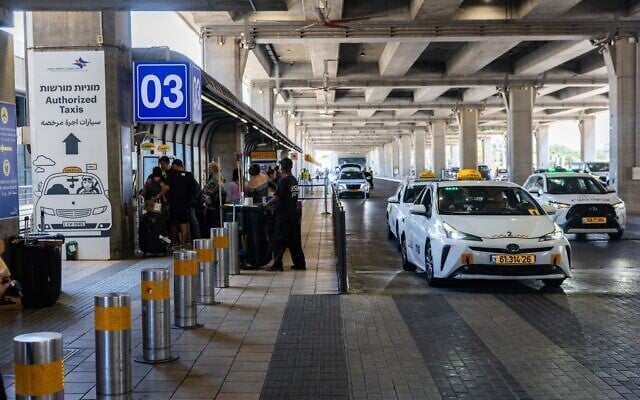
Taxis waiting at Ben Gurion International Airport. July 21, 2025 (Nati Shohat/FLASH90)
Uber, which operates in some 15,000 cities worldwide, was allowed to open in Israel in 2014 as a platform for taxi drivers only. However, it was overshadowed by local taxi-hailing services like Gett and Yango, and closed here in 2023. The technology platform has encountered resistance in many markets from taxi drivers who claim it undermines their livelihoods.
Many in Israel have been frustrated by the Transportation Ministry’s resistance toward the platform, and the ministry is now seen as being more open to regulating new technologies even at the risk of disrupting existing sectors.
In recent months, the ministry has also been in contact with officials from American car manufacturer Tesla about potentially allowing its autonomous driving mode to be used in Israel, according to media reports.
Is The Times of Israel important to you?
If so, we have a request.
Every day, even during war, our journalists keep you abreast of the most important developments that merit your attention. Millions of people rely on ToI for fast, fair and free coverage of Israel and the Jewish world.
We care about Israel – and we know you do too. So today, we have an ask: show your appreciation for our work by joining The Times of Israel Community, an exclusive group for readers like you who appreciate and financially support our work.
Already a member? Sign in to stop seeing this
You appreciate our journalism

You clearly find our careful reporting valuable, in a time when facts are often distorted and news coverage often lacks context.
Your support is essential to continue our work. We want to continue delivering the professional journalism you value, even as the demands on our newsroom have grown dramatically since October 7.
So today, please consider joining our reader support group, The Times of Israel Community. For as little as $6 a month you’ll become our partners while enjoying The Times of Israel AD-FREE, as well as accessing exclusive content available only to Times of Israel Community members.
Thank you,
David Horovitz, Founding Editor of The Times of Israel