
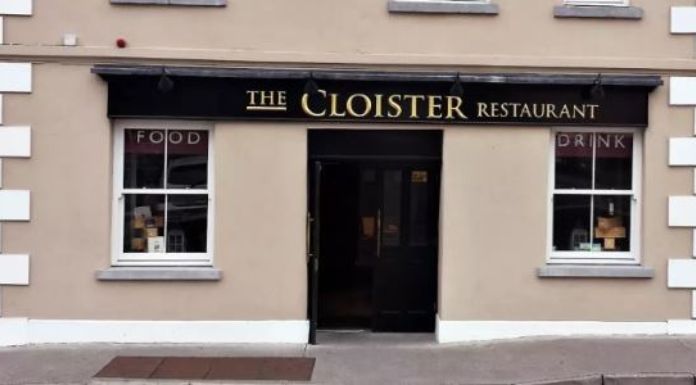
Almost €7 million in Government funding has been announced for the redevelopment of an iconic Ennis building.
Clare County Council has been awarded the funds for the renovation of the Cloister at 49 Abbey Street which is to be an arts and heritage hub consisting of artist studios, classrooms, conference space and exhibition space.
The funding comes through the THRIVE initiative which makes up to €7 million available to local authorities for the refurbishment and adaptation of publicly-owned heritage buildings in town centres.
The total amount provided to Clare County Council for the Cloister project comes to €6,997,047.
Tulla Fianna Fáil Minister of State Timmy Dooley has been telling Clare FM’s Seán Lyons the facility will breathe new life into Ennis and will be a “pivotal element” of the town’s redevelopment.
You can listen to the full interview here
Full announcement:
Minister for Housing, Local Government and Heritage, James Browne has announced that €6,997,047 in funding has been awarded to Clare County Council for the sustainable adaptive reuse of The Cloister through THRIVE – the Town Centre First Heritage Revival Scheme.
Co-funded by the Government of Ireland and the European Union, THRIVE empowers local authorities to reimagine and adapt heritage buildings to create useful, vibrant and sustainable cultural and community hubs. THRIVE isn’t just restoring buildings, it’s nurturing a new design ethos in Irish town regeneration, combining Europe’s green vision with local energy and ambition.
The Cloister Project in Ennis, Co Clare is set to transform a vacant heritage building in the town centre into a vibrant multi-use community space known as “Teach an Phobail.” The project will provide six artist studios, two classrooms, conference, exhibition, and heritage spaces, while retaining the existing café and kitchen, creating a dynamic hub for culture, learning, and community engagement supporting the values of the New European Bauhaus.
A protected structure, the Cloister is a detached, three-storey former house built around 1650. The building adjoins the historic Friary, the site where in the 17th century the Kingdom of Thomond became County Clare. Clare County Council describe this regeneration which will reopen five historic blocked-up openings between the buildings as, “Back to the Future – Located where Ennis was born in the 17th Century”.
This project reflects a citizen-led vision for regeneration, reimagining the Cloister as a welcoming and inclusive space that places heritage, creativity, and community at the heart of Clare’s cultural and civic life.
THRIVE demonstrates how strategic investment can ignite local regeneration, bringing design, innovation and community vision together under the New European Bauhaus approach and Town Centre First policy.
A number of projects have been awarded funding through this competitive funding call, local authorities demonstrated how citizen and community engagement determined the most beneficial end use for these buildings. Other successfully funded projects include the transformation of disused libraries, barracks, halls and banks into multi-functional community hubs, museums and event spaces, some of which even have roof gardens for the public to enjoy.
Welcoming the funding awards, Minister Browne said:
“This funding is about bringing our heritage buildings into the 21st century – giving local authorities the support they need to preserve and protect these important assets, and ensure their sustainable re-use for future generations. These kinds of regeneration projects add to the vibrancy of our towns and cities – revitalising our urban spaces and making them better places to live, work and visit.”
David Kelly, Director of the Southern Regional Assembly, said:
“The response to the THRIVE call has been exceptional, showing the appetite across our regions to tackle vacancy and bring heritage buildings back to life. THRIVE represents a turning point in how we approach regeneration in our regions. It brings together European funding, national funding and local expertise to create a blueprint for sustainable heritage restoration. This approach will not only transform individual towns but will also shape how we think about regeneration on a national scale.”
Cathaoirleach of the Southern Regional Assembly, Cllr Andrew McGuinness, said:
“Heritage buildings are part of the identity of our towns, holding memories and stories that matter to local people. This significant investment in the Southern Region and the Eastern and Midland Region puts communities firmly at the heart of town centre regeneration. It gives local people a say in how heritage buildings are repurposed, ensuring they meet the needs of modern life while celebrating their historic value.”