
Your support helps us to tell the story
From reproductive rights to climate change to Big Tech, The Independent is on the ground when the story is developing. Whether it’s investigating the financials of Elon Musk’s pro-Trump PAC or producing our latest documentary, ‘The A Word’, which shines a light on the American women fighting for reproductive rights, we know how important it is to parse out the facts from the messaging.
At such a critical moment in US history, we need reporters on the ground. Your donation allows us to keep sending journalists to speak to both sides of the story.
The Independent is trusted by Americans across the entire political spectrum. And unlike many other quality news outlets, we choose not to lock Americans out of our reporting and analysis with paywalls. We believe quality journalism should be available to everyone, paid for by those who can afford it.
Your support makes all the difference.Read more
Australia has pledged to reduce its greenhouse gas emissions by 62-70 per cent over the next decade, a goal that falls short of expert recommendations but still promises one of the steepest transitions in the country’s history.
The announcement comes ahead of a UN deadline for governments to submit their updated climate plans, known as Nationally Determined Contributions, before the Cop30 summit in Brazil this November.
Australia is one of the world’s highest emitters per capita, largely due to its powerful resources industry. The new target falls below the 65-75 per cent range modelled by the treasury department and proposed by the independent Climate Change Authority, which advises the government on climate policy.
“The target must be two things: ambitious and achievable. A target over 70 per cent is not achievable, that advice is clear,” climate change and energy minister Chris Bowen told a press conference on Thursday. “We’ve gone for the maximum level of ambition that is achievable.”
Prime minister Anthony Albanese also announced A$5 billion (£2.6bn) in funding to help industrial facilities decarbonise, along with A$2 billion for the Clean Energy Finance Corporation to continue supporting renewable projects and drive down electricity prices.
open image in gallery
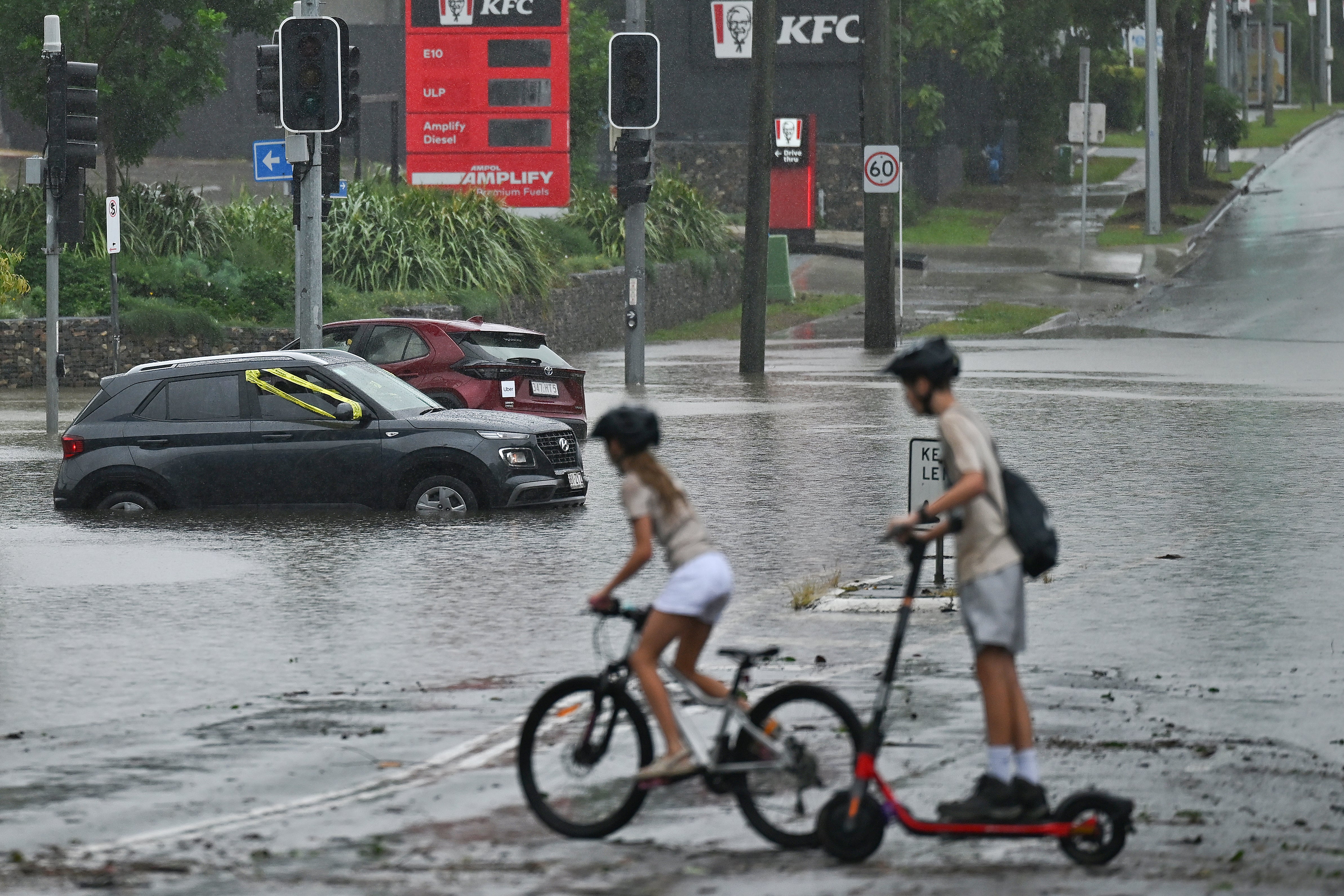
A flooded road in the Brisbane suburb of Wilston on 10 March 2025 (Getty)
“We are not the biggest polluter or the biggest economy but our commitment to action on climate change matters,” Mr Albanese, whose government is trying to host the UN climate summit in 2026, said.
“It matters to our neighbours, it matters for our economy, and it matters for the country that we pass on to our children.”
Earlier this week, Australia’s first national climate risk assessment warned that nearly 1.5 million people living along the coast could be at risk from rising sea levels by 2050, with heat-related deaths rising by 440 per cent in Sydney in the worst-case scenario.
The government’s pledge is facing criticism from environmental groups, which want Australia to adopt the upper end of the Climate Change Authority’s recommended range, warning that anything less will leave communities exposed to worsening heat, drought and flooding.
Among major economies, the UK has declared the most ambitious emissions target so far – an effective 78 per cent reduction from 2005 levels.
Additional reporting by agencies.