
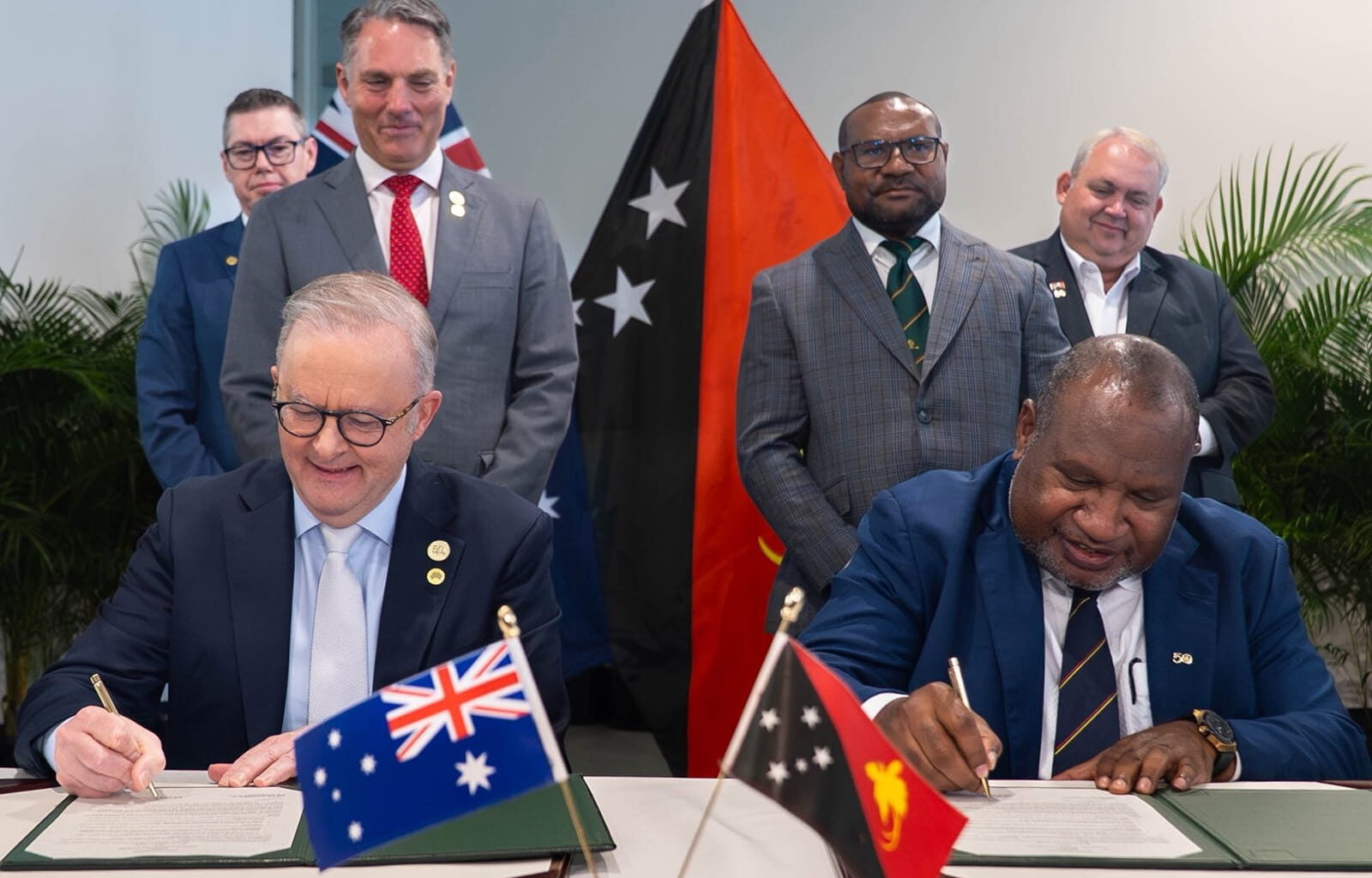
Papua New Guinea and Australia didn’t sign a long anticipated Mutual Defence Treaty today.
Instead, the prime ministers from both countries issued a last-minute communique, stating that the text had been agreed and the Treaty would be signed, “following Cabinet processes in both countries”.
Speaking at a press conference in Port Moresby, Australia’s Anthony Albanese took a glass half-full approach, saying, “This is all upside for Australia and upside for Papua New Guinea”.
Well then, we must be reading it upside-down.
This is as much a failure for Marape as it is for Albanese.
Aside from attending PNG’s 50th anniversary of independence celebrations, the key objective for Albanese on this trip was locking in what would have been a historic elevation in defence relations between the two countries by signing the deal with PNG’s Prime Minister James Marape.
The Treaty would have been PNG’s first such agreement with another country, particularly provisions around mutual defence, force integration, recruitment of PNG nationals into the Australian Defence Force, and binding exclusivity clauses. It would have been a marked departure from PNG’s non-aligned foreign policy, captured in the phrase “friends to all”.
The stalling on the PNG treaty follows a similar situation with Vanuatu in recent days, where Australia had also expected to sign off on a final deal when Albanese visited the country ahead of the Pacific Islands Forum.
While the focus is now on Albanese’s inability to lock in two critical regional security agreements in as many weeks, it’s important to note that PNG proposed the defence treaty in the first place.
This is as much a failure for Marape as it is for Albanese.
Marape has invested years of political capital in the relationship with Australia. He wants to be the prime minister that ushers in a new age of deep strategic cooperation between PNG and its closest neighbour.
And he wanted to leave his personal mark on PNG’s 50th anniversary of independence, which has been celebrated this week.
But the Treaty clearly has its detractors in the PNG system, and despite Marape’s strong domestic political position, he still has a coalition government to manage.
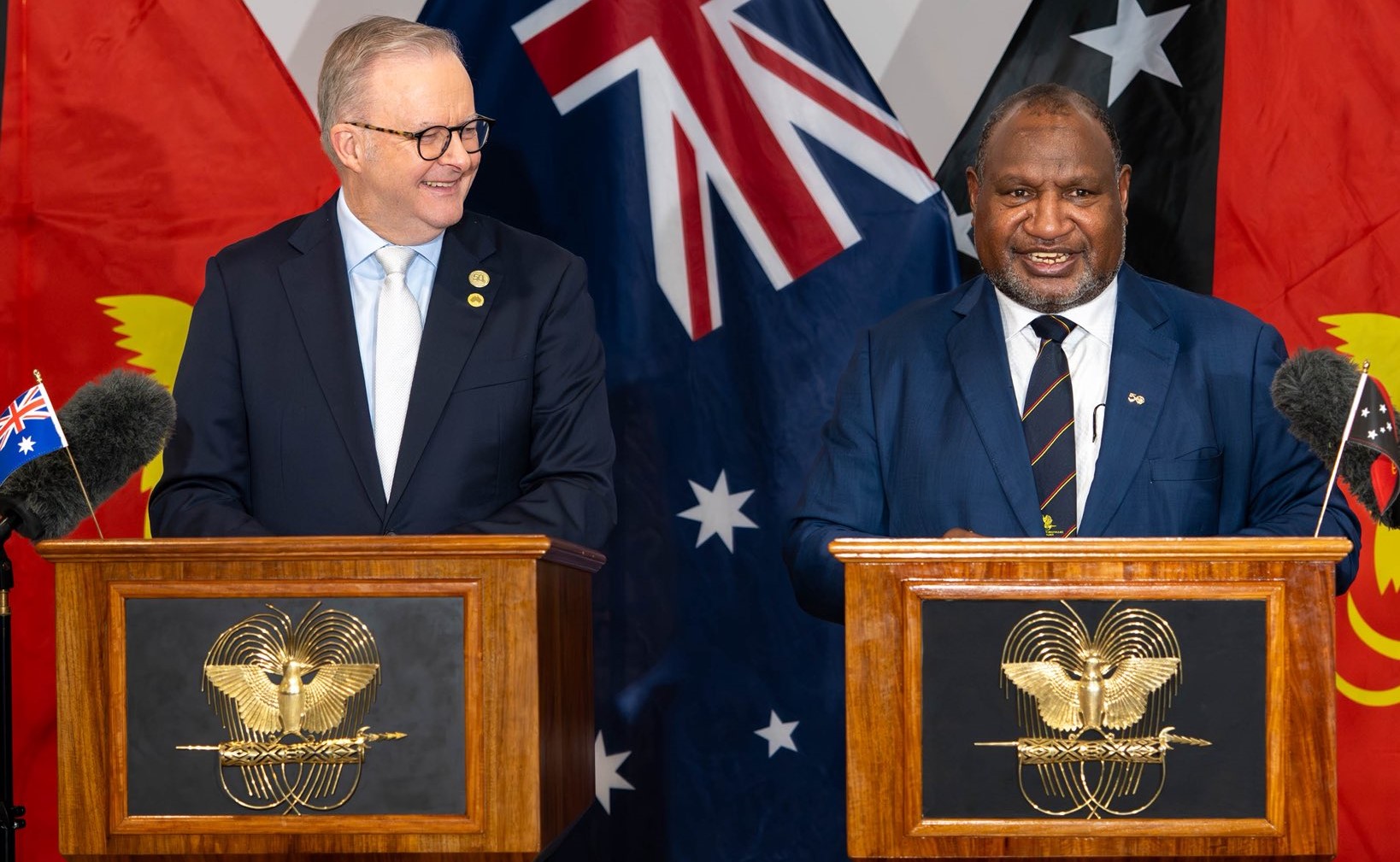
Anthony Albanese and James Marape at a press conference in Port Moresby this morning (@AlboMP/X)
Derailing the Treaty at the last possible moment was designed to inflict maximum damage on Marape’s domestic credibility. And it doesn’t look great for Albanese either. But this isn’t the first time the two countries have reached for a treaty, and it won’t be the last. Both countries have strong incentives to continue to pursue a significant elevation of security ties.
While others – China most obviously – with their own strategic equities are motivated to stymie Australia’s efforts to strengthen the regional security architecture.
The diplomatic knife-fight in the Pacific continues. We’re at the pointy end of geopolitics now. The low-hanging fruit of increased aid spending, more sports diplomacy, and more labour mobility, has been harvested.
The thing that Australia needs now from Pacific countries in order to build strategic trust is also the thing that’s hardest for them to give: alignment.
Marape expected to sign the deal as much as Albanese did. And Vanuatu Prime Minister Jotham Napat stood on top of a volcano alongside senior Australian ministers celebrating the new security deal he was about to sign with Albanese, but never did.
Issues around sovereignty and alignment are intensely contested in Pacific countries. Clearly there is more political discussion that needs to take place within Pacific countries themselves before they’re able, or willing, to commit to a new tier of security ties with Australia.
These are domestic issues for PNG, Vanuatu, and any other Pacific countries considering elevating their security partnerships. It’s not something Australia can control. And, perhaps tellingly, not something that individual Pacific leaders can control either.