
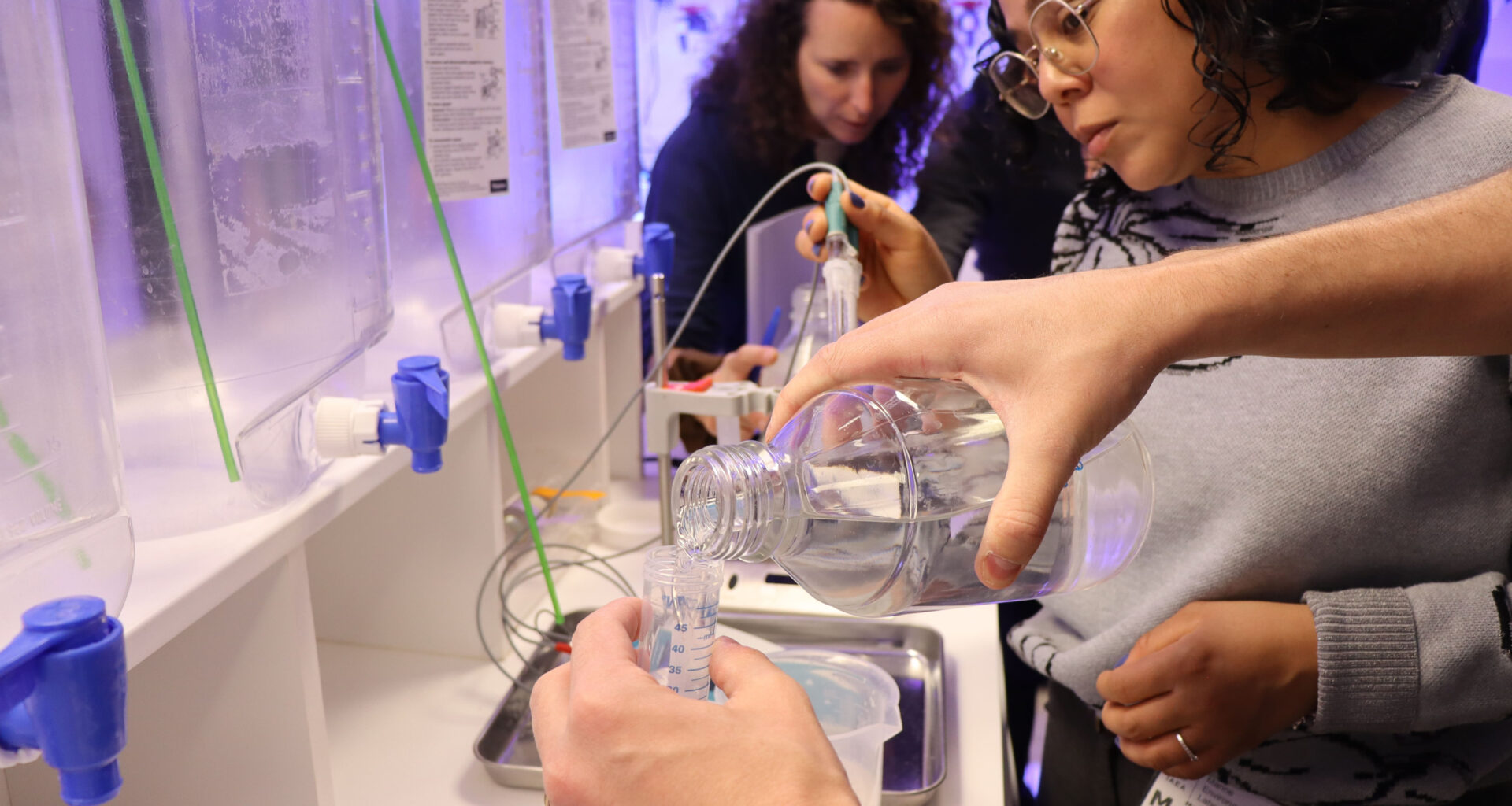
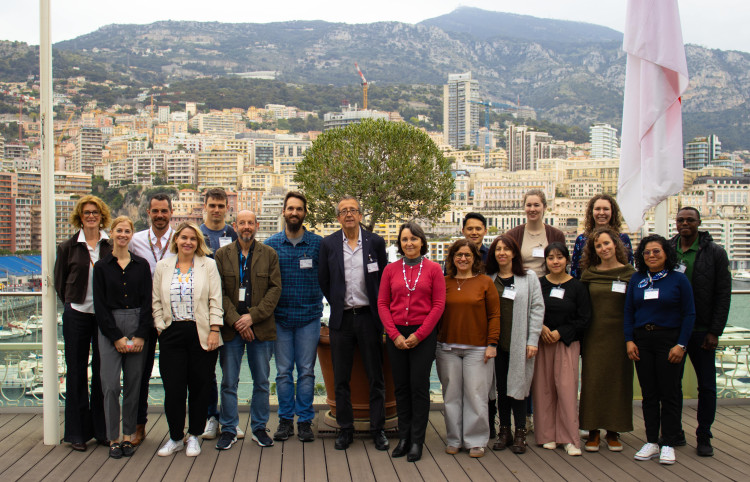
Course participants pictured at the IAEA Marine Environment Laboratories. (G. Hinterleitner/IAEA)
Participants learned how to measure and calculate seawater chemistry, various approaches to produce alkalinity in seawater and designing laboratory experiments to test the impacts of these alkaline substances on species of interest. In addition to causing changes to seawater chemistry that may affect organisms’ growth or physiology, some alkaline materials also release toxic metals when dissolved —a critical aspect to account for in future experiments.
Students applied this knowledge in the laboratory by conducting an experiment testing the impacts of increased alkalinity on sea urchin larvae. They completed the course equipped to design and carry out similar OAE research in their home countries on species important to their regions.
“Raising awareness and building technical expertise to assess ecological impacts of OAE is crucial and urgent, to ensure that future development and deployment of these techniques are informed by science,” said Olivier Wenden, Vice Chairman and CEO of the Prince Albert II of Monaco Foundation. “Without proper evaluation of the associated risks for marine ecosystems and associated services, vulnerable coastal communities may face adverse impacts on marine biodiversity and marine-dependent livelihoods.”
Jurleys Vellojin Furnieles from Chile shared, “The course allowed me to deepen my understanding of mitigation strategies such as ocean alkalinity enhancement, including their scientific basis and potential effects on marine life. This experience provided me with both theoretical and practical tools, including a detailed experimental protocol that I plan to adapt for native species in the fjords and channels of southern Chile. In doing so, I aim to strengthen my future work in climate change.”
“Promoting responsible and transparent research on the impacts of OAE and other ocean-based solutions proposed to counter climate change and ocean acidification is central to the OA-ICC’s core mission to support countries in minimizing and addressing ocean acidification,” said Lina Hansson, Associate Project Officer of the OA-ICC.
The OA-ICC will continue to empower countries to evaluate the impacts of OAE on key ecosystems and commercially important seafood species and foster collaboration across this emerging research community.