
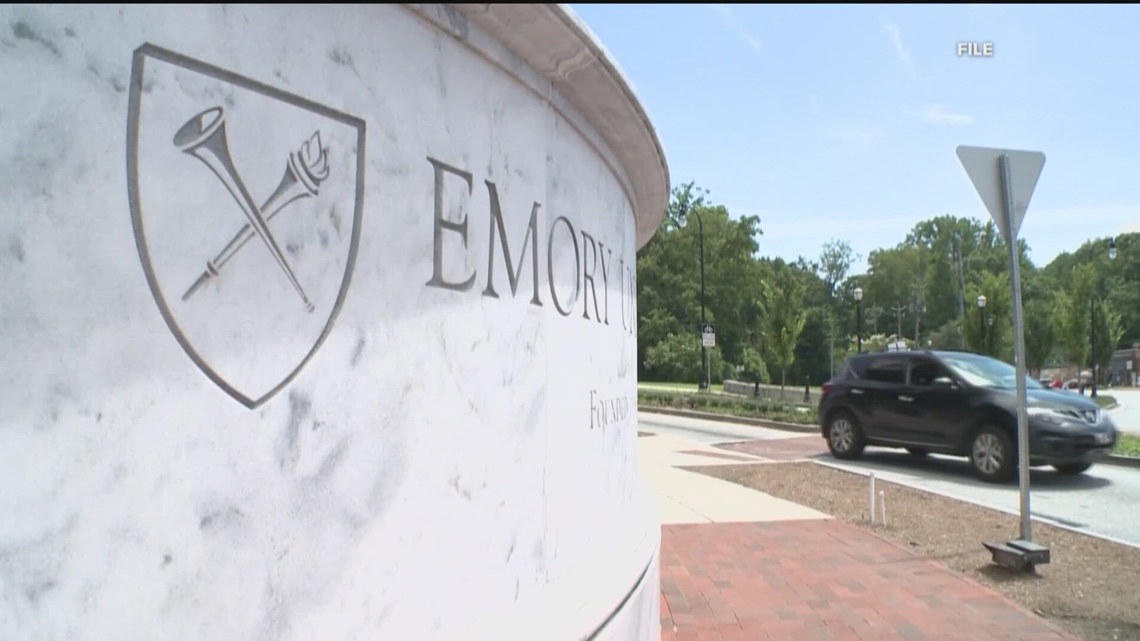
Emory described the individual in an earlier statement as a “non-clinical faculty member who does not treat patients.”
ATLANTA — Emory University has terminated a faculty member following a social media post made in the wake of the assassination of conservative activist Charlie Kirk.
The dean of Emory’s School of Medicine, Sandra L. Wong, shared news of the termination in a message to the school community.
The terminated faculty member was not identified. It’s also not clear what was contained in the post or where it was shared.
Wong’s message Thursday said they were “aware of a recent social media post by a School of Medicine non-clinical faculty member that caused concern within our community.”
“That individual has been terminated,” Wong’s message said.
Emory earlier this week said in a statement it was “looking into” the faculty member after the post raised concerns.
After Kirk’s assassination last week, Emory Interim President Justice Leah Ward Sears said she was “deeply saddened by the tragic and senseless killing” of the 31-year-old.
“In moments like these, all Americans must stand together and reject violence everywhere, always. We must also remain steadfast in ensuring that our college campuses are safe, welcoming spaces, so that even the most challenging and important debates can take place with respect and dignity,” Sears said.
The termination at Emory University follows on several other similar incidents both around Atlanta and the country. Delta Air Lines has suspended employees over social media posts about Kirk, Children’s Healthcare of Atlanta fired an employee for “inappropriate comments” about Kirk and the Cobb County School District on Monday placed an unspecified number of teachers on administrative leave over posts that allegedly celebrated Kirk’s death.
An attorney spoke to 11Alive’s Marissa Sarbak last weekend and explained that private employees “really have no rights” when it comes to speech and employment discipline.
Public employees, meanwhile, are subjected to what the attorney, Larry Pankey, described as a “balancing test” where some First Amendment rights are protected but “if that right interferes with the government’s ability to do its job, it will be outweighed possibly.”