
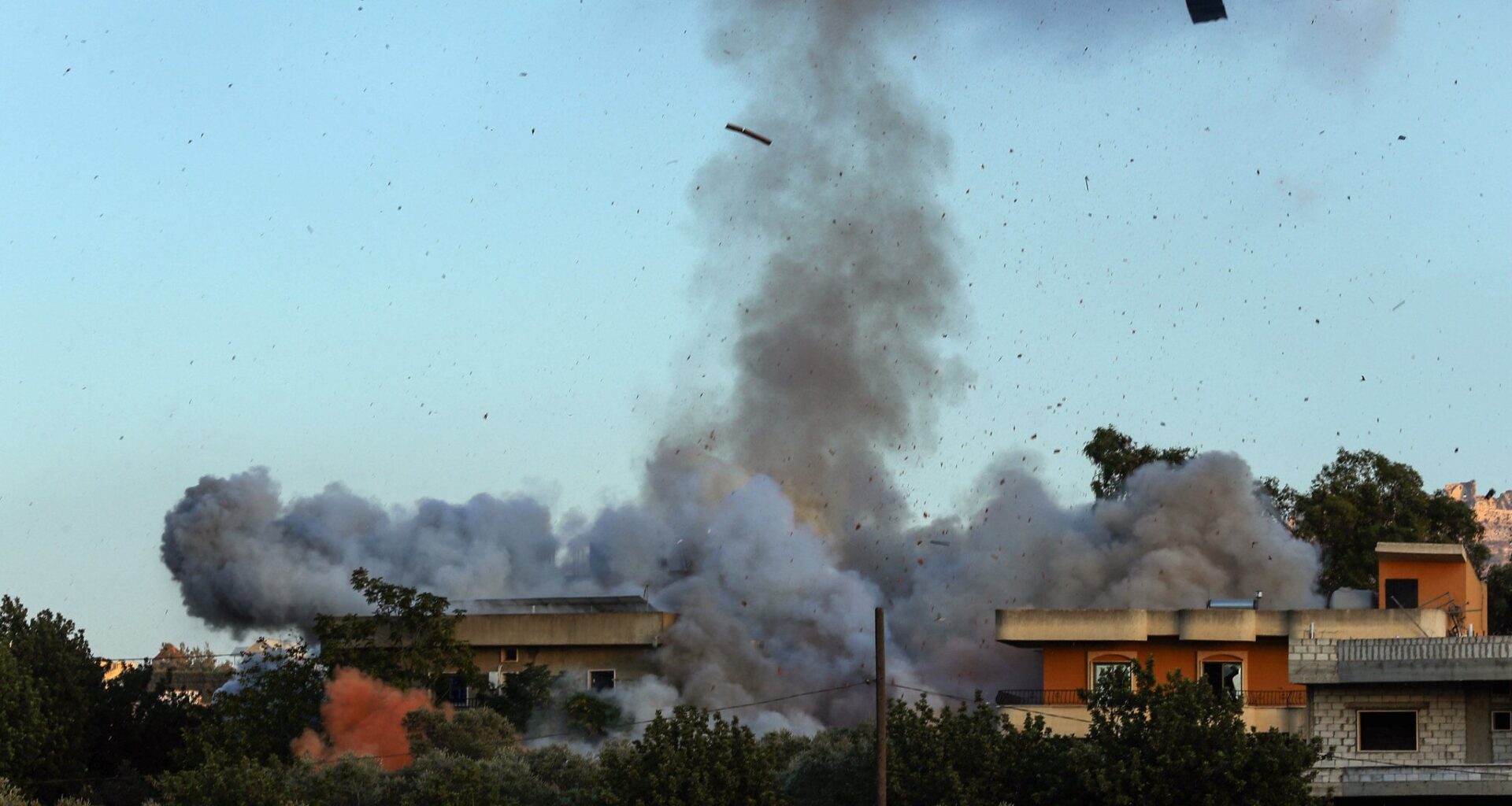
Israel said on Thursday it had launched a fresh wave of airstrikes against Hezbollah targets in southern Lebanon to prevent the terror group from rebuilding in the area.
Before the strikes, the IDF issued evacuation warnings for four sites in southern Lebanon, before later calling to clear the vicinity surrounding two additional buildings.
In the evacuation order, the IDF’s Arabic-language spokesman Col. Avichay Adraee said that the strikes had been ordered in response to Hezbollah’s “prohibited attempts to rebuild its activities in the area.”
He published maps of the targeted buildings, calling residents and those close by to evacuate “immediately and distance yourselves from them by no less than 500 meters.”
The strikes were carried out in two main waves following evacuation warnings to residents of Mays al-Jabal, Kfar Tebnit, Dibbin, Chehabiyeh, and Burj Qalaouiyah.
Get The Times of Israel’s Daily Edition
by email and never miss our top stories
By signing up, you agree to the terms
Lebanon’s state-run National News Agency said roads leading out of Kfar Tebnit were full of people who had left their homes ahead of the attacks.
It said that the strikes had caused material damage to the targeted areas.
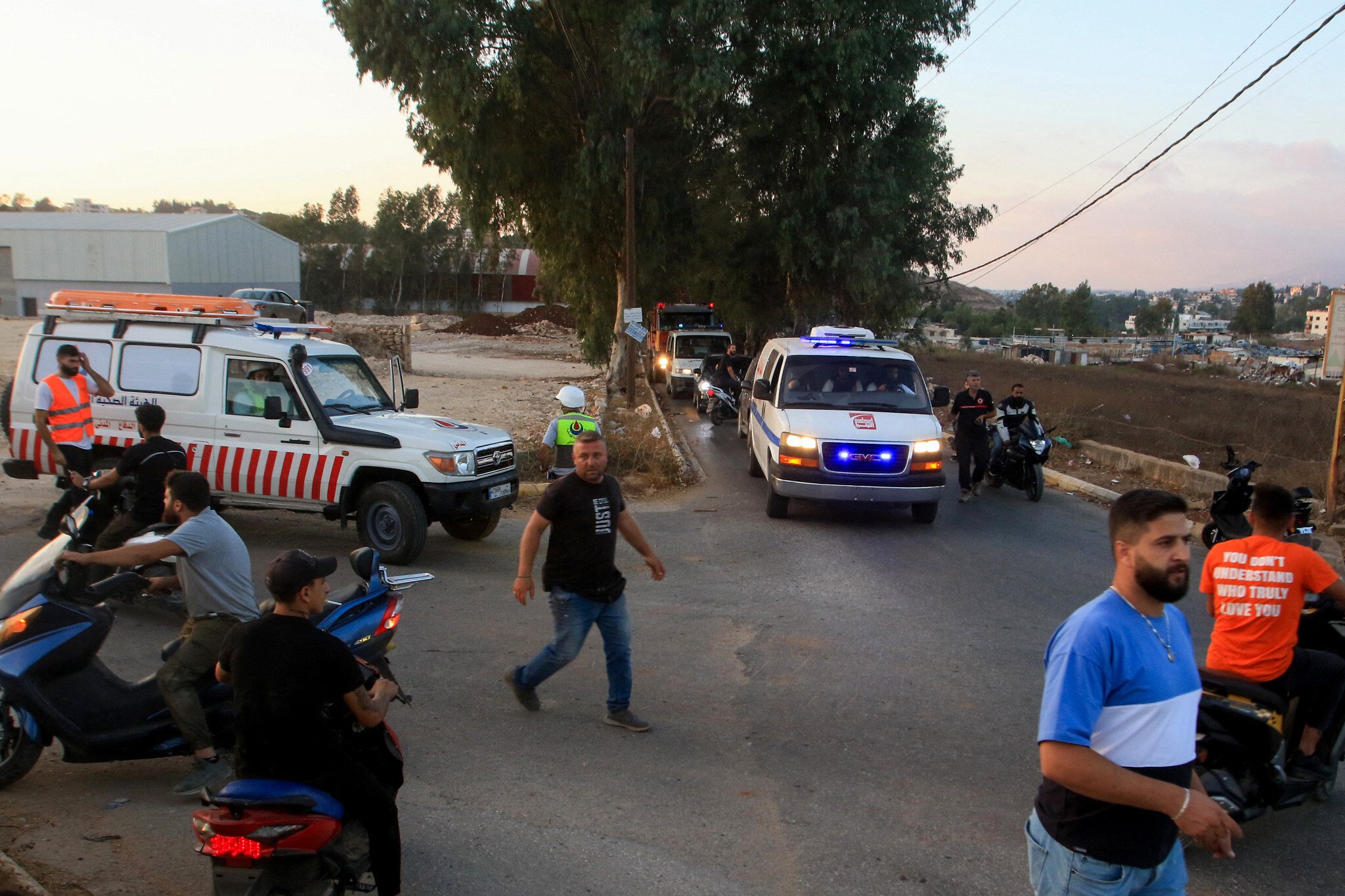
Emergency medical and firefighting services deploy following Israeli strikes in the southern Lebanese village of Kfar Tebnit on September 18, 2025.(Mahmoud Zayyat/AFP)
The IDF said later on Thursday that the strikes had targeted several weapon depots belonging to Hezbollah’s elite Radwan Force.
The Radwan force was previously tasked with invading Israel in a future war, and the IDF says the elite unit had advanced the terror group’s “Conquer the Galilee” plan for years, until the 2023-2024 war that saw most of Hezbollah’s leadership eliminated.
“The Hezbollah terror organization continues its attempts to restore terror infrastructure in southern Lebanon, especially the Radwan unit, with the aim of harming the State of Israel,” the military said in a statement.
The IDF said Hezbollah’s efforts to restore the Radwan Force were a violation of the ceasefire, and added that troops “have been operating over the past two years against the unit’s attempts to recover and rebuild its strength.”
Lebanon’s Prime Minister Nawaf Salam condemned the strikes in comments to Lebanon’s cabinet, and questioned Israel’s commitment to halting hostilities in the region, given the frequent strikes against what Israel says are Hezbollah targets violating the ceasefire in the country’s south.
“The Lebanese government, firmly committed to the path of halting hostilities, remains engaged in the mechanism meetings,” he said, referring to the meetings held by the US, Lebanon, and Israel that deal with upholding the ceasefire that has been in place between Beirut and Jerusalem since last November.
“But the legitimate question today is: Where is Israel’s commitment to these frameworks?” inquired Salam. “How can it persist in intimidation and attacks when these meetings are supposed to ensure full implementation of Resolution 1701 and the cessation of hostilities?”
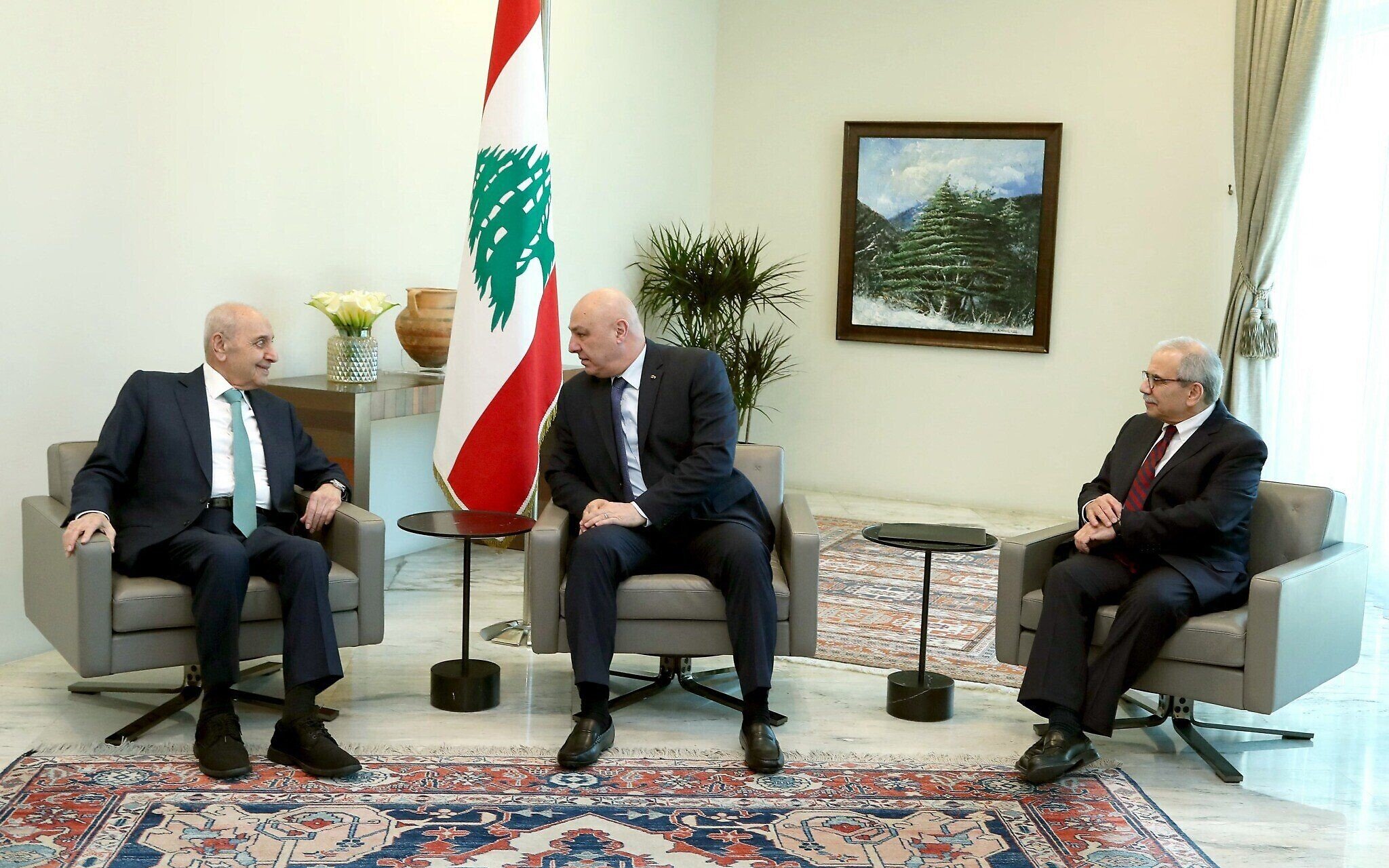
This handout picture released by the Lebanese presidency shows President Joseph Aoun (C) meeting with Lebanese Parliament Speaker Nabih Berri (L) and Prime Minister Nawaf Salam at the presidential palace in Baabda, east of Beirut on February 8, 2025. (Lebanese Presidency/AFP)
Last month, Salam and Lebanese President Joseph Aoun approved the objectives of a US proposal to disarm Hezbollah by the end of the year.
The Iran-backed terror group has vowed to resist such efforts.
Following Thursday’s strikes, Hezbollah lawmaker Hassan Fadlallah said Lebanon and its people needed no further proof that there were no international or diplomatic guarantees to curb what he called “Israel’s terrorism.”
He did not address Israel’s accusation that Hezbollah was rebuilding its forces.
Under a November 27, 2024, ceasefire between Israel and Hezbollah, weapons in south Lebanon were to be held only by the state, and the IDF was permitted to act against imminent threats by the terror group.
Israel has since carried out hundreds of attacks on Hezbollah personnel or assets, the vast majority of them in southern Lebanon, though it has also taken action deeper inside the country, including in the Beqaa Valley, a stronghold of the Iran-backed group.
Since the beginning of the ceasefire, the IDF says it has carried out over 500 airstrikes against Hezbollah targets in Lebanon, killing over 300 operatives and destroying dozens of sites belonging to the terror group, saying they violated the terms of the truce.
On Thursday, the Lebanese army warned that Israeli strikes — which it said were violations of the ceasefire — were hampering its deployment in the south and could block the implementation of its plan to end Hezbollah’s armed presence south of the Litani River.
The ceasefire agreement came after nearly 14 months of conflict sparked by Hezbollah’s unprovoked launching of near-daily attacks on Israeli border communities starting October 8, 2023 — a day after fellow Iran-backed group Hamas stormed southern Israel, sparking the Gaza war.
The Hezbollah attacks displaced some 60,000 residents of northern Israel. In a bid to secure their return, Israel stepped up operations in Lebanon in September 2024, decimating Hezbollah’s leadership.
Is The Times of Israel important to you?
If so, we have a request.
Every day, even during war, our journalists keep you abreast of the most important developments that merit your attention. Millions of people rely on ToI for fast, fair and free coverage of Israel and the Jewish world.
We care about Israel – and we know you do too. So today, we have an ask: show your appreciation for our work by joining The Times of Israel Community, an exclusive group for readers like you who appreciate and financially support our work.
Already a member? Sign in to stop seeing this
You appreciate our journalism

You clearly find our careful reporting valuable, in a time when facts are often distorted and news coverage often lacks context.
Your support is essential to continue our work. We want to continue delivering the professional journalism you value, even as the demands on our newsroom have grown dramatically since October 7.
So today, please consider joining our reader support group, The Times of Israel Community. For as little as $6 a month you’ll become our partners while enjoying The Times of Israel AD-FREE, as well as accessing exclusive content available only to Times of Israel Community members.
Thank you,
David Horovitz, Founding Editor of The Times of Israel