
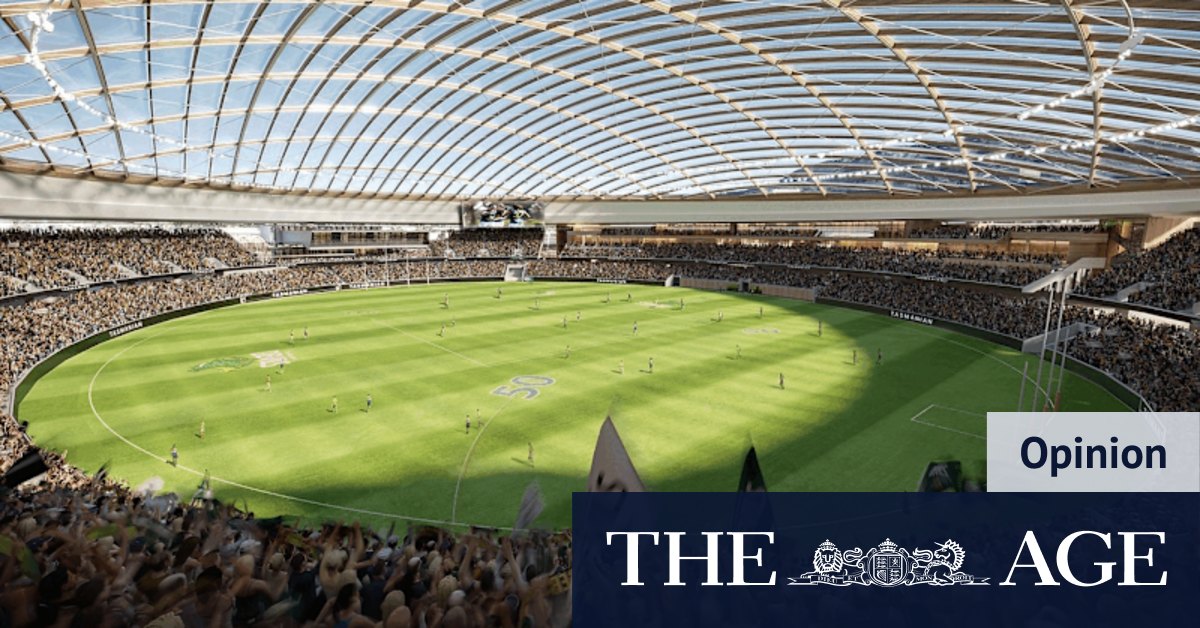
The Tasmanian Planning Commission’s report into the Macquarie Point stadium could restart a showdown between factions that would rip Tasmania apart.
With a focus mainly on cost and location, the report, released on Wednesday, advised against building the stadium, in no uncertain terms.
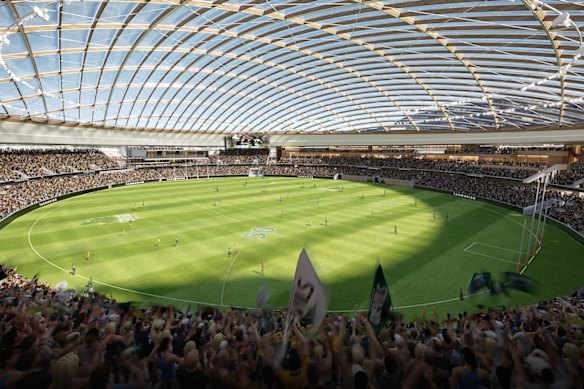
An artist’s impression of the proposed stadium at Macquarie Point in Hobart.
The AFL has made a roofed stadium a condition of entry to the league for the Tasmania Devils, long a point of contention between pro- and anti-stadium factions. Now, this report threatens to reignite the debate; like pulp mill or salmon protests in the past, the rift could cause real harm to social cohesion in the state.
But this is bigger than just construction of a venue.
Rather than taking a binary approach to the stadium that would only lead to a stalemate (and, despite the goodwill towards Tasmania, test the other 18 AFL clubs’ patience), Tasmanians should use this opportunity to see how they can maximise the benefits of the stadium precinct, as well as the economic benefits of the club itself.

Brendon Gale is the CEO of the Tasmania Devils.Credit: Artwork: Stephen Kiprillis
It’s not just dollars and cents, bricks and mortar. The economic and social benefits of having the Devils enter the AFL in 2028 cover a range of areas: job creation, tourism and a boost to brand Tasmania on the national and international stage, not to mention the opportunity for sports innovation and technology.
Devils CEO Brendon Gale described it to me as “a powerful, enduring stimulus”.
“I honestly couldn’t think of a more potent sort of mix of government-type policies that could deliver the sort of economic, financial, social, cultural, [and] psychological uplift than a football club participating in the AFL, the whole economy that sits around that, and also the uplift that gives to the state and to our youth,” he said in an interview for Footynomics: The Business of Sport.