

Your support helps us to tell the story
From reproductive rights to climate change to Big Tech, The Independent is on the ground when the story is developing. Whether it’s investigating the financials of Elon Musk’s pro-Trump PAC or producing our latest documentary, ‘The A Word’, which shines a light on the American women fighting for reproductive rights, we know how important it is to parse out the facts from the messaging.
At such a critical moment in US history, we need reporters on the ground. Your donation allows us to keep sending journalists to speak to both sides of the story.
The Independent is trusted by Americans across the entire political spectrum. And unlike many other quality news outlets, we choose not to lock Americans out of our reporting and analysis with paywalls. We believe quality journalism should be available to everyone, paid for by those who can afford it.
Your support makes all the difference.Read more
England and the rest of the home unions have regained control of their autumn international fixtures with World Rugby unveiling a radical reshaping of the women’s calendar on the back of a record-breaking Rugby World Cup.
The retitled WXV Global Series will launch next year and feature the top 18 teams in the world, with the top 12 competing in a home-and-away touring model in non-World Cup years with fixtures scheduled each September and October at the discretion of each union.
Teams will play between four and six fixtures annually within the September-October Test window, with a maximum of 16 games over a three-year period, though will no longer compete for a trophy. The Global Series replaces the three tiered WXV tournament, which launched in 2023 but has been endured difficulties.
Significantly, touring unions will retain the commercial rights to home fixtures, enabling them to sell directly to broadcasters and sponsors, rather than be beholden to World Rugby.
With sides like the Red Roses and Black Ferns commanding increasing global profile and looking to capitalise on a World Cup that has brought record crowds and viewing figures, extra home fixtures will be seen as a vital opportunity to continue to grow women’s rugby.
Beneath the top 12 (Australia, Canada, England, France, Italy, Ireland, Japan, New Zealand, Scotland, South Africa, USA, Wales) will sit a further group of six teams to compete in a centralised tournament that will be funded by World Rugby.
The sextet of Brazil, Fiji, Hong Kong, Netherlands, Samoa and Spain will play their fixtures in a single location in 2026, with a subsequent event held in 2028.
The autumn of 2027, which will feature the first British and Irish Lions women’s tour to New Zealand, may allow opportunities for crossover between the two tiers.
open image in gallery
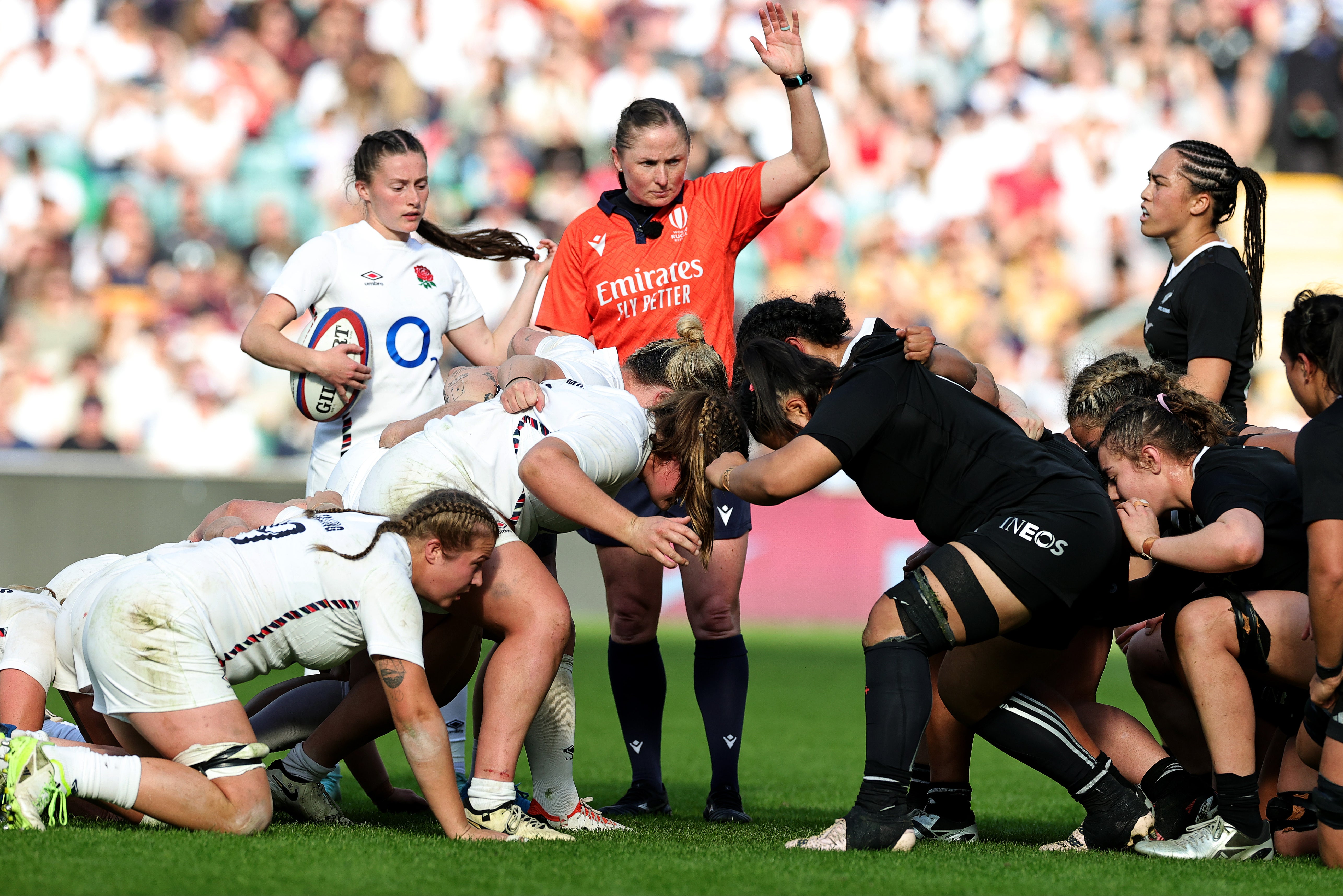
England and New Zealand could clash more regularly in the future (Getty Images)
The Global Series takes the place of WXV after just two editions. The tournament launched with 18 teams split into three tiers, but launched in the shadow of the men’s World Cup and struggled to cut through despite some standout results, including Ireland beating New Zealand.
It had to deal with problems, though, with no significant television deal sourced, crowds generally small and hosts finding it difficult to commit with uncertainty over which tier they would be in.
“The first iteration of WXV provided additional competitive games that were so critical in the sprint from 2022 to the 2025 World Cup for participating unions,” Sally Horrox, chief of women’s rugby at World Rugby, explained. “It has raised performance standards, and we have seen that across the tournament.
“But the women’s game is growing at such a pace and we agreed to look and refresh the model. This will better support the commercial development and audience growth side of the equation.”
World Rugby will invest an additional £9m to their existing women’s rugby investing in the competition over the three-year period in participation fees and for the operation of the two centralised tournaments.