
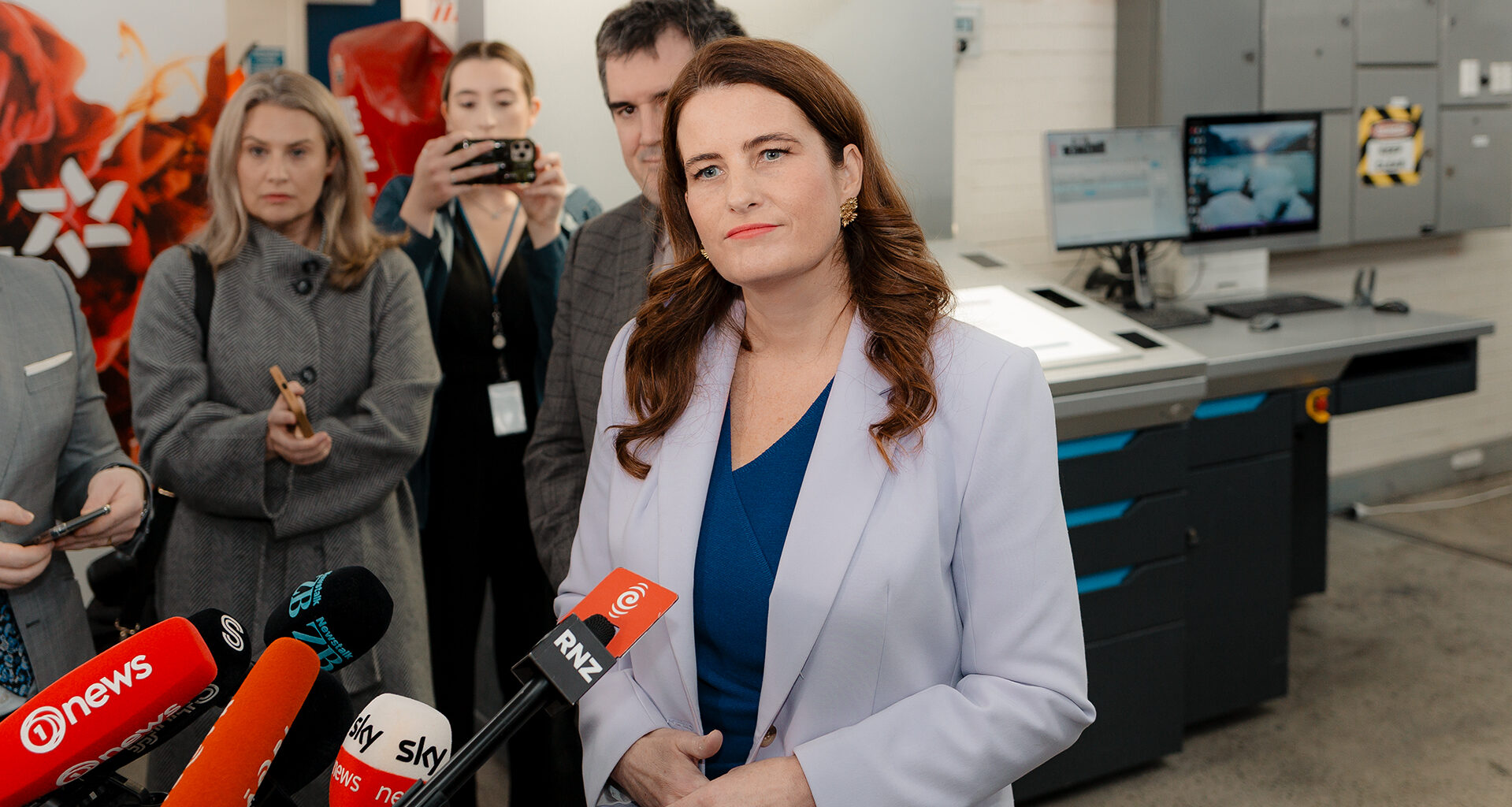
Former National Party Finance Minister Ruth Richardson has called on her successor, Nicola Willis, to pass an emergency austerity budget by Christmas in response to the June swoon.
Willis would do well to ignore her. Doctor (honorary) Richardson made up her mind 35 years ago and would prescribe the same medicine regardless of the symptoms.
Her 1991 budget intensified a downturn for over two years. Unemployment surged to 11%, poverty levels shot up and never fully recovered, protestors took to the streets, and New Zealand’s social fabric frayed.
She would argue the fiscal situation was so serious that this pain was unavoidable and strong economic growth between 1993 and 1996 had proven it all worthwhile. She may well be right.
But let’s not overstate the case. Much of that growth was making up for the years of recession, the global economy was in an upswing, and the New Zealand economy had freshly liberalised.
Today the situation is very different. Public debt is a third lower, while servicing costs and the operating deficit are roughly half what they were in the 1990s. New Zealand has a near-perfect credit rating with a stable outlook, compared to being at risk of its third downgrade back then.
Richardson inherited an economy which had just been radically liberalised. It was not just spending cuts which built confidence. It was also an independent central bank, a floating currency, and a true market economy flourishing for the first time.
Setting aside the ethical debates about deregulation, there simply isn’t much low-hanging productivity fruit for politicians to pick and the Coalition is already reforming what it can.
What would New Zealand gain by slashing spending? It would not improve our credit rating, attract any foreign capital, or give households and businesses more confidence.
It would simply prolong the economic downturn while greatly improving the chances of the Labour Party winning the next election and immediately reversing the austerity measures anyway.
New Zealand is not Argentina. There Javier Milei has had some success with radical neoliberal reforms and spending cuts. But he is only trying to get his country ‘in cooee’ of what New Zealand already is: a successful, liberal, solvent economy.
Slashing spending today would undoubtedly delay economic recovery. Richardson will argue it is worth it in the long-term but, everyone say it with me, in the long run we are all dead.