
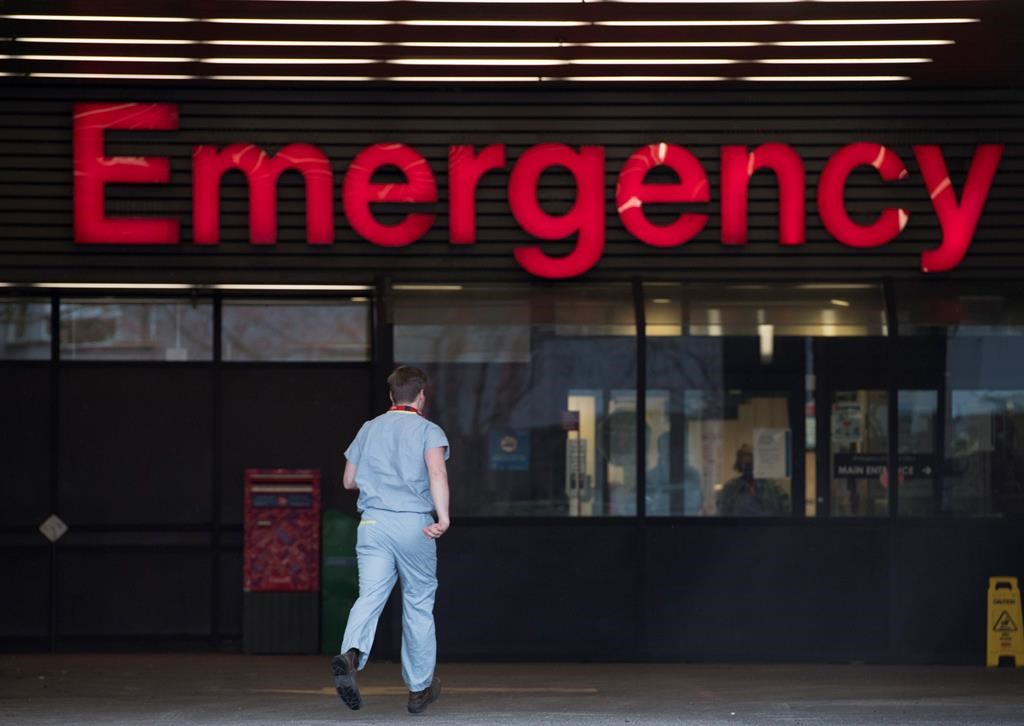
It appears to be another black eye for the crumbling health-care system in this province:
A new report from the Montreal Economic Institute (MEI), via Freedom of Information request to local health authorities, found about 143,000 people in B.C. left ERs last year without being treated — even though some made it through to triage.
Long wait times were one of the number one complaints.
“In B.C. specifically, we saw in 2024 that 5.5 per cent of patients that went to the emergency room left without being treated,” Emmanuelle B. Faubert, economist at the MEI, told 1130 NewsRadio.
She says what’s not clear is the severity of the cases. Unlike some other provinces, B.C. does not track that.
Faubert adds that the silver lining is B.C.’s rate is below the national average of 7.8 per cent of patients leaving without treatment, which equates to about 1.2 million people.
“[B.C.] is the second-lowest provincial average. What you want is for this number to be as low as possible. The worst one we see is Prince Edward Island — we’re talking about 14.2 per cent of people leaving the ER without being treated. Even though B.C. is doing a lot better, it still means there are five per cent of people that are still falling through the cracks.”
“A patient who leaves the ER untreated is a patient that has been dropped by the health-care system.”
A growing and aging population, not enough urgent care centres to help fill the gap, next-to-no access to primary care, overworked staff, and ongoing staffing shortages all contribute to clogging up emergency rooms and complicating the situation, Faubert.
“Unless the problem is very minor, it means the problem is not usually going away. It means you’re waiting, and this could lead to potential complications that could lead to the problem worsening,” said Faubert, adding that ‘worsening’ could include death.
She says their research also found people eventually get help for the same health concern — just weeks later — which is inefficient for an overburdened health-care system.
“If we look at data from the U.S., 55 per cent of the people who left untreated ended up coming back for consultation within three weeks, and almost three out of four of those visits were related to the medical issue that led them to the ER in the first place. This is only a problem that is being pushed for a later [time] because these people will need to be treated at some point.”
The MEI is making three recommendations:
Increasing the use of specialized nurse practitioner clinics
Granting the broadest scope of practice to pharmacists
Allowing for the creation of non-governmental Immediate Care Medical Centres, based on the French model, to treat non-life-threatening emergencies
For the third recommendation, she admits it would be considered private care in a country that touts universal health care.
“What we see is, because there is less bureaucracy, there is less hierarchy and less needing to go above for permission to do anything, you end up seeing specialists, expertise being developed and a lot quicker access to care. That means you have fewer people waiting to be treated. It works. It’s quicker, it’s more efficient, and it allows more people to be treated.”