
Unlock the White House Watch newsletter for free
Your guide to what Trump’s second term means for Washington, business and the world
The US carried out its third deadly strike this month on a boat allegedly trafficking drugs, as the Trump administration continues its military campaign in the waters around South America.
US President Donald Trump said late on Friday that on his orders, three “male narcoterrorists” were killed on board the boat in international waters.
Washington conducted “a lethal kinetic strike on a vessel affiliated with a Designated Terrorist Organization conducting narcotrafficking in the USSOUTHCOM area of responsibility”, the president wrote on his Truth Social platform. Southcom is the command that oversees US military operations in the Central and South American region, including their surrounding waters.
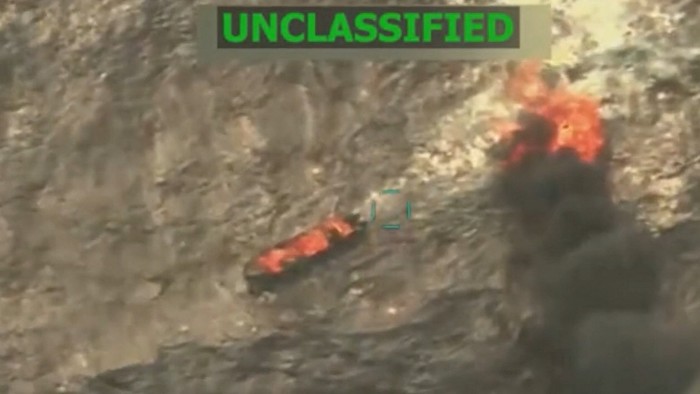
Trump’s post included a minute-long aerial video showing a boat travelling through water before being engulfed by a fireball.
“Intelligence confirmed the vessel was trafficking illicit narcotics, and was transiting along a known narcotrafficking passage en route to poison Americans,” the president said, adding that no US forces were harmed.
The Pentagon declined to provide details beyond the president’s post and referred questions to the White House, which did not immediately respond to a request for comment.
The president’s post followed a similar military operation announced on Monday, which killed three people, and one on September 2, which killed 11, according to the administration.
While Trump did not specify where the boat was coming from, or where exactly in the region Friday’s strike took place, he had said the previous two strikes targeted Venezuelan drug cartels. The Trump administration has also accused Venezuelan President Nicolás Maduro of being a leader of the drug trafficking gang Cartel de los Soles.
Venezuela’s government did not immediately respond to a request for comment on Friday’s strike.
Trump’s military campaign against these alleged drug boats has marked an about-face in US counternarcotics policy, which until this month was treated as a matter of law enforcement. Typically, coastguard vessels would stop boats and question and detain suspected traffickers, with the military’s role generally limited to intelligence gathering.
Secretary of state Marco Rubio and defence secretary Pete Hegseth have said the US’s military campaign in the region would be a sustained one, rejecting the efficacy of interdicting drug smuggling boats.
Rubio said earlier this month that “interdiction [of drug smugglers] doesn’t work”, but “what will stop them is when you blow them up”.
The US has built up a significant military presence in the region, deploying eight warships — including three guided-missile destroyers, an amphibious assault squadron, a guided-missile cruiser and a nuclear-powered fast attack submarine — and thousands of troops. Washington has also ordered 10 F-35 jets — the world’s most advanced — to Puerto Rico.
Recommended

Venezuela’s defence minister Vladimir Padrino López on Wednesday announced three days of military exercises on the Caribbean island of La Orchila. The so-called Operation Sovereign Caribbean 200 would include more than 2,500 troops, 12 naval ships and 22 aircraft, Padrino said on state television.
Padrino said the exercises were a response “to the threatening and vulgar deployment of US ships in the Caribbean”.
On Monday, Venezuela’s military shared images of Russian-built Sukhoi Su-30 fighter jets on social media.
Maduro has previously described the build-up as a pretext to “regime change”, and claimed as many as 4.5mn militiamen would be ready in case of an invasion.