
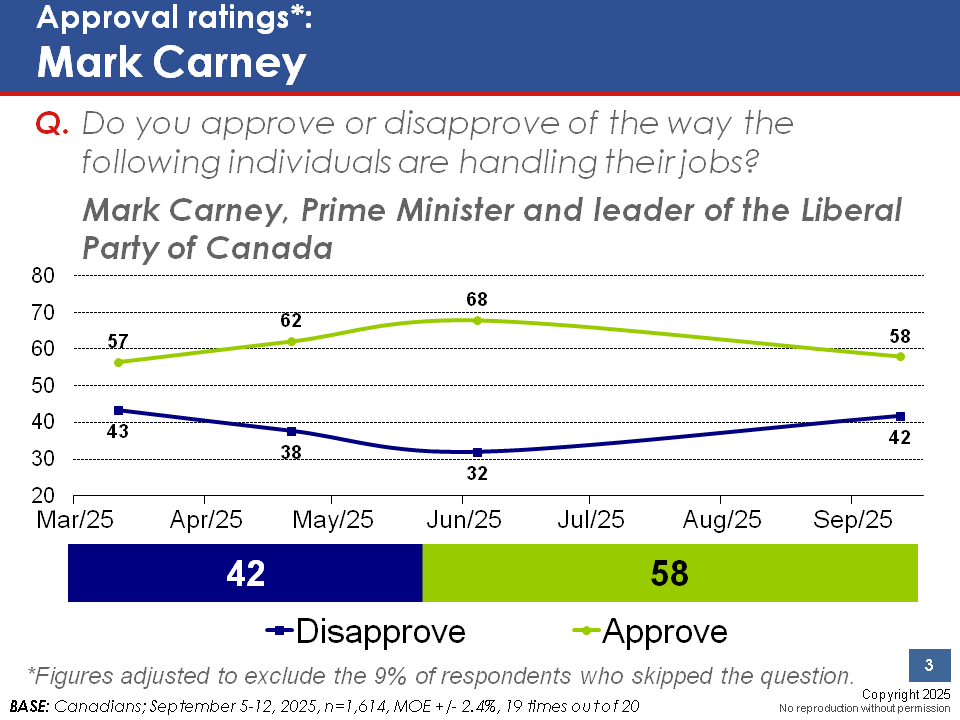
But Mark Carney’s approval rating drops 10 points amid rising fears of job loss
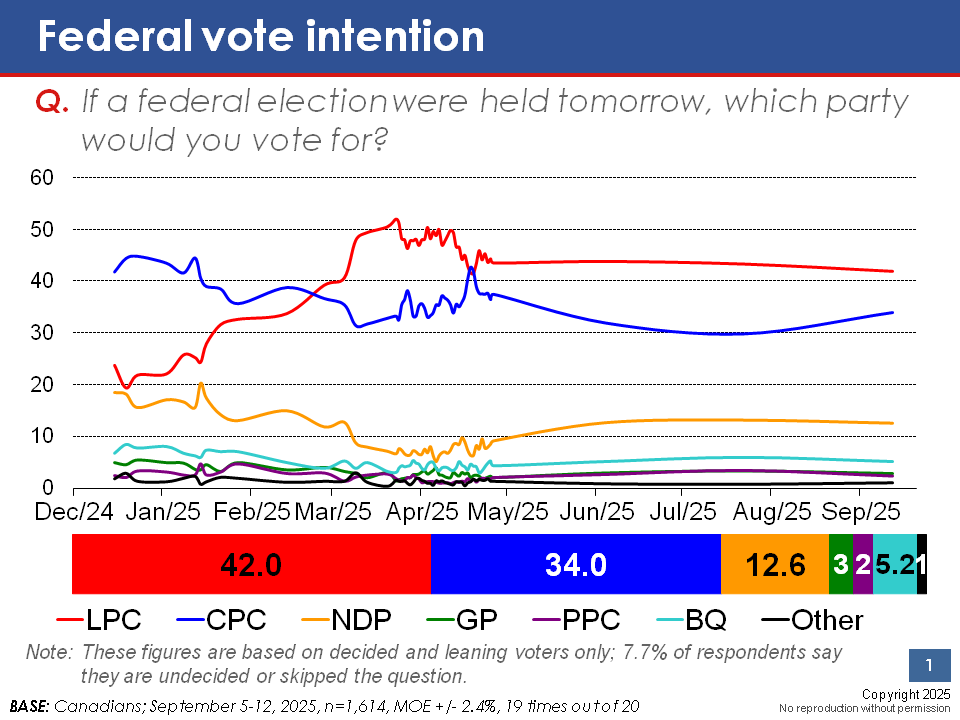
[Ottawa – September 19, 2025] Six months into the 30th Canadian Ministry, the Liberals remain in a clear leadership position. Nevertheless, the federal race has tightened somewhat, driven primarily by Conservative gains. The Conservative Party now stands at 34.0 points, up 3.5 points since our last release, while the Liberals are at 42.0 points, down 1.2 points. Even so, the Liberals remain at roughly twice the level of support they held just nine months ago.
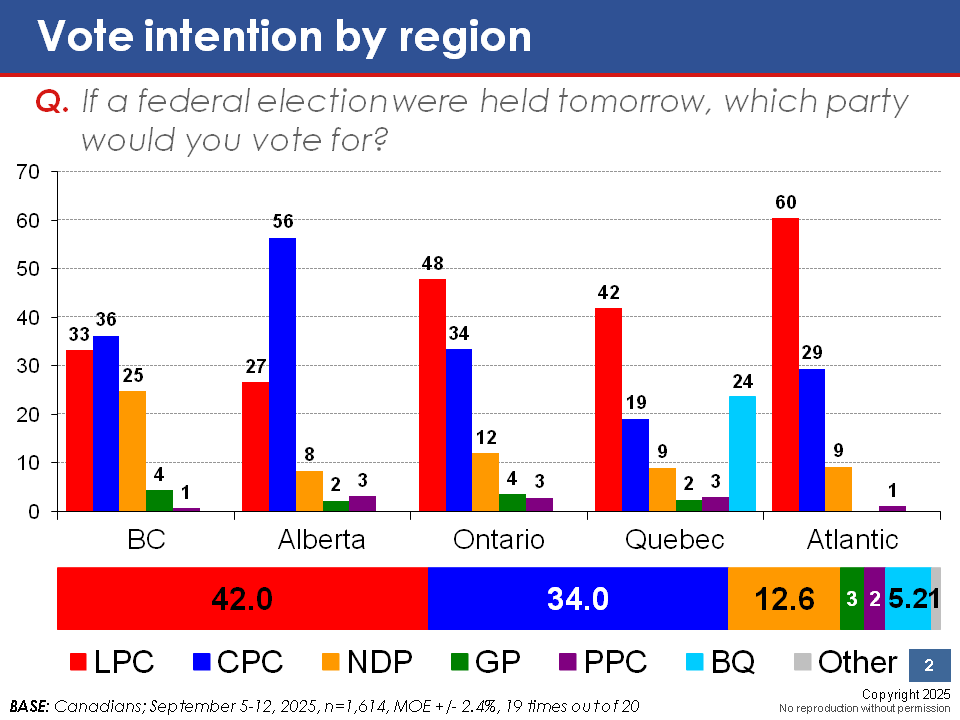
The regional and demographic patterns reveal few surprises. The Liberals hold commanding leads in Ontario, Quebec, and Atlantic Canada, while Conservatives appear untouchable in Alberta. The Conservatives find themselves on the winning edge of a two-way race in British Columbia, where the NDP is in a strong third place. The Liberals enjoy a runaway lead with women, while the Conservatives lead with men. The Liberals do extremely well with seniors, while NDP support comes primarily from those under 45.
The more notable development, however, is the modest – but significant – drop in Mark Carney’s approval rating. While Carney still enjoys a net positive rating overall, his approval has fallen 10 points in the past three months.
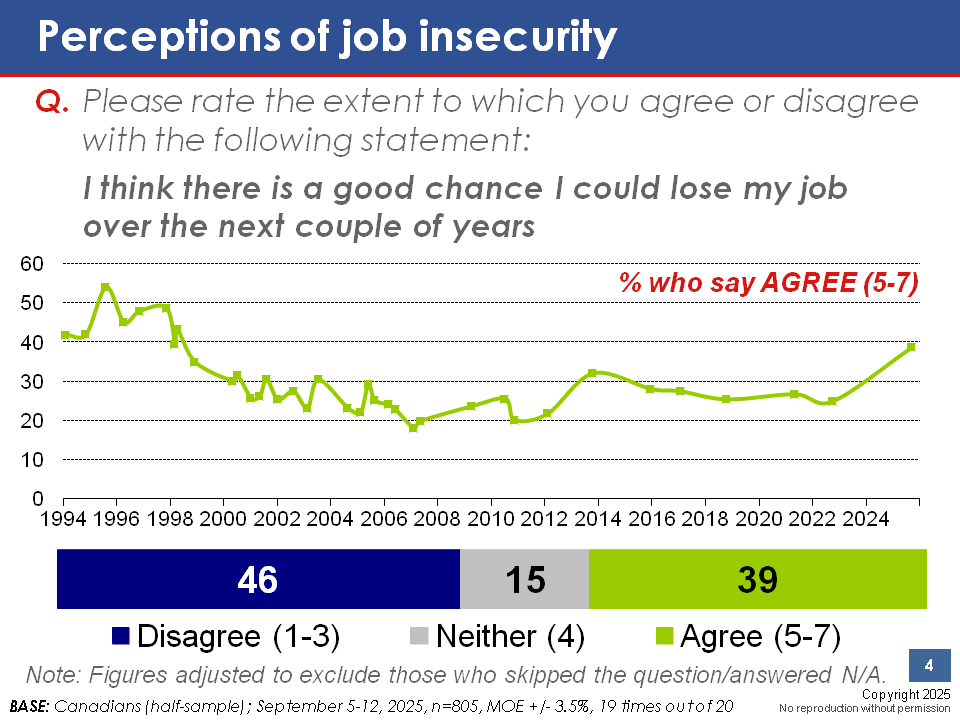
A sharp rise in fears about job loss is most likely a factor underpinning the erosion of the Liberal Party’s position. Indeed, the proportion of Canadians who are worried they could lose their job over the next couple of years has reached a 25-year high amid the recent but sharp rise in the unemployment rate (now at 7.1 per cent).
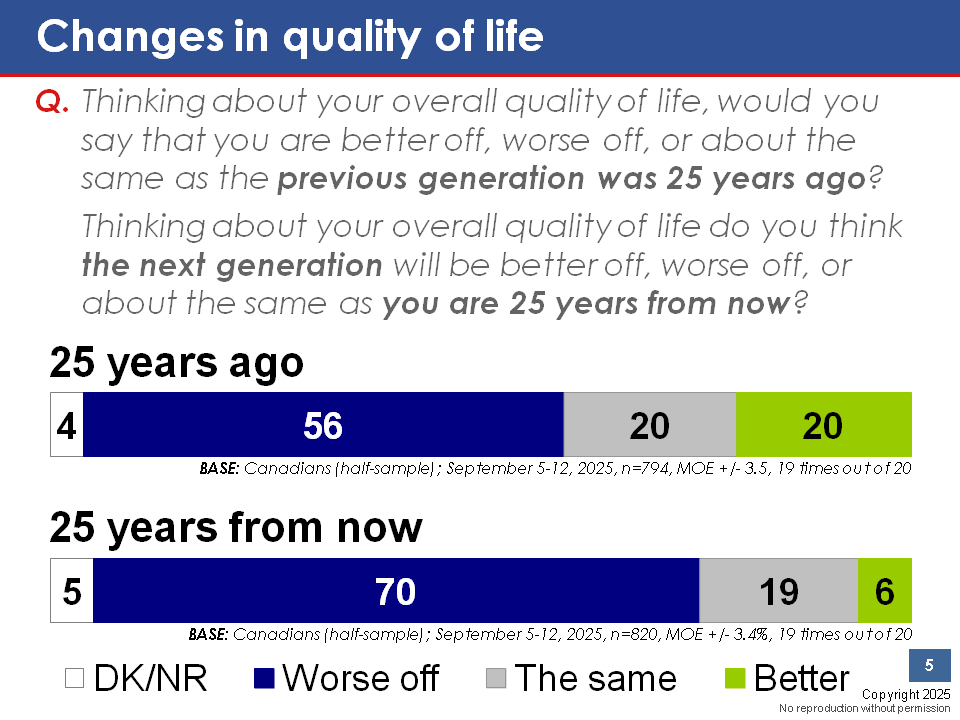
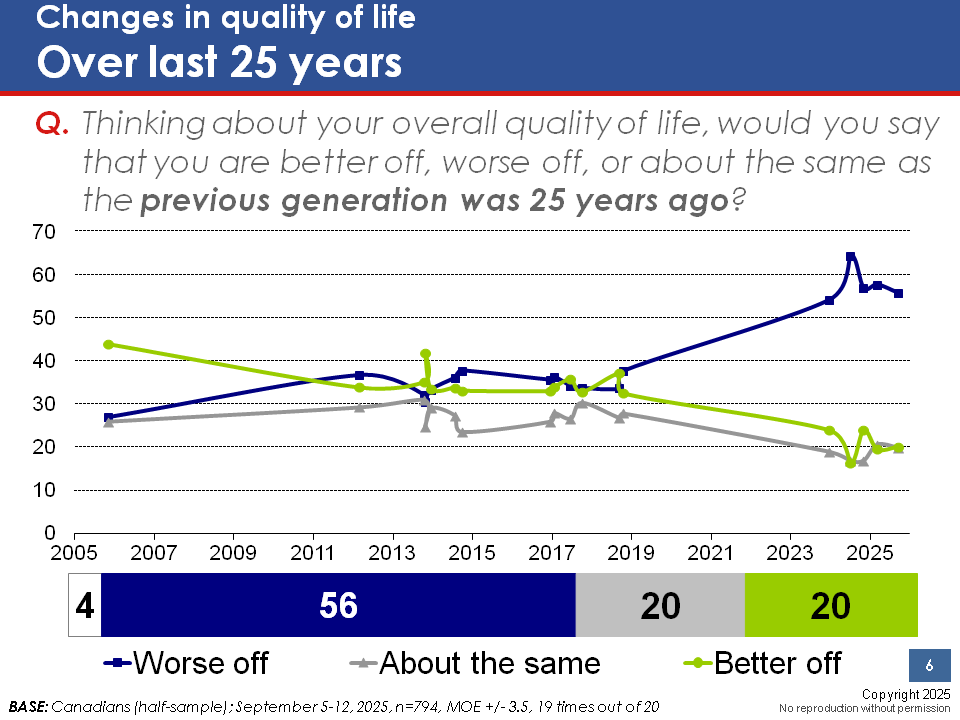
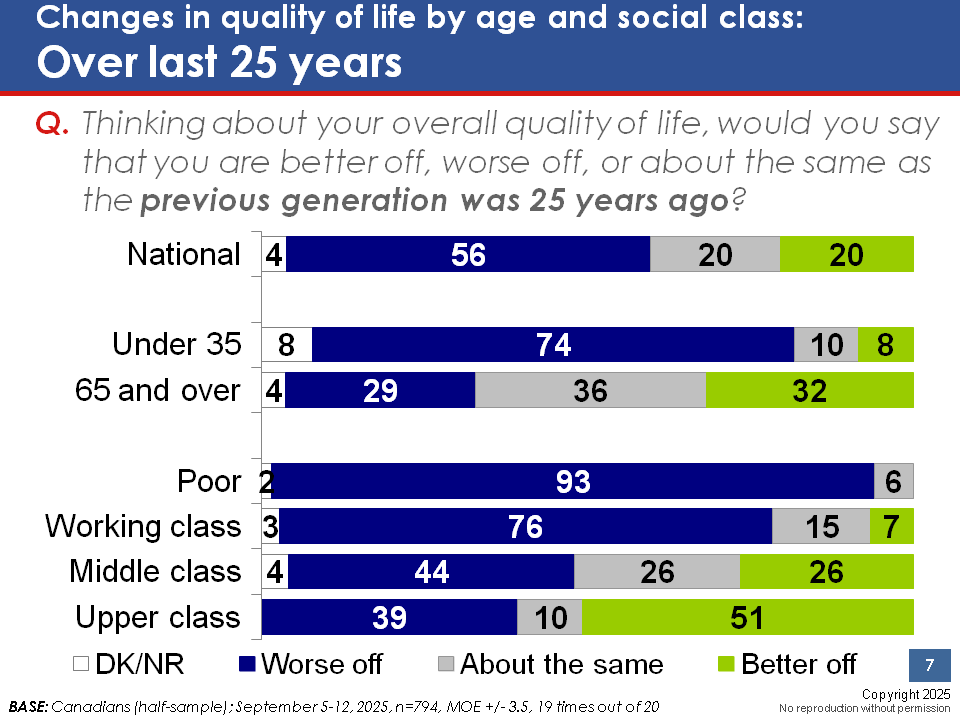
Similarly, generational outlook – that is, whether Canadians believe they are better or worse off than the previous generation 25 years ago, and whether the next generation will be better off 25 years from now – shows an extremely dark outlook with no sense of recovery in the future. These findings are hugely linked to social class and generation, with under-35 Canada deeply pessimistic about their perceived decline, and even more pessimistic about a future recovery.
Methodology:
This survey was conducted online using EKOS’ unique research panel, Probit. Our panel offers exhaustive coverage of the Canadian population (i.e., Internet, phone, cell phone), random recruitment (in other words, participants are recruited randomly, they do not opt themselves into our panel), and equal probability sampling. All respondents to our panel are recruited by telephone using random digit dialling and are confirmed by live interviewers. Unlike opt-in online panels, Probit supports margin of error estimates.
The field dates for this online survey are September 5-12, 2025. In total, a random sample of 1,614 Canadians aged 18 and over responded to the survey. The margin of error associated with the total sample is +/- 2.4 percentage points, 19 times out of 20.
Please note that the margin of error increases when the results are sub-divided (i.e., error margins for sub-groups such as region, sex, age, and education). All the data have been statistically weighted by age, gender, region, educational attainment, and household size to ensure the sample’s composition reflects that of the actual population of Canada according to Census data.
EKOS follows the CRIC Public Opinion Research Standards and Disclosure Requirements.
The data tables for this survey are available here. The questionnaire is available here.