

The glittering Mediterranean always captivated Samah Haboub. From the balcony of her 11th‑floor flat in Gaza City, she photographed the sea’s changing moods each morning before scouring the kitchen for something to feed her four children, aged between seven and 17.
Even for Haboub, a professional cook, feeding the family had become a daily puzzle as food grew scarce. At about 10.30am last Sunday, as she reached for the last lentils, shouts rose from the stairwell as her neighbours rushed outside. One word cut through: “Evacuate!”
Her husband was out. Through tears, she called his number, grabbed a few bags and shepherded the children downstairs.
Half an hour later, from a friend’s rooftop across the road, Haboub watched an airstrike turn her home in al‑Kawthar tower into dust:
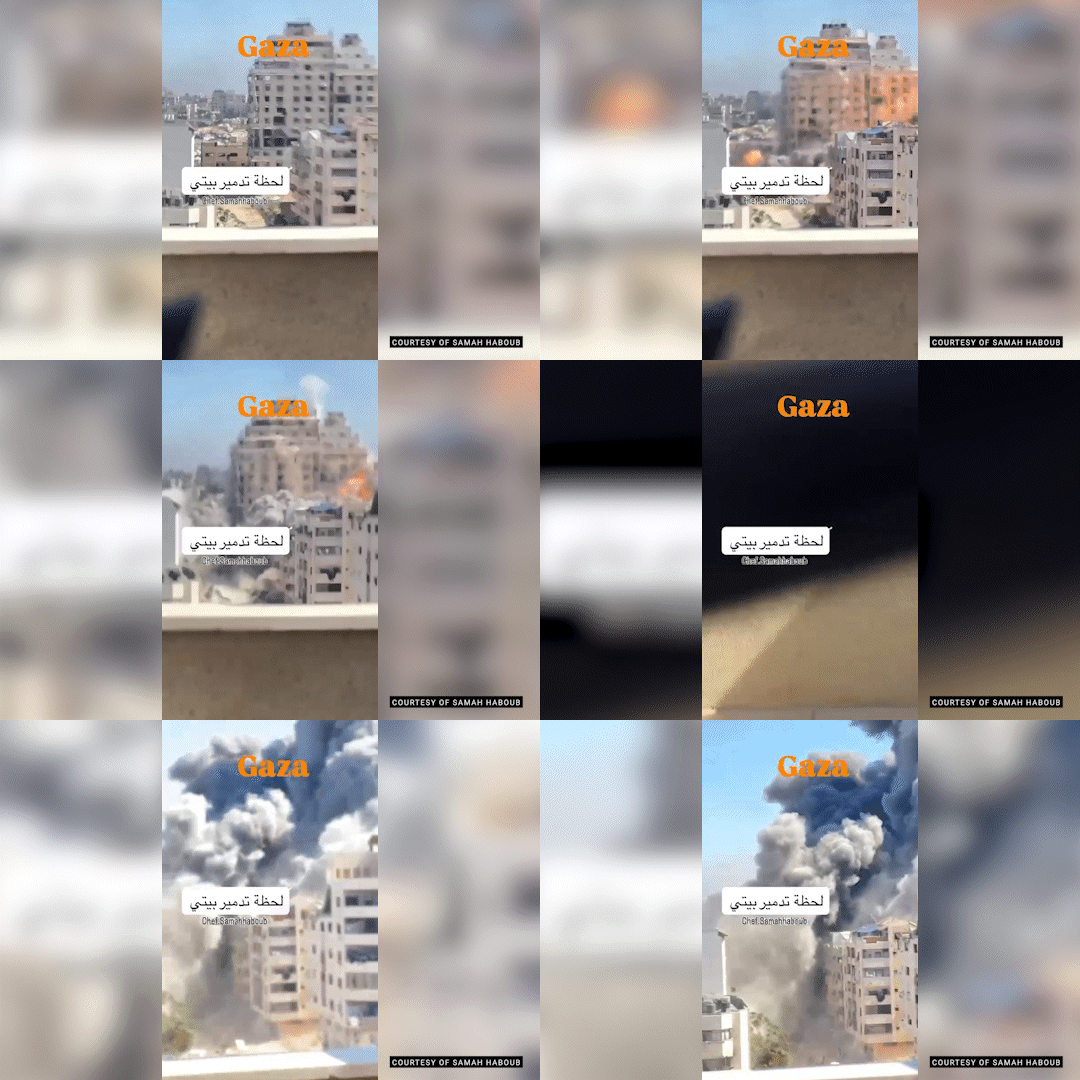
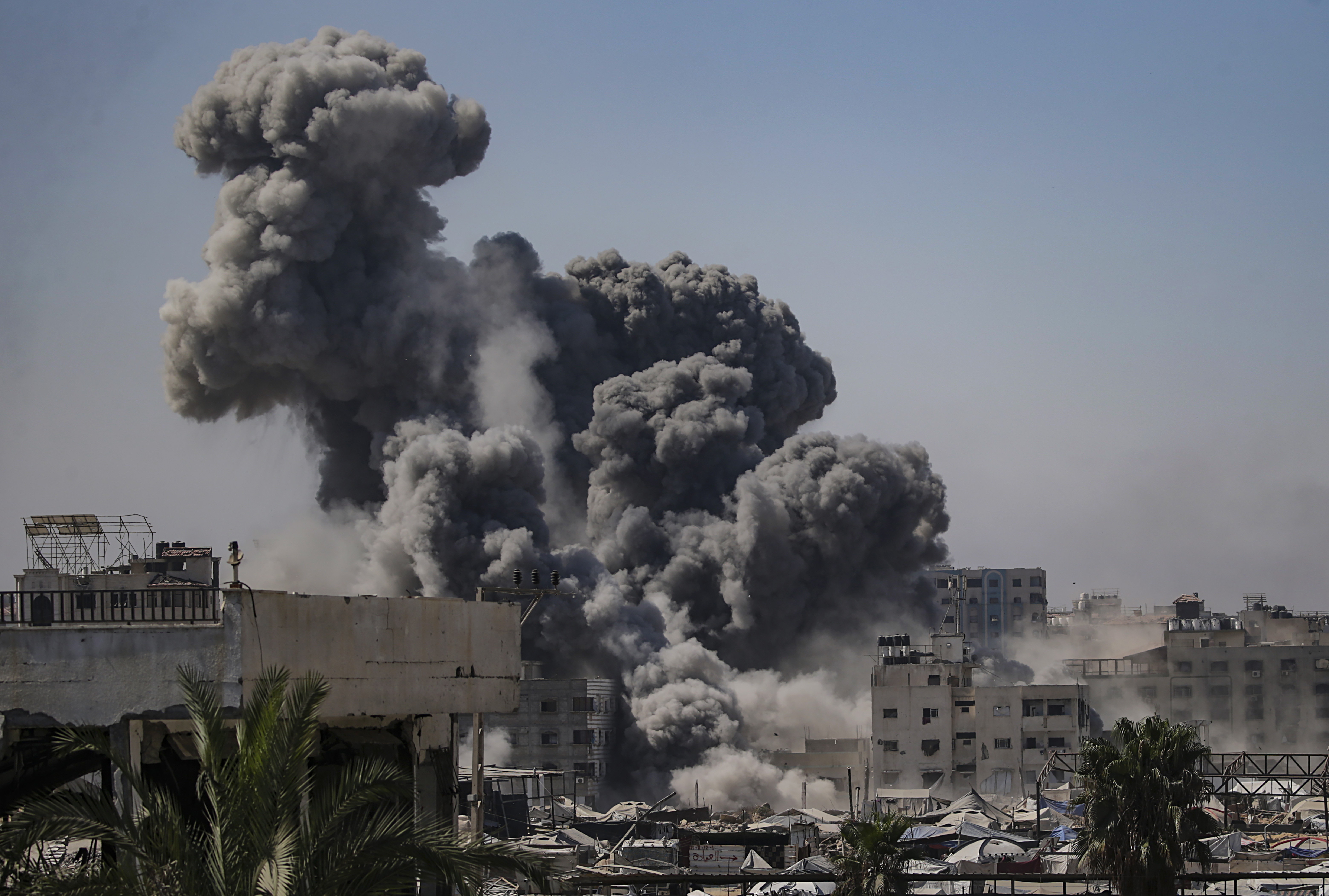
“It was like losing a child I had raised for 20 years,” she said. “A dream wiped out in seconds.”
About one million people, roughly half of the territory’s population, live in Gaza City, and last Sunday all were ordered by the Israel Defence Forces (IDF) to evacuate, marking a new chapter in the war.
This is the story of a week in Gaza City and some of the families struggling to get out of the path of Israel’s ground offensive.
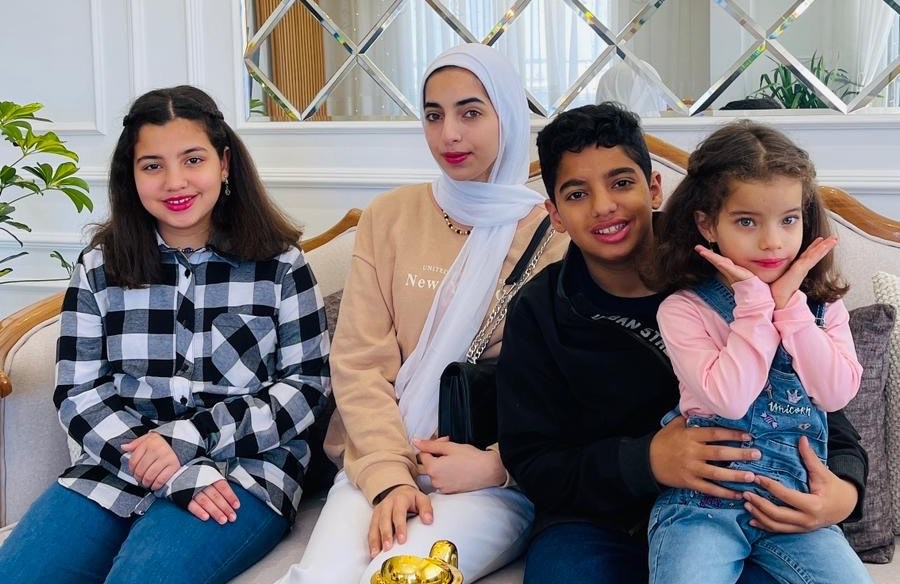
Samah Haboub with her four children: Nada, 13, Berlent, 17, Ahmad, 16, and Sarah, seven
Last week was the first time in nearly two years that Israeli troops have invaded Gaza City at scale, aiming to seize it and dismantle Hamas’s remaining strongholds there.
On Monday, the Israeli military started encircling the city, sending in troops and tanks supported by sea and air in what was described as an operation to defeat Hamas terrorists and secure the release of the 48 remaining hostages they hold, 20 of whom are thought to be alive.
Haboub rejects Israel’s assertion that her building was used by Hamas to monitor troop movements. Also hit that day was the Islamic University, struck by several missiles. Israel Katz, the defence minister, said the campus was “going up in smoke”, praising the strike as eliminating “sources of incitement and terrorism”.
Please enable cookies and other technologies to view this content. You can update your cookies preferences any time using privacy manager.
Enable cookiesAllow cookies once
Since the war began almost two years ago, Gaza has endured wave after wave of evacuations, its roads often choked with convoys of trucks, cars and handcarts as each new offensive redraws the map of risk, leaving few safe places to go.
The Haboub family had been displaced six times, moving between their own home of 20 years and those of relatives and friends. With the destruction of their flat leaving them suddenly homeless, they had to decide where to go.
The only place of relative safety now was the “humanitarian zone”, a strip of sandy land covered in tents known as al-Mawasi on the southwest Mediterranean coast.
To get to this already overcrowded refuge shelter they would need to take either the coastal road or a shorter but riskier central highway controlled by the IDF. They would also need to pay someone the exorbitant fee — up to £1,000 — to drive them there. Was it worth the risk?
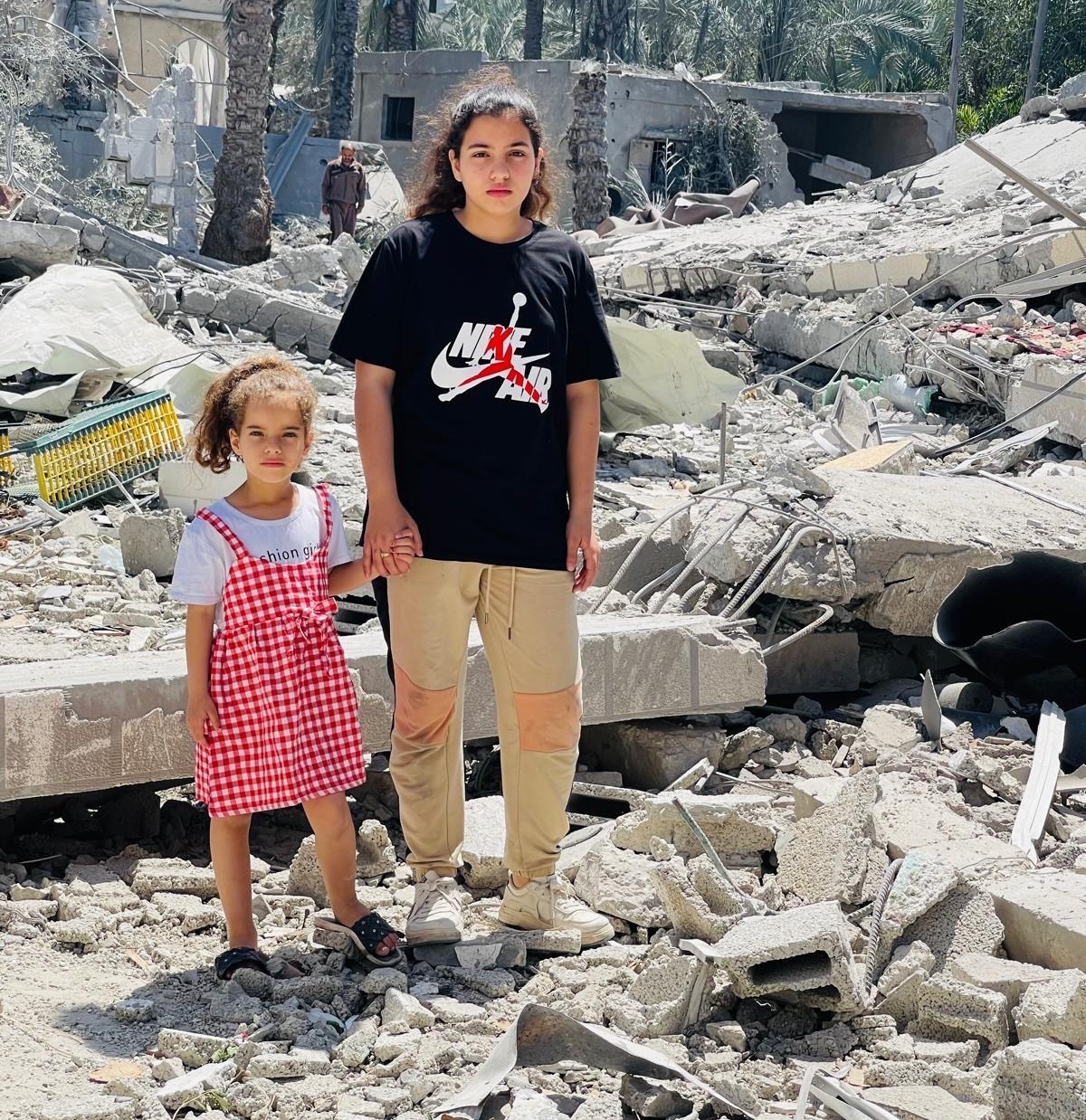
Sarah and Nada Haboub in the ruins of their apartment block
I gave my children a squeeze, unsure I’d ever see them again
Not far away, in Gaza City’s al‑Shifa district, Amin Deifallah, a 40‑year‑old agricultural labourer, was facing the same dilemma. Like most people in Gaza, he and his wife, Om Omer, and seven children aged between two and 12 were already refugees, living in a tent after repeated displacements.
They used to live in Gaza’s northern town of Beit Hanoun, with its orchards and farmland, surviving on a £75 monthly stipend from Qatar for low‑income families. It barely covered food and basic needs, but those days seem idyllic compared with today. “We managed, we ate, we drank — we were content,” Deifallah recalled.
That life ended with Beit Hanoun’s bombardment in October 2023. With no choice but to flee, the family set off on an odyssey: first to Beach Camp, then to al‑Shifa Hospital, where thousands had taken refuge; on to Nuseirat, then Rafah, then Khan Yunis. During a fragile truce in January they tried to return to Beit Hanoun, pitching a tent on the rubble of their home. “There was nothing left to recognise,” he said.
When the bombing resumed, they left again, drifting back toward al‑Shifa and raising another makeshift shelter. Then the latest offensive began. The family had to move again.
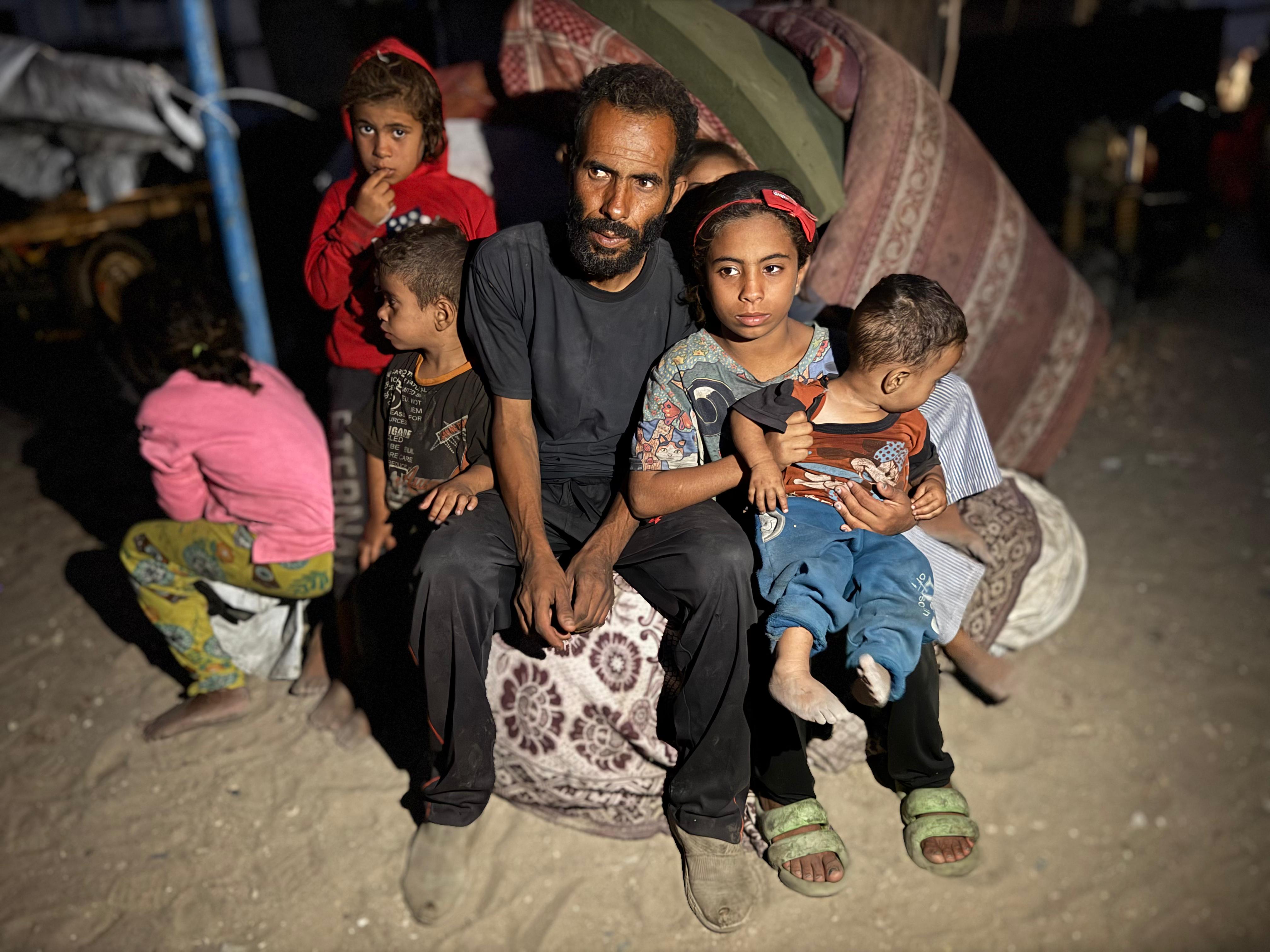
Amin Deifallah and some of his seven children, who are Mayar, 12, Sama, ten, Jana, six, Nagham, eight, Salwa, five, Omar, four, and Fares, two
TAHA ABUZARIFA
Katz took to X again on Tuesday: “Gaza is burning,” he wrote. “The IDF strikes with an iron fist at the terrorist infrastructure and IDF soldiers are fighting bravely to create the conditions for the release of the hostages and the defeat of Hamas.”
In New York, the UN’s Independent International Commission of Inquiry released a report declaring that Israel was committing genocide in Gaza, something that last week the British government rejected. Israel called the commission members “proxies” for Hamas.
At 6am on Wednesday, the Deifallah family joined the southbound exodus. The streets were scenes of upheaval. Families dragged mattresses, donkeys pulled carts loaded with pots and blankets.
Deifallah squeezed his seven children and a few bags into a car with other people, but there was no room left for him or his wife. So they set off on foot, watching the vehicle disappear into the crowd.
“The children cried when we were separated,” he said. “I was terrified I might never see them again.” The roads were clogged with thousands like them, pushing south into the unknown.
Near al‑Nuweiri Hill, west of Nuseirat along the Rashid Road, another driver made space for Deifallah and his wife. They were reunited with their children in Khan Yunis.
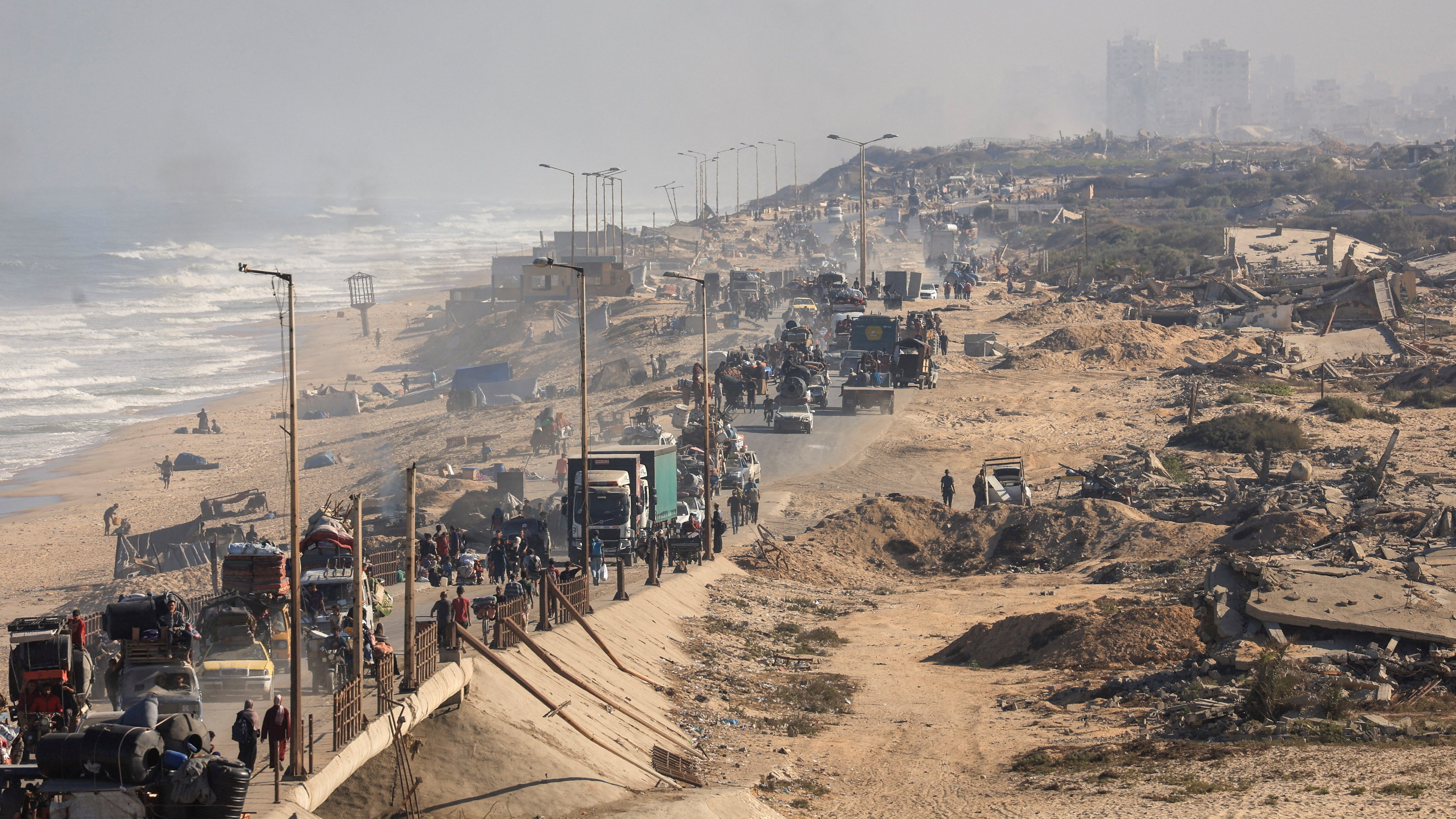
Gazans flee southwards down the Rashid Road on Saturday
DAWOUD ABU ALKAS/REUTERS
More than a quarter of a million Palestinians are estimated to have evacuated Gaza City. Estimates of the number remaining are between 400,000 and 600,000.
For some, staying behind is an act of resistance. Walid al-Awad, a retired civil servant, lives on the fifth floor of a high-rise in southwest Gaza City with his wife, two daughters and their families. For him the evacuation order is less to do with freeing hostages than an effort to uproot Palestinians.
“Gaza is being destroyed before our eyes, its people forced into displacement,” said Awad. “If this continues, the return of people to their homes could become a difficult demand in future negotiations.”
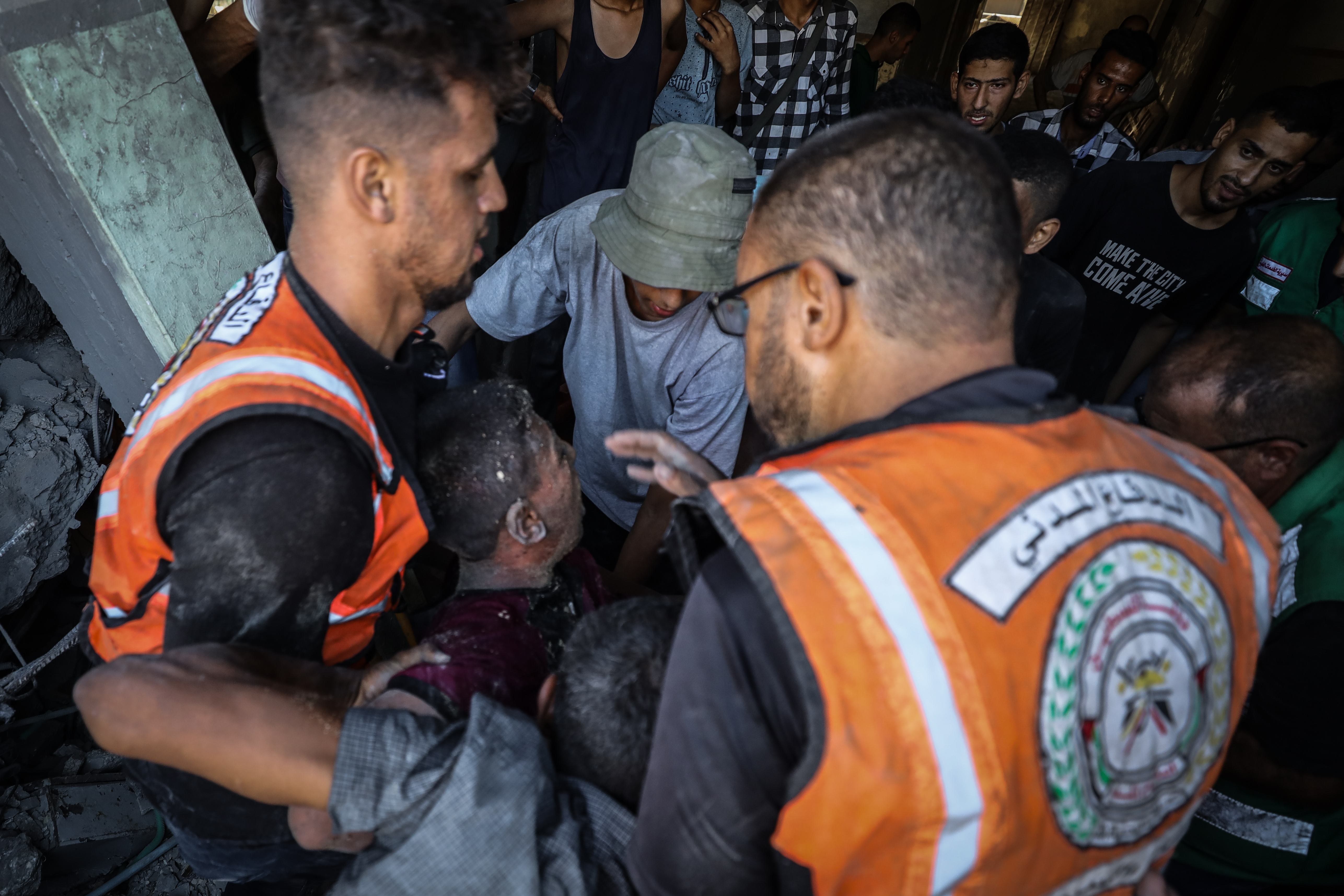
A Palestinian boy is saved from the rubble of an Israeli airstrike in al-Shati camp on Saturday
KHAMES ALREFI/ANADOLU/GETTY IMAGES
For Deifallah and his family, though, staying alive was the primary concern.
It took them 11 hours to escape Gaza City. Throughout, Deifallah says, he was overwhelmed with fear: “Fear that we would be hit, fear that we would be separated, fear that we would never see our home again.”
The Mawasi “humanitarian zone” brought little relief. There was not a free space anywhere on the beach to put up a tent.
“People were demanding hundreds of pounds just to rent a patch of earth for a small tent,” said Deifallah. “They are renting out three metres of sand for thousands of shekels.” He spent the night on the street in Khan Yunis, the children shivering in the dark.
On Wednesday afternoon, the first Israeli tanks appeared on the edge of Gaza City, near the Sheikh Radwan Pond.
By then, more than 100 civilians had already been killed in the Israeli operation and another 400 injured. Gaza’s health ministry said the Palestinian death toll in the war triggered by the massacre of 1,200 Israelis by Hamas on October 7, 2023, had passed 65,000.
On Thursday morning Deifallah’s five-year-old, Salwa, awoke saying she was hungry. “I have nothing to give her,” he said.
Fear on the road
By that morning Haboub had finally found a driver willing to take her south with her sister’s family, sharing the cost. The trip, normally an hour, stretched to six. Traffic ground to a halt for two hours at Wadi Gaza. “We had to sit on top of the luggage,” Haboub said. “There was no space.”
Along the way, she photographed her children under a blazing sun, ringed by bags. With every stop and start her fear rose. “The whole time I was afraid they would bomb us. Every minute felt like it could be the last.”
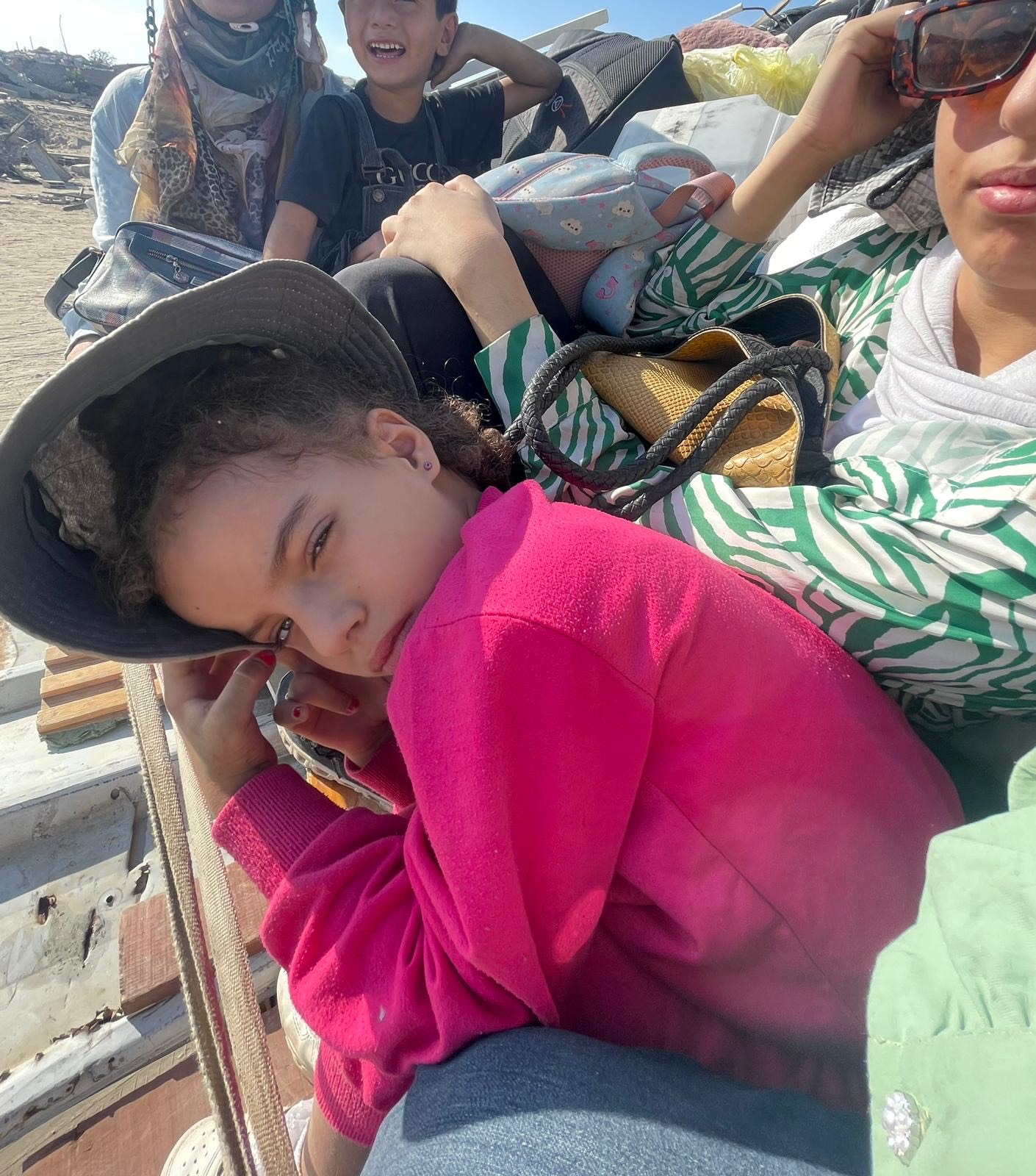
Sarah, seven, was exhausted by the family’s latest displacement
Now the family is staying with friends in Deir al‑Balah, trying to find a tent among the hundreds of thousands of people who got there before them. “Even if you have a tent you have to pay for the land to put it on,” said Haboub. “The situation is unbearable.”
She cries over her lost dreams — “the restaurant I wanted to start, my destroyed home, I lost everything”. And she fears for her children, wondering what sort of future awaits them.
Recalling their escape from the bombing on Thursday, she said that at one point in the journey they looked back at the city from their perch in the back of a truck.
“Even destroyed, Gaza is part of us. We filmed the streets and said: ‘Goodbye, Gaza City. We don’t know if we will ever return.’”