
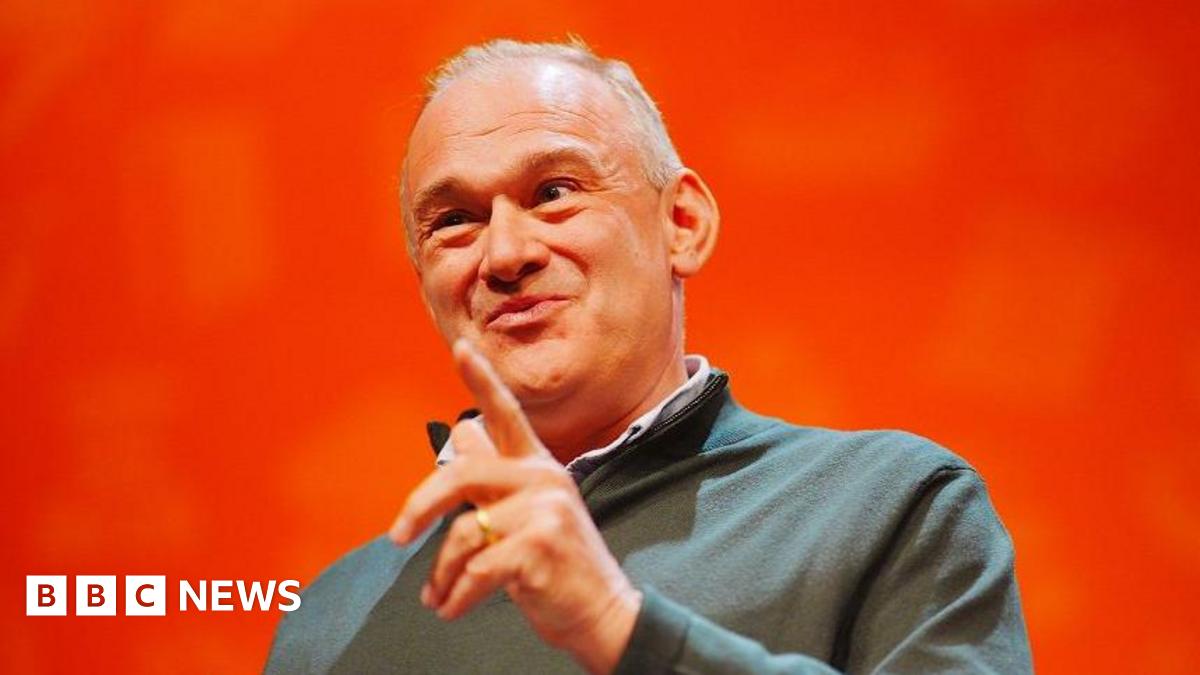
If a UK system was about “giving individuals power to access public services” Sir Ed said he could be in favour because “that could increase people’s freedom and rights”, but he warned against a model that could be abused by an “authoritarian” government.
Asked for a show of hands, about two-thirds of members in the hall at their conference in Bournemouth backed a debate on changing their position on ID cards.
Lib Dem home affairs spokeswoman Lisa Smart earlier warned members they would be unlikely to get a chance for a formal vote on a change of policy before the government brought in legislation, as it was not scheduled for debate this week.
Earlier this month, Sir Keir told the BBC it could help tackle illegal immigration and press reports suggest he is preparing to make a policy announcement at next week’s Labour conference.
On Sunday morning, Smart chaired a packed fringe meeting to test the party’s mood on the issue.
The majority of those present argued against digital ID cards, over civil liberties and data security concerns, among other things.
Veteran MP Alistair Carmichael told the meeting: “It seems to me if we are going to go along with the Labour Party on this then we are saying ‘we are quite happy to trust the government on this’.
“And I think the day we start saying we trust the government is the day that we stop being a liberal party.”
He added: “I think it is ocean-going nonsense to change our mind at that this stage.”
Bridget Fox, from Islington in North London, who like many of those present is a veteran of the No2ID campaign 20 years ago, said: “I shouldn’t have to prove who I am, going about my own business in the place where I live.”
She warned about the impact on “digitally excluded” people, such as the elderly and disabled – and voiced concern about digital ID being abused to intimidate vulnerable and marginalised people.
“I can only too easily see some vigilante patriots stopping people and demanding to see their ID and saying ‘I am not carrying it or I don’t have it’ would no longer be an excuse.”
Like others at the meeting, she expressed concern about the “massive” government database that would be needed and the potential impact on the environment.
“This stuff is coming but we should be the constructive critics, we should be the guardians of freedom in this,” she told the meeting.
“Just because we can do something doesn’t mean we should.”