
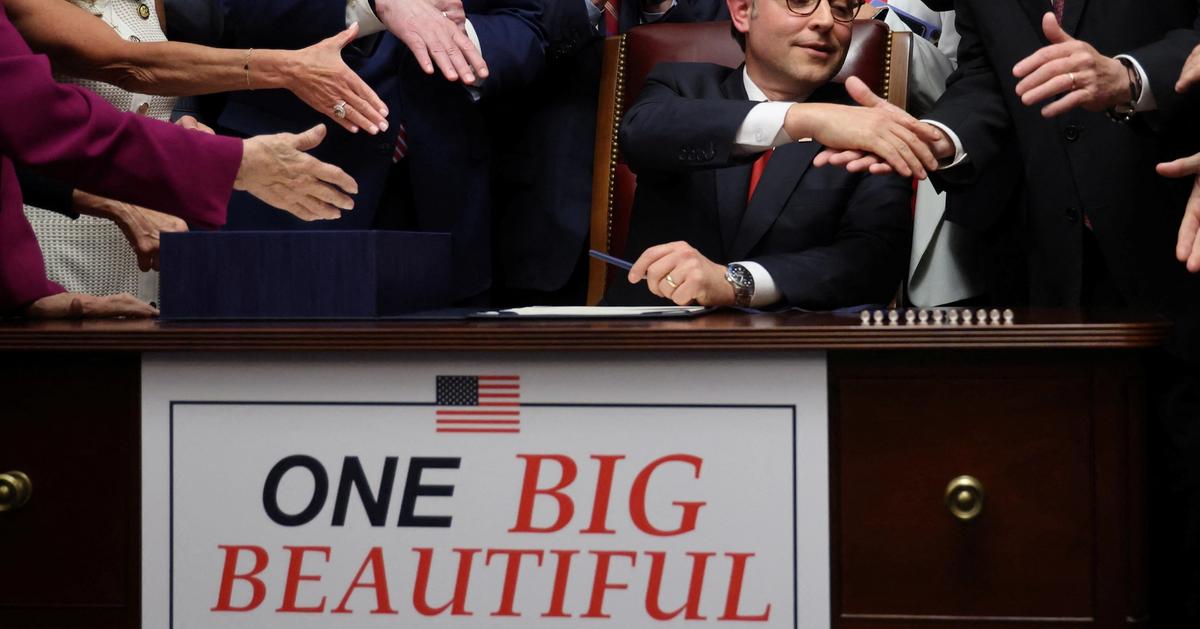
With the passage of Donald Trump’s “big, beautiful bill,” the GOP won a generational victory. It did so by co-opting key Democratic messages and building a MAGA-based story of America and what ails it.
Democrats are getting used to that. Most of them consider Trump as a sui generis political figure who voters don’t associate with the GOP’s least popular ideas.
Ironically, Trump built that reputation in 2020, before he lost the presidency. He had scrapped the GOP’s old commitment to reforming Social Security and Medicaid in his 2016 campaign, denying Democrats one of their best issues. During the COVID-19 pandemic, he implemented bipartisan relief bills that expanded health care coverage and gave direct cash payments to most Americans.
In 2024, when he pledged to cut more taxes and protect welfare programs — trimming only “waste, fraud, and abuse” — swing voters remembered 2020 and found it credible. His policies added $7.8 trillion to the national debt, but Democrats voted for some of them, and Republicans never really blamed him for that number. Nikki Haley criticized Trump for growing the debt, and he beat her in South Carolina by 20 points.
Democrats built their anti-megabill campaign on what had worked in 2017, when they got enough Republican votes to save the Affordable Care Act. The GOP was more aligned with Trump than it had been then, which they knew going in. But it also had a more coherent story to tell, which Democrats unwittingly helped with.
The MAGA story in 2025 was that America needed to be saved from internal drift and external threats, which this legislation would do. Robert F. Kennedy, Jr’s entrance into the MAGA coalition was an important part of the story. Neither party denied that Americans needed to be healthier, but Kennedy and his allies — now in the administration — described the government’s health apparatus as an impediment, a waste of money that had been captured by the pharmaceutical industry.
“We are spending $900 billion, and our people are getting sicker every single year,” Kennedy, now health secretary, said during his confirmation hearing. That statistic is one that the left and Democrats have used to argue that the for-profit health care system is less efficient than a single-payer system. But Kennedy used it to explain how most Americans need to make personal choices to be healthier, and that Medicaid needs to focus on the truly needy.
By the time he endorsed Trump, Kennedy had also embraced his future boss’ position on immigration: Democrats had let the US-Mexico border get “out of control,” and Republicans needed to seal it.
This was harder for Democrats to campaign around. New ICE funding for agents and camps, new funding for a border wall — all of this was part of the One Big Beautiful Bill Act pitch, and Democrats did denounce it. But at the same time, they were divided on whether talking about immigration, one of Trump’s stronger issues, was a diversion from Medicaid and tax cuts for the wealthy, two of his weaker issues.
Republicans made a zero-sum argument that expelling migrants and denying them benefits would help American citizens; Democrats invited reporters with them as they demanded access to ICE facilities. They tried to make a connection, arguing that Trump was distracting from his unpopular tax cut push by targeting immigrants.
But Republicans were happy to talk about all of it. Yes, they would cut taxes for Americans and cut Medicaid for people who didn’t earn it or need it; yes, doing that would be easier if they expelled millions of migrants, they argued.
Now, Republicans who said they couldn’t vote for the bill have done so. One Democratic project for the next 17 months will be blaming any cutbacks to services on Trump and the GOP.
Democrats remember how badly it hurt their party when Barack Obama said that anyone who liked their pre-ACA insurance plan “could keep it,” because millions of people couldn’t keep theirs. They now have plenty of video and audio of Republicans exuding the same confidence about their health care policies — that the only people who might lose out will be migrants who shouldn’t be here, or lazy thirty-somethings who should get employer insurance instead.
And they’re a little more cynical now. At this point four years ago, Democrats believed that Joe Biden’s 2021 stimulus plan would deliver benefits that Americans would thank them for. Two years ago, they hoped that Biden’s record of infrastructure funding, student debt relief, prescription drug reform, and union pension bailouts would convince voters to reelect him.
That optimism won them nothing. Inflation overwhelmed any good feelings for Biden’s policies, and they faced Trump, whose approach to welfare programs was the kind of populism Franklin Roosevelt once made fun of: “We will do all of them; we will do more of them; we will do them better; and, most important of all, the doing of them will not cost anybody anything.”
Eighty-nine years later, it sounds less like a joke — and very hard to run against.