
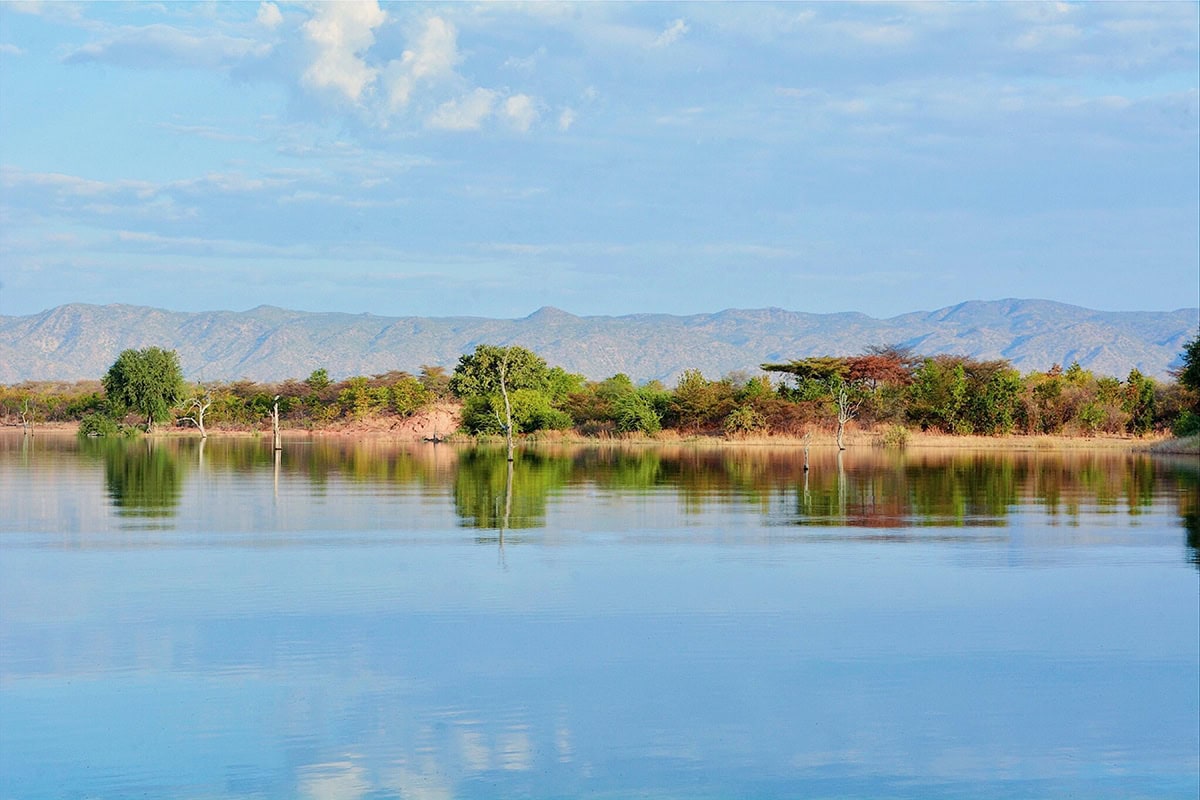
The Kariba project was certified under the now-inactivated methodology VM0009 Methodology for Avoided Ecosystem Conversion.
Under VM0009, projects predict deforestation in a reference area with similar characteristics to the project area. Emission reductions or removals, known as ERRs, are then estimated based on this projection. Some of these ERRs would be issued as Verified Carbon Units (VCUs), some would be placed in Verra’s buffer pool, and some may have been reserved to be issued at a later date.
Projects must then regularly determine whether the actual deforestation in the reference area corresponds to their initial projections. Based on this, projects then determine how many ERRs the project had actually generated. When credits have been issued beyond the revised projections, projects would have to make up the difference in subsequent verification periods.
However, given that the project withdrew from the Verra Registry, there are no subsequent monitoring periods where such compensation could occur.
At the time of the October 2023 suspension, the Kariba project had verified 41,955,689 ERRs. The table below breaks down how these ERRs have been processed.
Issued as VCUs, which could be sold or used for offsetting 26,822,953
Verified but not yet issued as VCUs; these credits are still held in the Verra Registry and could not be sold or used for offsetting 10,083,263
Contributed to as credits to Verra’s buffer pool to cover potential reversals resulting, for example, from fires or other unexpected risks 5,049,473
TOTAL VERIFIED ERRs41,955,689
As part of Verra’s review, it was found that the actual deforestation observed in the Kariba project’s reference area was significantly lower than the initially estimated deforestation. The number of excess credits issued as a result of this discrepancy is 15,220,520 (of the 26,822,953 credits issued). These are credits that can no longer be compensated for in subsequent monitoring and verification periods, given the project’s withdrawal from the Verra Registry.
Therefore, Verra will now exercise the following to enable corrective action:
Verra will engage with the project proponent, CGI, and request compensation for the 15,220,520 excess credits (of which 10,321,531 have been retired, while 4,898,989 are active VCUs in other accounts). The status of retired VCUs will not change and will remain valid in the Verra Registry.
In parallel, Verra will engage with the account holders of the remaining active VCUs (i.e., 4,898,989) and invite them to voluntarily cancel those credits. These cancellations would count toward the compensation request of CGI.
Verra will permanently remove the verified but not issued ERRs, so they can never be used (i.e., 10,083,263).
In addition, given the project’s withdrawal from the Verra Registry and to ensure the highest level of environmental integrity of all credits it issues, Verra will conservatively assume that emission reversals may have taken place in the project. As such, Verra will immediately cancel the entirety of the credits the Kariba project contributed to the buffer pool (i.e., 5,049,473 VCUs). Normally, Verra would wait to confirm these reversals, but in this case, given the project’s withdrawal and complexity, Verra has decided to take pre-emptive action.
Further, Verra will use its Long-Term Monitoring System (LTMS) to periodically track deforestation in the project in the years ahead. If the system observes reversals beyond what is covered by the project’s buffer pool contributions, additional credits will be cancelled from the buffer pool to ensure the full environmental integrity of all credits Verra issues.
These steps underscore Verra’s proactive commitment to transparency and integrity, proactively safeguarding the credibility of the market.