
The Lib Dems are far from the only ones seeking to adjust and adjust quickly.
Part of their strategy is to extend their appeal towards recent Conservative voters unattracted by both Reform and Kemi Badenoch’s leadership of the Tories.
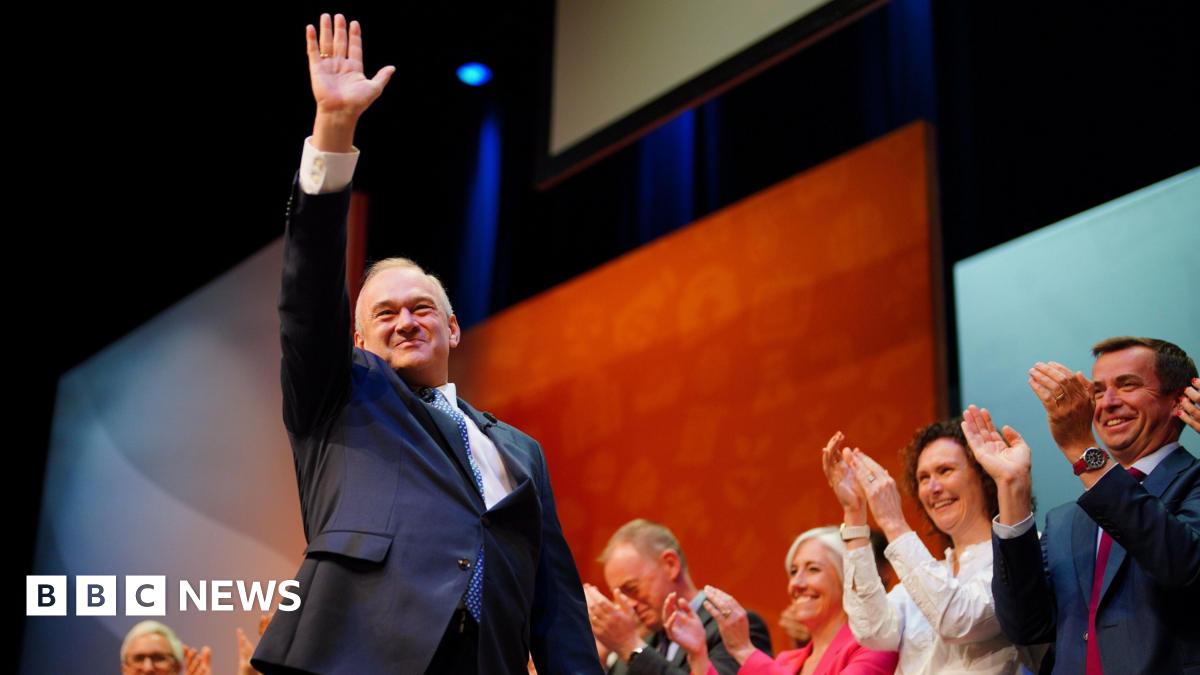
Sir Ed Davey’s pitch was both direct – “my message to you is this: come and talk to us” – and also packaged in the language of a former Conservative prime minister.
The Lib Dem leader talked of “male voice choirs and Hogmanay, county shows and school fairs, fish and chips, village greens and cricket pavilions”.
It reminded me of Sir John Major’s words more than three decades ago:
“Fifty years from now Britain will still be the country of long shadows on county grounds, warm beer, invincible green suburbs, dog lovers and pools fillers and – as George Orwell said – ‘old maids bicycling to Holy Communion through the morning mist’ – and if we get our way, Shakespeare still read even in school.”
Both men, today and in 1993, are attempting to portray a pride in what they see as an understated patriotism and respect for traditions, a small c conservatism.
The Liberal Democrats hope they can be seen to represent the clearest and most authentic big party antidote to Reform.
And they are buoyed by internal polling suggesting more people are at least open to voting Lib Dem than for any other party right now.
But their challenge is they face a new and noisy rival in Reform for the protest votes of those put off by both the Conservatives and Labour.
They have grounds to hope and to worry in this increasingly competitive, noisy and fluid politics – and a determination not to be squeezed out of the conversation.