
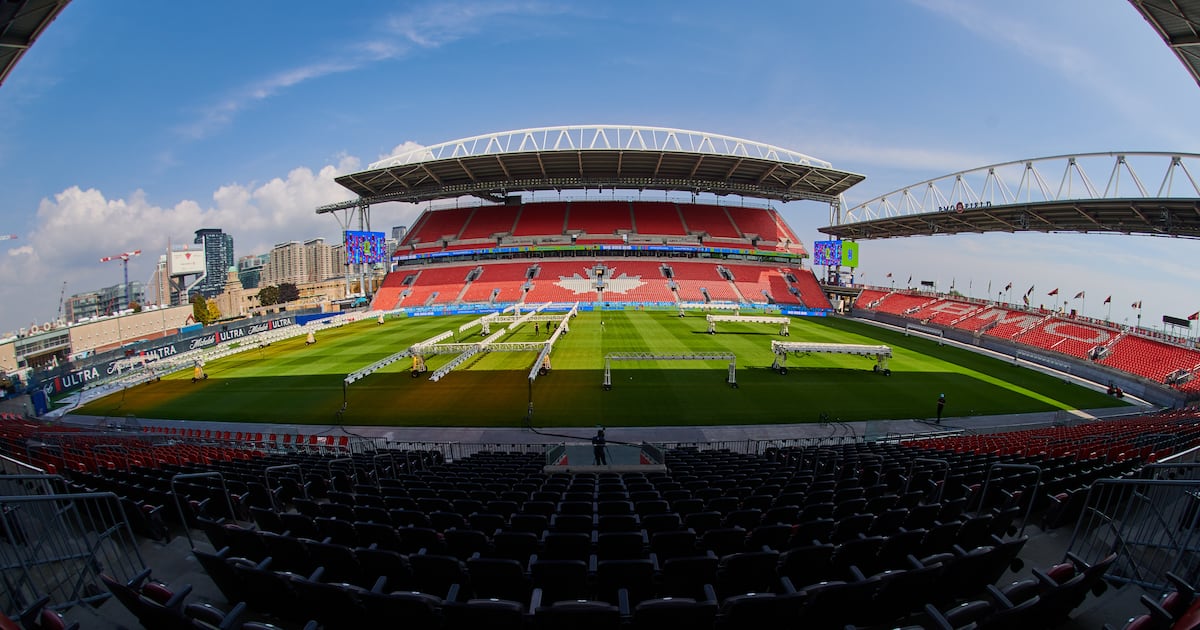
The first round of upgrades to Toronto’s BMO Field were revealed for the first time Tuesday, with giant new video screens sitting high above the pitch of the future FIFA World Cup arena.
When Toronto hosts its six matches at the field next summer, fans will be screaming in the stands of a stadium that has undergone $146 million in renovations and an increased capacity by 17,000 seats.
“The stadium capacity is about 28,000. We’ll be putting it up to (roughly) 45,000 to meet the FIFA requirement,” Sharon Bollenbach, executive director of FIFA World Cup 2026 for the City of Toronto, told CTV News.
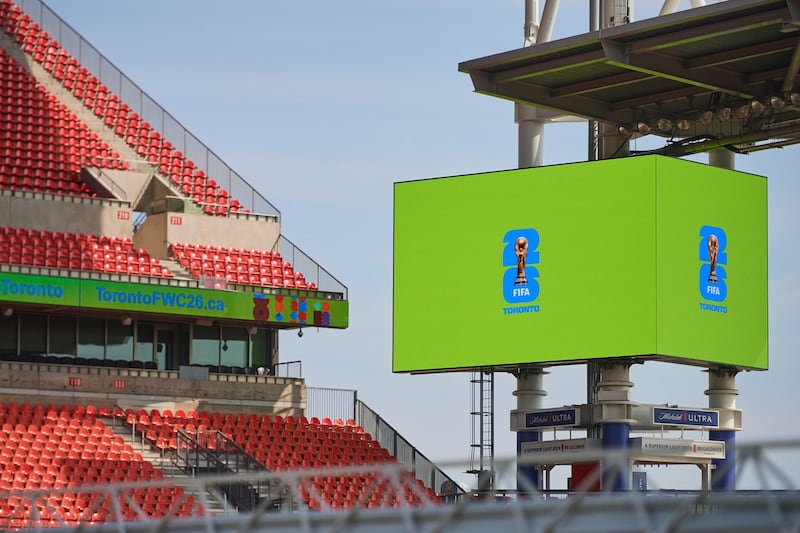 Field work continues at BMO Field as the City of Toronto and MLSE complete the first phase of upgrades in transforming the space into the 2026 World Cup ready Toronto Stadium in Toronto, on Tuesday, Sept. 23, 2025. THE CANADIAN PRESS/Sammy Kogan Field work continues at BMO Field as the City of Toronto and MLSE complete the first phase of upgrades in transforming the space into the 2026 World Cup ready Toronto Stadium in Toronto, on Tuesday, Sept. 23, 2025. THE CANADIAN PRESS/Sammy Kogan
The City of Toronto, along with Maple Leaf Sports and Entertainment (MLSE) revealed the progress of the renovations.
“It’s the countdown to June the 12th when Canada’s men’s team will be playing their first World Cup match on home soil,” MLSE COO Nick Eaves says.
BMO Field will then be called the Toronto Stadium, temporarily and for the duration of the tournament.
The new screens are 30 feet high and 50 feet wide and are visible from all seats.
“They’re really sort of, I would say, kind of the jewels in the crown here,” says Bollenbach.
Part of the phase one renovations feature upgrades to the video production and broadcast room, so it can handle FIFA broadcasts streaming to billions of fans around the world. There are also improvements to food preparation and concessions, with the biggest upgrades set for this fall.
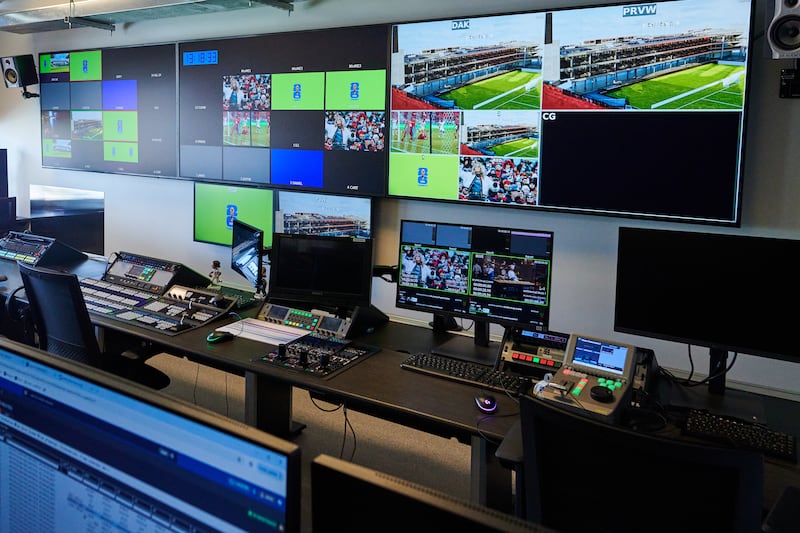 Inside BMO field Media tour the updated control room at BMO Field as the City of Toronto and MLSE complete the first phase of upgrades in transforming the space into the 2026 World Cup ready Toronto Stadium in Toronto, on Tuesday, Sept. 23, 2025. THE CANADIAN PRESS/Sammy Kogan
“There will be 10,000 seats going in at the north end and about 7,000 going in at the south end,” says Bollenbach.
The additional seats will be temporary with one new permanent hospitality structure being built at the north end of the stadium.
Construction on phase two of the upgrades is expected to start in late November.
One of the biggest changes is taking place on the field. In order to comply with FIFA requirements, BMO Field will remove the current, 100 per cent natural grass to install more durable grass that is reinforced by a synthetic base.
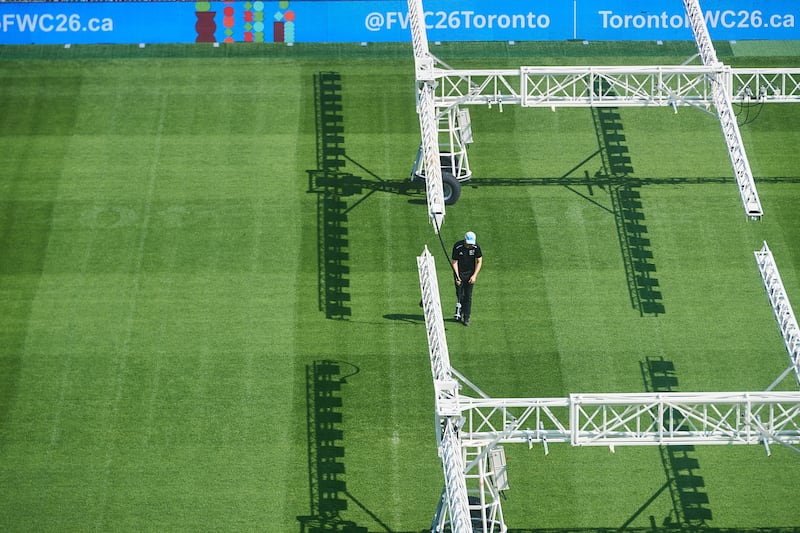 BMO Field Field work continues at BMO Field as the City of Toronto and MLSE complete the first phase of upgrades in transforming the space into the 2026 World Cup ready Toronto Stadium in Toronto, on Tuesday, Sept. 23, 2025. THE CANADIAN PRESS/Sammy Kogan
On top of that, the on-field action will likely look different because of the new lights that will be installed throughout the arena.
“That’s been put into place principally to really deliver on the broadcast quality that FIFA World Cup requires,” says Eaves.
As of now, MLSE says the project is on time and on budget. Phase two is expected to finish by May 12, when the city must hand over control to FIFA for the duration of the tournament.