
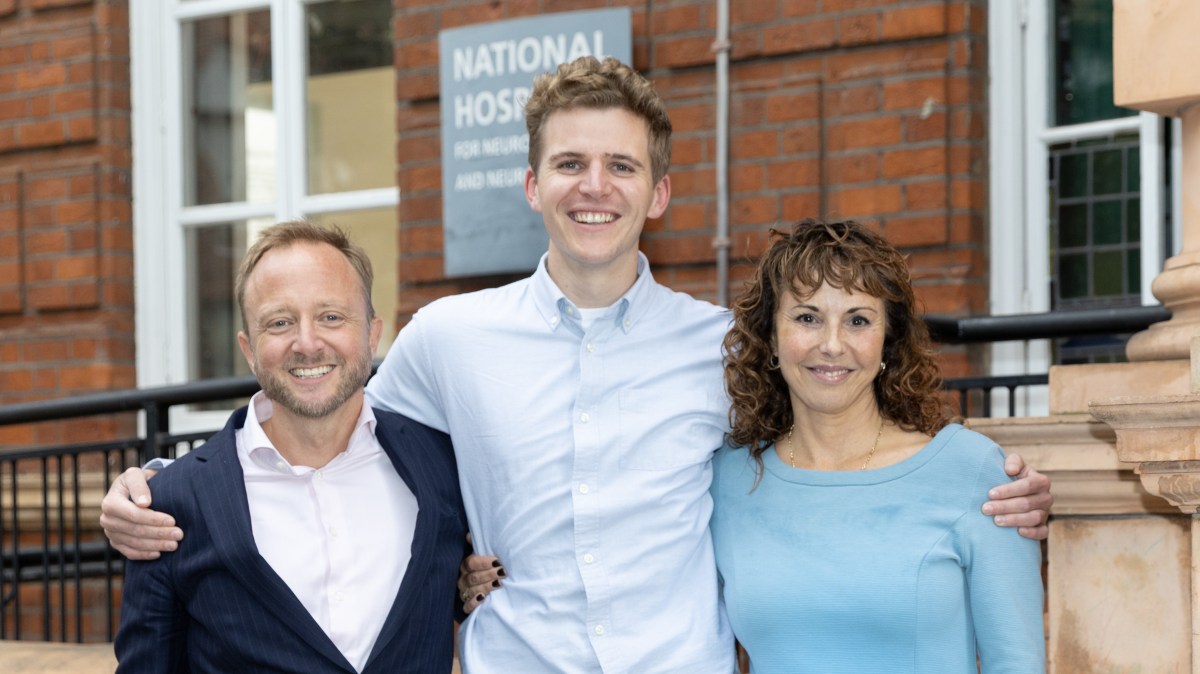
British researchers have successfully treated Huntington’s disease for the first time in a landmark breakthrough.
A pioneering gene therapy worked “better than anything we dreamt of” in tackling the neurodegenerative condition which affects movement, thinking and mood, researchers said.
“Today we remove Huntington’s disease from the column headed ‘untreatable’ into the column headed ‘treatable’,” Professor Ed Wild, consultant neurologist at the University College London Hospital, said.
Professor Sarah Tabrizi, who led the trial and is director of UCL’s Huntington’s disease centre, said the results were “spectacular”. She added: “What [the results] mean is people will be able to work longer, be independent, function better — it will slow the progression of this truly terrible disease. The results are better than I could have ever imagined.”
She said that it could mean that Huntington’s, which resembles a combination of dementia, Parkinson’s and motor neurone disease, is no longer a death sentence for patients. She added: “These are the best results I’ve seen in my nearly 30 years of Huntington’s disease research.”
About 8,000 people in the UK have the neurodegenerative condition, which is caused by a genetic mutation.

The gene therapy requires brain surgery
ALAMY
The researchers tested a new gene therapy, AMT-130, which is delivered by brain surgery.
The early stage clinical trials among 29 patients concluded that those who were given a high dose of the treatment experienced 75 per cent less disease progression after 36 months, according to uniQure, a gene therapy company based in the Netherlands and the US.
A single dose is expected to last for a person’s life.
Jack May-Davis, 30, from Sussex, found out that he carried the Huntington’s disease gene when he was 19.
Two of his family members, including his father, have died from the condition.
Since discovering he carries the gene, May-Davis has been involved with trials at the National Hospital for Neurology and Neurosurgery at University College London Hospitals.
“The results are astonishing — I’m lost for words,” he said. “It is just amazing.”
“When I started participating in trials I never thought something would be developed in a timeframe that might be actually be useful for me.
“This feels like a huge moment that will mean so much to families who carry the Huntington’s gene.”