

Report headlinespublished at 12:04 BST 24 September
12:04 BST 24 September
Mr McCullough highlights what he calls the “headlines” of the review.
First, assertions that the PSNI have been conducting systemic wholesale surveillance of journalists and lawyers are misplaced – he says the detailed searches have provided no support for concerns at that scale.
Second, where covert measures are being deployed in relation to the groups under review, they are largely being “lawfully” applied.
The report includes a detailed breakdown of the application, authorisation and investigation in each category to understand the ways the powers can be exercised and to show how he has reached the conclusion that they are being “appropriately exercised”.
Third, he says, any proper understanding of what the PSNI has and has not been doing in relation to areas within Mr McCullough’s remit “requires specificity in the identification of the particular covert powers involved and understanding the nature of those”.
Fourth, Mr McCullough says obtaining communications data is the most widely used covert measure.
He says it does not involve accessing the content of any communications, and technically does not constitute surveillance.
He says it is intrusive but far-less intrusive than other covert powers.
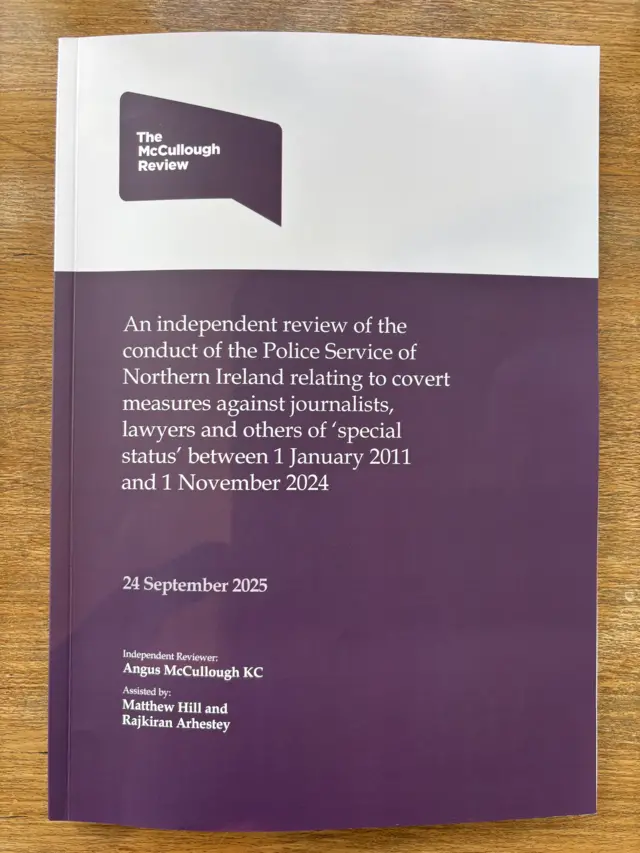 Image caption,
The report was published on Wednesday morning
More of Mr McCullough’s findings can be found here., external