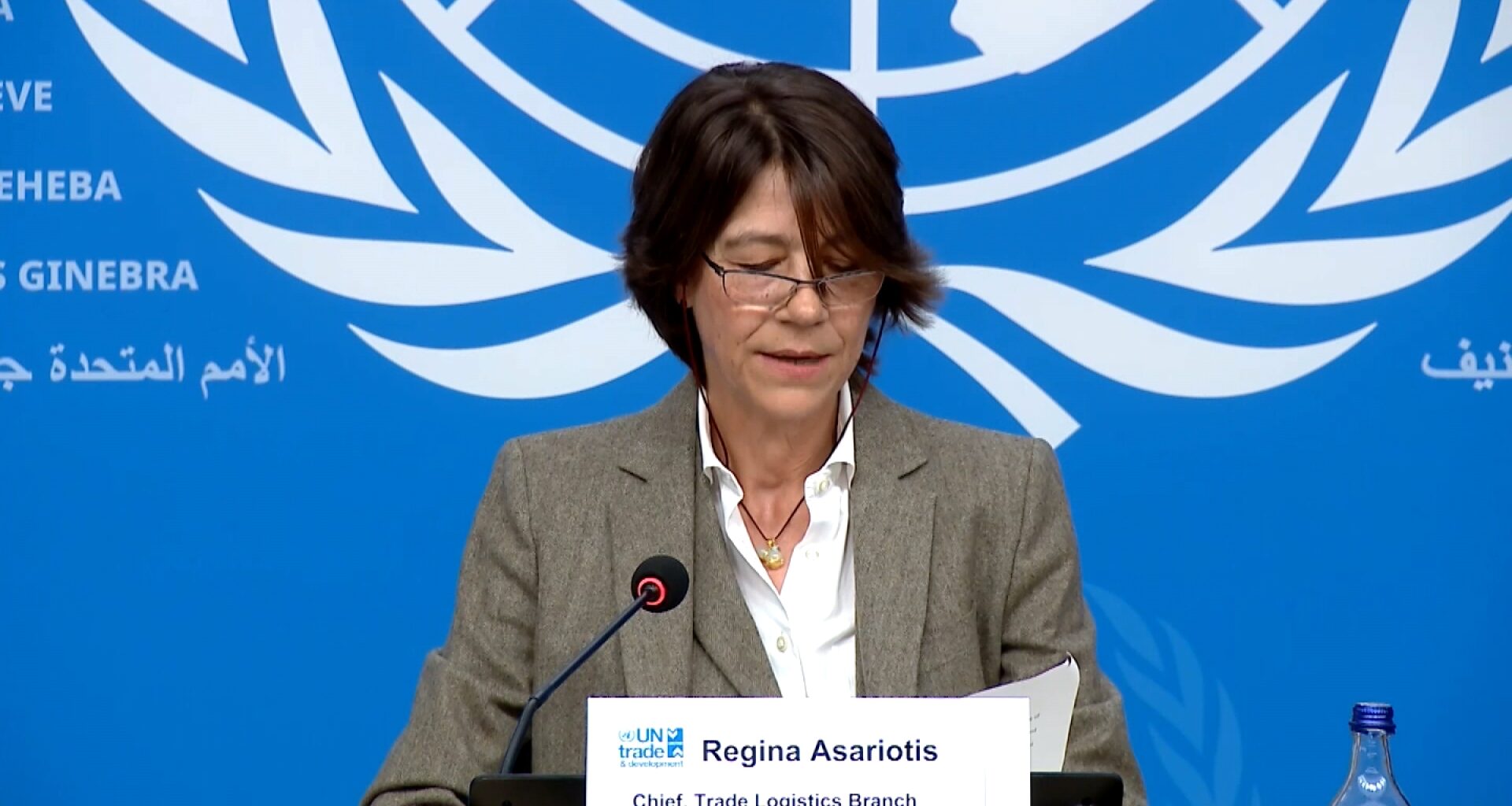
1. Wide shot, Palais des Nations
2. Various shots, briefing room
3. SOUNDBITE (English) Regina Asariotis, Chief, Trade Logistics Branch (UNCTAD):
“We know the global environment has become more complex. We know geopolitical tensions are affecting the Red Sea and have forced costly rerouting around the Cape of Good Hope. Risks remain, for example, in the Strait of Hormuz, a vital artery for global oil trade. New tariffs are disrupting established trade flows, freight rates are increasingly high and volatile, and delay and disruption are becoming the norm. And these challenges drive up costs. Small island developing states, least developed countries, and net food-importing nations are the most vulnerable, as higher freight costs quickly translate into more expensive imports and food insecurity.”
4. Wide shot, briefing room
5. SOUNDBITE (English) Regina Asariotis, Chief, Trade Logistics Branch (UNCTAD):
“Seaborne trade has grown in 2024 by 2.2 per cent. At the same time, rerouting has meant longer shipping routes, with ton-miles increasing by about 6 per cent. This, in turn, has led to higher transport costs, delays, and greenhouse gas emissions, as well as a reshuffling of shipping networks affecting ports, including in Africa. For 2025, the big picture is heightened uncertainty and volatility, with growth forecast to slow to only half a percent.”
6. Wide shot, briefing room
7. SOUNDBITE (English) Regina Asariotis, Chief, Trade Logistics Branch (UNCTAD):
“Digital solutions like maritime single windows and port community systems are proving essential for port efficiency and for smoother trade. But greater reliance on digital systems and solutions across the industry has also heightened cyber risks and vulnerabilities, which need to be addressed. Gender inclusiveness in ports is improving, with nearly 40 per cent of managerial positions held by women, but women remain underrepresented in operational jobs, where automation may create new opportunities. Maritime workforce development and training will be vital for resilience. Building more consistent implementation and enforcement of rules to protect seafarers’ rights by flag states, ports, and the industry will be key to turning the tide on the growing shortage of seafarers.”
8. Wide shot, briefing room
9. SOUNDBITE (English) Regina Asariotis, Chief, Trade Logistics Branch (UNCTAD):
“A major development is the IMO net zero framework, which will be considered for formal adoption this October. It would introduce a global fuel standard, a carbon pricing mechanism, and a net zero fund to support research, technology, infrastructure, and just transition initiatives, especially in small island developing states and least developed countries. And if adopted, revenues from this fund could help developing countries decarbonize.”
10. Various shots, briefing room