
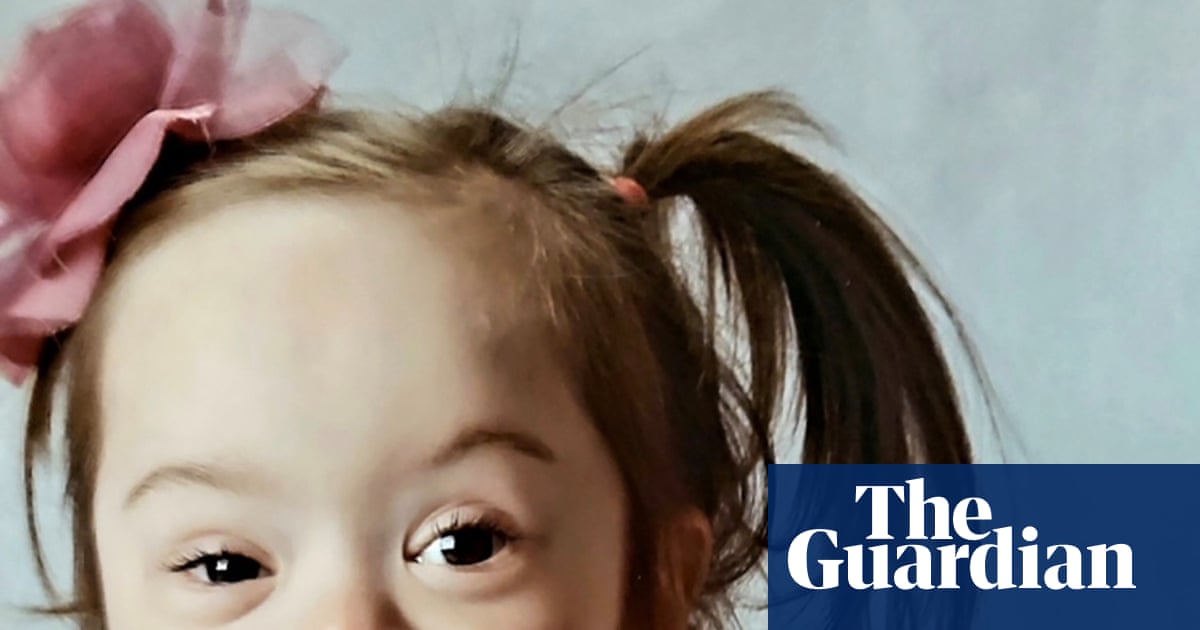
A grieving mother has pleaded with doctors to “truly listen to parents” after she recalled watching her toddler die from sepsis as clinicians stuck to their diagnosis that she had a fever.
“I will never forget the desperate attempts to resuscitate her tiny body,” Miranda Jowett said on Thursday after the conclusion in Melbourne of an inquest into her daughter’s death.
“Parents know when their child is gravely ill. I urge doctors to set aside assumptions and truly listen to parents.”
Jowett took her daughter, Dio Kemp, to Melbourne’s Monash Medical Centre with a rash or fever four times and twice to a family GP, before she died from sepsis in November 2019.
Miranda Jowett, mother of Dio Kemp, outside the Victorian coroner’s court in Melbourne. Photograph: James Ross/AAP
But medical professionals told her the toddler, who had Down’s syndrome and was non-verbal, had a virus or fever, should be given pain medication and to wait for the child’s fever to break.
“Children with an intellectual disability must be given the highest priority in emergency care,” she said.
“Many cannot communicate their symptoms like neurotypical children can and that makes them especially vulnerable.”
A coroner on Thursday found better medical investigation of Dio’s symptoms by doctors and clinicians in the three days before she died could have “potentially” saved her life.
Victorian deputy state coroner, Paresa Spanos, found a GP and two Monash clinicians did not provide sufficient care to Dio and her mother.
She said an emergency department clinician and a rapid review clinic clinician at the hospital, who saw Dio between 22 and 23 November, provided clinical management and care that was “not reasonable by current standards”.
She said the ED clinician failed to consider the possibility of a bacterial infection and did not comply with Monash Health guidelines.
Spanos said the clinician failed to recognise Jowett’s heightened concern, which should have prompted closer monitoring, and more frequent observations or further investigation.
The rapid review clinic doctor on 23 November failed to give due weight to Dio’s overall clinical picture, on day five of a febrile illness, and her plan for a GP review in two days was “not safe enough” as no clear guidance was given, the coroner said.
And she said a GP’s management and care of Dio, on 26 and 28 November, was also “not reasonable by current standards”.
While Spanos could not determine a time when Dio’s bacterial infection would have been detectable, she said “as a matter of logic there must have been a time within the last three days of Dio’s life when there was a potential to prevent her death”.
“This would have required competent examination by a GP or hospital clinician, recognition of the possibility of a bacterial infection, urgent investigations and the timely initiation of treatment,” Spanos said.
The coroner said Monash had undertaken a review after the toddler’s death and made changes to its care guidelines already.
Outside court, Jowett’s lawyer, Samuel Pearce, said the findings stressed the importance for clinicians to take parental or caregiver concerns into account with sick children.
“We welcome the findings from the coroner, and we welcome the changes that have been implemented since Dio’s death,” he said.
“But we urge that those changes be accompanied by rigorous training and cultural change to ensure that this does not happen to another family.”
Dio’s uncle, Paul Oliver, asked Monash Health to listen to parents, because Jowett “knew instinctively” how unwell her daughter was before her health began to deteriorate.
“Unless the culture within pediatric emergency medicine starts to change at Monash, more children will die,” he said.
A Monash Health spokesperson said it would review the coroner’s findings and consider “any learnings or recommendations to ensure our patients receive the best care possible”.