
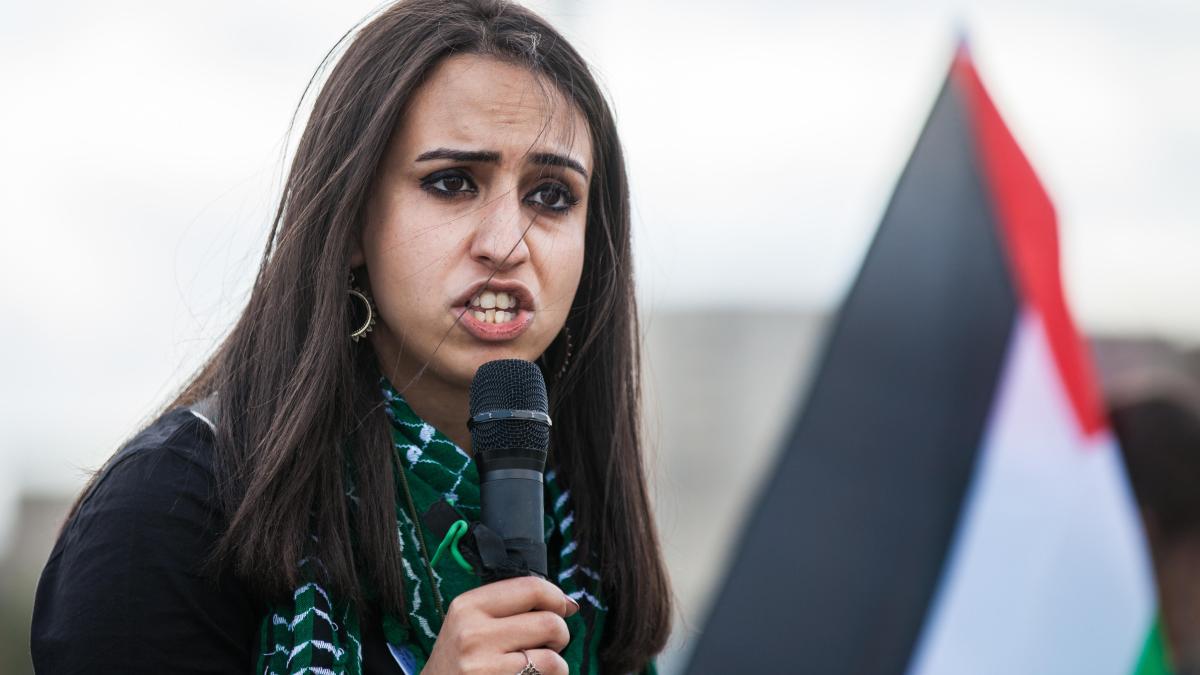
The home secretary has warned of a “recipe for chaos” in criminal cases involving Palestine Action if the High Court is allowed to hear an appeal against its designation as a proscribed terror group.
Huda Ammori, 31, the co-founder of the group, was given permission by a High Court judge to proceed with a judicial review claiming that the ban breaches her human rights.
More than 1,600 people have been arrested for allegedly supporting the group and 138 have been charged with a criminal offence since the law came into effect on July 5.
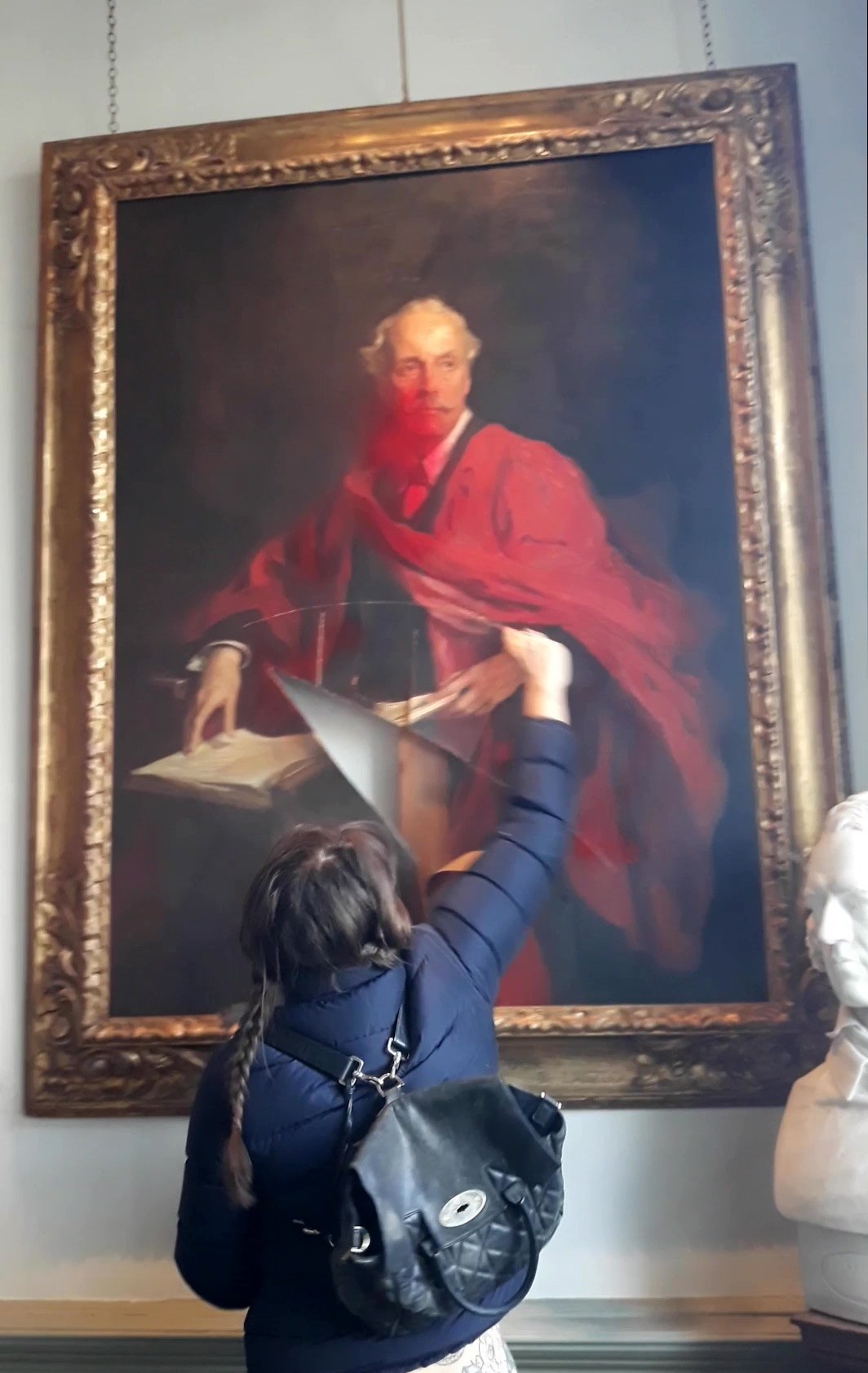
Yvette Cooper, who was then home secretary, proscribed the group after incidents including the vandalism of two military Voyager aircraft at RAF Brize Norton, which reportedly caused £7 million of damage. A portrait of Lord Balfour at Trinity College, Cambridge, was also defaced last year:
Shabana Mahmood, the home secretary, is fighting the approval of the judicial review of the terrorism designation. She argues any challenge to the ban should be heard by the Proscribed Organisations Appeal Commission.
Sir James Eadie KC, for the home secretary, said Mr Justice Chamberlain’s approval of the review wrongly suggested that defendants in criminal cases could challenge the ban as part of their defence. Eadie said: “It would be a recipe for chaos which would arise in the context of every single proscription prosecution for every single proscribed organisation.”
He said the ban should be challenged at the appeal commission rather than the High Court. “Parliament has created a comprehensive and detailed regime for the proscription of organisations which are concerned in terrorism,” he added.
The barrister said in a written submission that the proscription of terror groups was a “pre-emptive mechanism designed to degrade the structures and capabilities of an organisation”. He added: “Proscription is deliberately a strong executive measure, which has immediate practical consequences.”
Ammori claims the ban “amounts to a disproportionate interference” of her rights to freedom of expression and that the home secretary failed to consult Palestine Action “in breach of natural justice”. The case is due to be heard at a three-day hearing in November.
Raza Husain KC, representing the activist, told the court the challenge to the ban was “exceptional” because of the “unique nature of the case — the proscription of a protest group with widespread popular support”.
He highlighted the “ongoing and irremediable chilling of speech and assembly” and said the appeal through the appeals commission “offers no remedy to the hundreds of people already arrested for offences related to support for Palestine Action”.

A Palestine Action protest on September 6
TOBY SHEPHEARD FOR THE TIMES
Husain said the home secretary had failed to consider the “negative discriminatory effect against Palestinians or those in support of the Palestinian cause” and cited the “measure’s disproportionate impact on those in relevant protected categories, including in seeking employment and participating in civil society”.
The ban is the first time a group that does not advocate violence has been proscribed as a terrorist organisation and has had “draconian consequences” for thousands of people, Husain added.
He said Palestine Action had large support, including 248,000 followers on X, and the ban had led to “widespread and ongoing civil disobedience”.
The barrister said it was “at least arguable” that Cooper had not acted for national security reasons, but for “improper” purposes.
The court was told that only two cases had been considered by the appeals commission, the People’s Mujahideen of Iran and the Tamil Tigers. The bans on both groups were lifted.
The case is being heard by Lady Chief Justice Baroness Carr of Walton-on-the-Hill, Lord Justice Lewis and Lord Justice Edis. Carr said at the start of the hearing that the court had received “closed” evidence from the home secretary, but the judges did not understand why it needed to be secret.

The hearing continues.
Ammori, from Bolton, Greater Manchester, said before the hearing: “It is deeply troubling that the former home secretary decided to try to stop a full legal review of her widely condemned decision to ban a protest group as a ‘terrorist’ organisation for the first time in British history.
“A successful appeal would not only shield an unlawful ban from scrutiny — it would deny justice to thousands of people whose fundamental free speech rights have been violated by this ban.”
Ammori lost a High Court bid to temporarily block the ban from coming into effect. The appeal court dismissed a further challenge less than two hours before the proscription came into force.
Sally Rooney, the Irish novelist best known for Normal People, said last week that she “can no longer safely enter the UK without potentially facing arrest”, because of her support for Palestine Action.
The first people charged with supporting Palestine Action were arrested at a demonstration in Parliament Square, Westminster, shortly after the ban came into effect. They included Jeremy Shippam, 72, of Yapton, West Sussex, and Judit Murray, 71, of West Ewell, Surrey.
Westminster magistrates’ court was told the protesters allegedly held placards reading, “I oppose genocide, I support Palestine Action”. All the defendants pleaded not guilty and a trial is scheduled for March.
Protesters have so far been charged with an offence that carries a maximum sentence of six months in jail but there is a maximum sentence of 14 years for some breaches of the ban.