
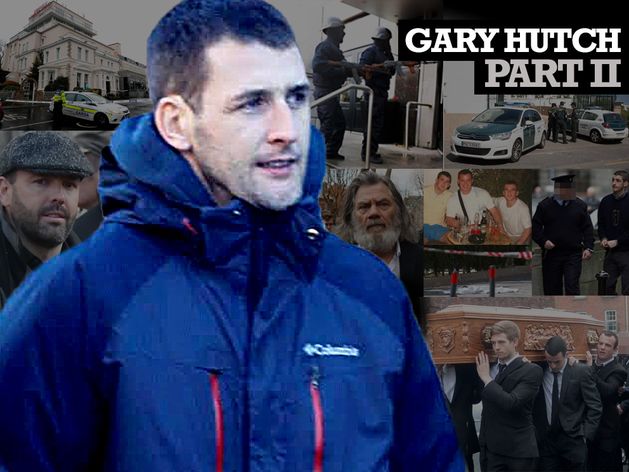
Unsurprisingly, Gary Hutch absolutely idolised his uncle, The Monk. However, he showed none of the same restraint.
The Monk’s generation had risen through the Bugsy Malone days of car theft and armed heists, building reputations through harsh discipline and careful planning. But the rules of the criminal underworld were now shifting.
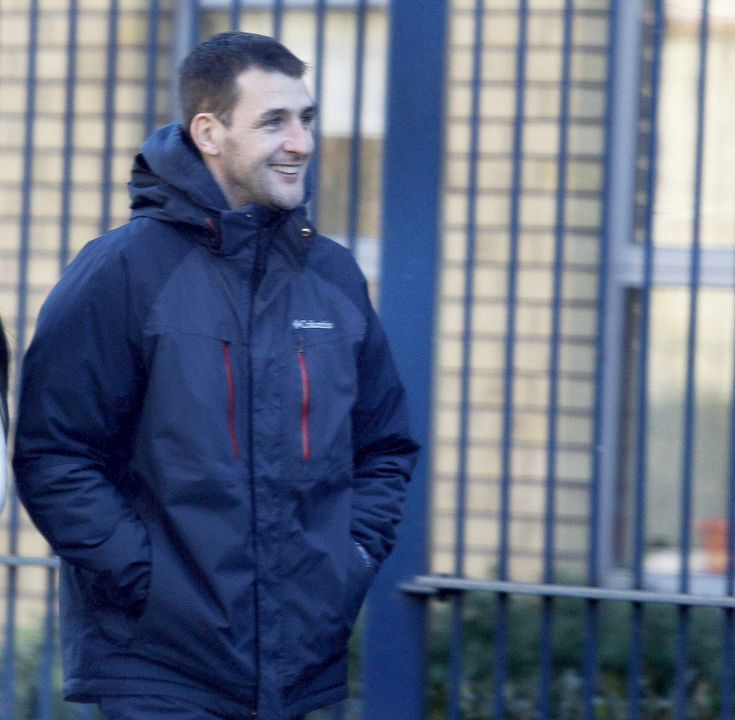
Gary Hutch just months before he was shot dead in 2015
The age of big robberies and profit sharing with the Provos was giving way to something else, industrial scale drug trafficking, international networks, and the rise of an Irish mafia whose reach extended far beyond Dublin’s streets.
At the heart of this new empire was Christy Kinahan Sr.. Throughout the late 1990s, he had been consolidating his power, even while serving time for a cheque forgery case. His partner, John Cunningham, ran operations in the Netherlands until Dutch police intercepted a wiretap in which he discussed ecstasy tablets and firearms.
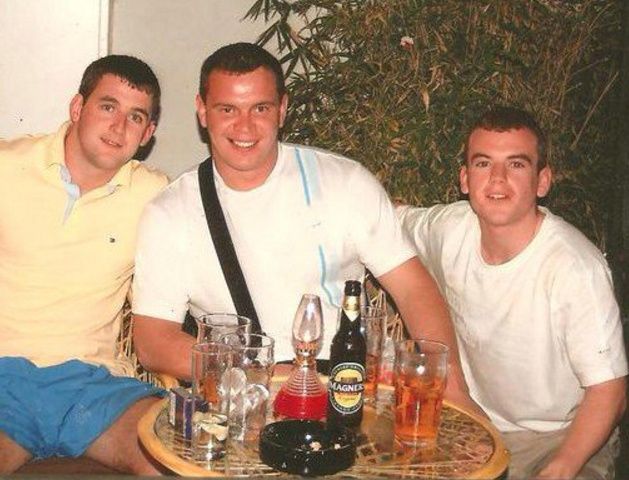
Gary Hutch with Paddy Doyle (centre) and James ‘Mago’ Gately (right)
Cunningham’s conviction threatened to slow their momentum, but only a month later, Christy was released from prison. He wasted no time, moving first to the UK and then travelling between England, Holland and Spain, laying the groundwork for something far bigger.
By this time, his sons Daniel and Christopher Jr, were no longer on the sidelines. They were now registered as residents in the UK and were being positioned as the natural heirs.
Anyone who wanted to climb within the organisation now had to prove their loyalty directly to them. The signal had been made clear. The Kinahans were no longer a loose network, they were becoming a dynasty.
Back in Dublin, the demand for drugs was booming. Chris Casserly, a trusted associate of Christy Kinahan, managed an apartment in Harold’s Cross that effectively served as makeshift headquarters.
Between November of 1999 and February of the year 2000, they had shifted 80,000 ecstasy tablets, a staggering quantity, and proof that this was no longer the business of smuggling a few bags through customs. It was becoming an industry.
The Dublin operation was now fully integrated into Christy’s wider network abroad.
This is the environment Gary Hutch stepped into as a young man. He was no longer just a boy from the flats, but an ambitious criminal in his twenties.
Around him was a younger generation that included his close friend Ross Browning, who would later become Daniel Kinahan’s right-hand man in Dublin, Barry Finnegan, Robert Brown, and a cluster of others from Hardwick Street.
They had grown up idolising the joyriders of the 1980s, and now they were keen to make their own mark, diving headfirst into the chaotic, anything – goes era of small-time crime that saw them smashing windows at McDonalds and chasing thrills across the streets of Dublin.
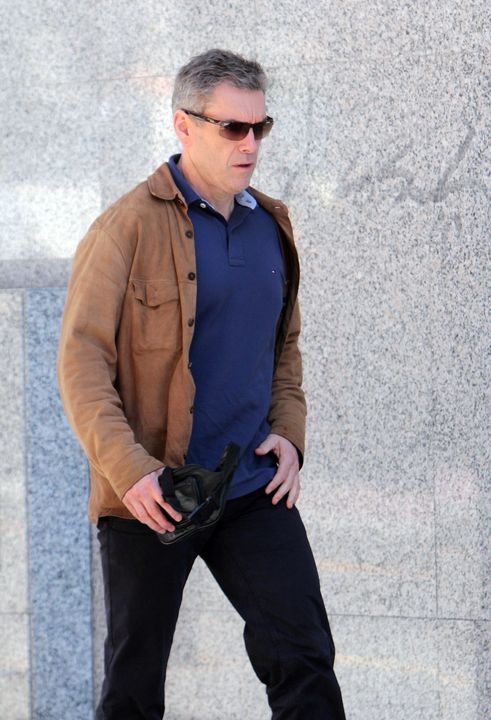
Christy Kinahan
The contrast from their parents’ generation could not have been more stark. T
heir mothers and fathers had marched in Concerned Parents Against Drugs rallies, demanding that heroin be driven out of their streets.
But these boys saw ecstasy and cocaine as different, unlike heroin, they were glamourous drugs, fun and lucrative. Their generation was the product of the Celtic Tiger, a boom time in Ireland where money was everywhere, and the demand for cocaine, insatiable.
It cut across all social groups, from construction workers earning hefty paychecks, to professionals with disposable incomes and teenagers hitting the nightclubs. They all wanted it, and the Kinahans were there to supply.
Unsurprisingly, Gary Hutch absolutely idolised his uncle, The Monk. However, he showed none of the same restraint.
Gerry had built his fortune with careful calculation and discretion, accumulating wealth without drawing attention. Gary, contrastingly, thrived on the adrenaline. He lived recklessly, chasing fast cars, drugs, and the thrill that came with danger.
Around the turn of the millenium, he was involved in breaking into a house in Malahide, terrorising a businessman and his wife, taking €40,000 worth of jewellery and €8,000 worth of cash. The job was messy, and they were caught. Gary was jailed for six years, his first serious prison sentence marking the moment he stepped out of teenage chaos and fully into the world of organised crime.
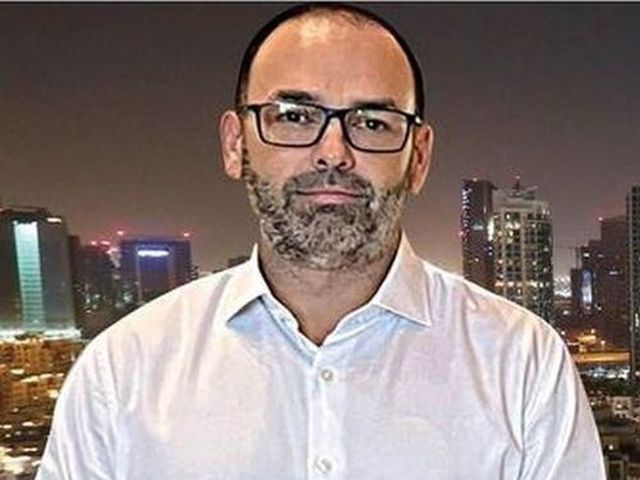
Daniel Kinahan
Upon his release, the Kinahan empire had grown even stronger. Christy however, had not let old wounds fade. He still held a grudge against Raymond Salinger, the man whose information had triggered his cheque forgery conviction in the 1990s. In 2003, Salinger, who had recently returned to Dublin, was watching a Leeds vs Chelsea football match when two men in balaclavas walked calmly into the bar and shot him dead, making him the first definitive victim of the Kinahan cartel.
Those close to the Kinahans believed the gunmen were two of Daniel’s associates, with Gary Hutch among them. For Gary, this was a pivotal moment. He had demonstrated the loyalty that had become the unspoken price of entry into the cartel.
But that same year, tragedy struck closer to home, when Gary’s cousin, Christopher “Bouncer” Hutch, died of a cocaine overdose. His mother disputed the official explanation, insisting there was more to the story, but whatever the truth may have been, it underlined how deeply drugs were eroding their generation. The older Hutch men had despised heroin, even marched against it, but now, cocaine and ecstasy coursed through their children’s lives. Gary was no exception.
Meanwhile, The Monk was investing his robbery wealth into property, buying up flats around Buckingham Village, Talbot Street and further afield. He partnered with figures like Matt Kelly, Paddy Shanahan, who was later shot dead, and businessman Jim Mansfield Sr. He was a world away from the chaos of Gary’s circle. Gerry saw real estate as security. Gary saw the Kinahans as the future.
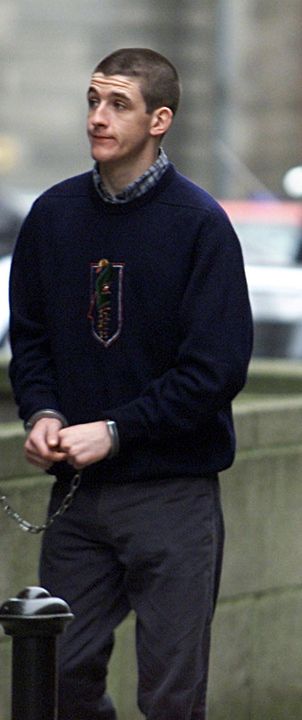
Gary Hutch was shot dead in 2015
By the mid-2000s, Spain had become the ultimate finishing school for ambitious Irish criminals, offering both a glamorous lifestyle and direct access to ports where Moroccan hashish and Colombian cocaine entered Europe.
Many young Dubliners relocated to Costa del Sol, to embed themselves in these expanding networks and establish their place in the Spanish underworld. Amsterdam also played a key role as a hub for coordinating shipments across Europe. Freshly released from prison, Gary Hutch moved to Amsterdam and Spain to secure both wealth and respect while fully immersing himself in the new era or organised crime.
Building on this foothold, Gary joined Daniel Kinahan’s crew in Amsterdam by 2005, where he linked up with “Fat Freddie” Thompson, who was in the midst of a violent gang war with his rival, Brian Rattigan. Thompson had already brought in Paddy Doyle from Dublin’s north inner city as a personal hitman, and the three of them used Amsterdam as a base to escape the heat in Ireland, while coordinating logistics for the Kinahan drug shipments into Europe.
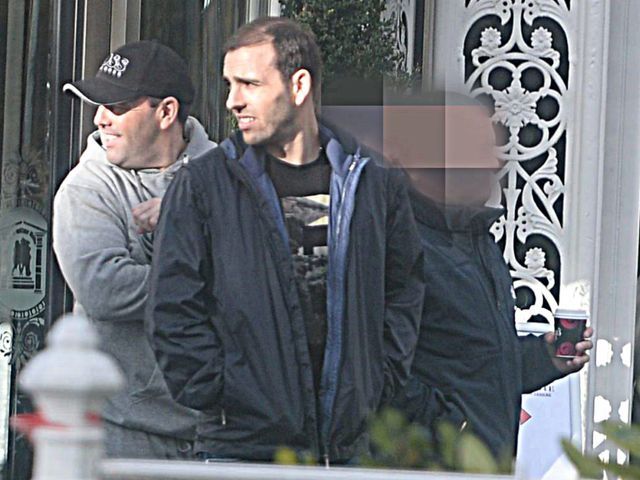
Daniel Kinahan and brother Christopher Jr
But Doyle soon became a liability, showing his disrespect toward Daniel Kinahan by spending more of his time with Peter “Fatso” Mitchell, a former member of the Gilligan gang who had established himself on the Costa del Sol with his Paparazzi bar. Fatso Mitchell, despite the nickname, was in peak physical shape and was steadily building his own influence on the coast. For Daniel, Doyle’s growing closeness with him was more than bad manners, it was a challenge to his authority. On February 4th 2008, that challenge was answered.
Doyle was sitting in a jeep with Gary Hutch and another senior Kinahan lieutenant outside his home in Cancelada. A power cut left the house without electricity, and he had asked Hutch to collect him so he could pass the time at the gym while it was being restored. Just as they were about to pull away, a BMW pulled up beside them and Eric “Lucky” Wilson stepped out, raising a gun and firing directly into the jeep. Doyle was killed instantly.
In the chaos, Hutch lost control of the car and crashed into a lamppost, forcing him to scramble out and flee on foot. In the aftermath, Kinahan loyalists attempted to deflect suspicion by blaming the attack on the Russian mafia but investigators quickly concluded it was an internal “housekeeping” hit, sanctioned by Daniel Kinahan himself. Despite this, Hutch returned to Dublin to carry Doyle’s coffin, a surreal show of respect to a man he had effectively helped betray.
Just months later, Peter “Fatso” Mitchell himself was targeted. In August of 2008, as he was having a drink out the El Jardin bar, a masked gunman sprinted towards him with a pistol. Mitchell dived for cover and in the midst of the chaos, the gunman slipped, shooting him in the shoulder and leg rather than killing him.
Two bystanders were wounded in the process. Shaken by the attempt on his life, Mitchell put his home up for sale, shut down the Paparazzi bar, and moved permanently to Amsterdam. His departure created an immediate gap on the Costa del Sol, and within weeks the vacuum was filled by a new gathering place, The Auld Dubliner, a bar opened by Daniel Kinahan with Gary Hutch installed firmly at his side.
The timing was significant. Christy Kinahan Sr., had just been extradited to Belgium on money laundering and corruption charges. For the first time, Daniel was in charge, and Gary was his lieutenant. Together they cultivated the aura of a new dynasty. The Auld Dubliner became their clubhouse, a place where deals were made and large sums of money changed hands. For Daniel, it was his first real taste of power and for Gary, it was proof that his loyalty had paid off.
In the months that followed, Gary’s activities extended beyond the Costa del Sol. By early 2009 his name appeared in connection with one of the most audacious crimes in Irish history; the Bank of Ireland robbery on College Green, also known as the biggest bank raid in the Republic of Ireland.
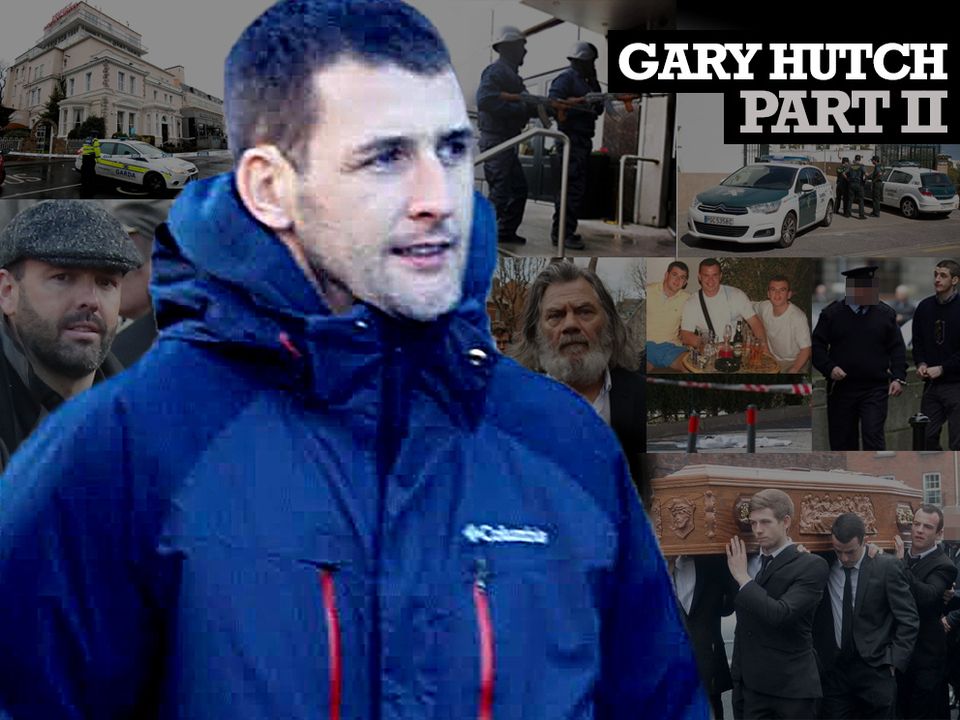
News in 90 Seconds – September 25th
A gang carried out a tiger kidnapping, forcing an employee to facilitate the theft of €7.8m. Seven associates of Hutch were arrested, and around €1.8m was eventually recovered, but the other €6m was never retrieved. Gary himself was then arrested but later released without charge.
According to investigators, his share of the take was invested back into the Kinahan organisation, and Hutch and his associates essentially became shareholders of the Kinahan network organisation. It was a bold move, and one that tied Hutch’s future irrevocably to Daniel’s.
By 2010 the Kinahans were about to make global headlines. In May of that year, Europol coordinated a massive offensive on the Costa del Sol against what they openly described as the “Irish Mafia.” The operation, known as Operation Shovel, saw Spanish police raid villas, seize fleets of luxury cars and arrest dozens of people. The Spanish courts were presented with a pyramid chart of the organisation showing Christy Kinahan Sr. at the top, alongside John Cunningham and a senior money launderer.
Beneath them, Daniel oversaw trafficking and “harsh decisions” (i.e. the euphemism for murder), while Christopher Jr. managed the business and investments. Directly under Daniel sat Gary Hutch and Freddie Thompson, named as managers of trafficking, transport, and security. It was the first official confirmation that Hutch had reached the inner circle of the cartel, now recognised as the Irish mafia.
For a moment, it seemed as though the Kinahan empire might collapse. But Spanish law allowed many of those arrested to walk free on bail within months, and the Kinahans regrouped quickly. Christy Sr. reassured his lieutenants that they would beat the case, and he was right. By 2014, most charges had been whittled away, and the cartel remained stronger than ever. This marked the beginning of the golden era for the Kinahans.
In the Costa del Sol (otherwise known as the Costa del Crime), Gary moved into Daniel’s villa, and their “bromance” soon became a running joke among friends. They lived the high life, indulging in a private chef, long nights of partying, and movie nights in the villa, surrounded by fast cars and every comfort money could buy.
On the surface it was all glamour and freedom, but behind the luxury, the business they were part of was growing sharper and more ruthless. The Kinahans had secured direct lines to Colombian cartels, buying wholesale and supplying across Europe. What set them apart was not just their wealth but their reliability.
In a world where shipments often went missing, payments were delayed, or middlemen skimmed from consignments, the Kinahans built a reputation for discipline. They paid on time, every time, and they took the kind of risks others didn’t, moving tonnes of cocaine with clockwork precisions through Spain, Holland and beyond.
For the Colombians, that consistently made them invaluable. It was not the flash or the violence that earned their trust, but the fact that they delivered, again and again.
By the mid 2010s, they were no longer small-time Dublin gangsters, but traffickers with established roles in an international network. Gary Hutch was at the centre of it, his investments secured and his loyalty clear. Yet, tensions were starting to surface.
Hutch felt his share of the profits weren’t fully reflecting his role, and frustrations quietly built. He had tied his future to Daniel Kinahan, and for years that had worked out. But beneath the surface, amidst the villas and social circles of Puerto Banús, the beginnings of conflict were already emerging.