
The National Council for Special Needs Education have been asked to clarify guidance criteria for SNAs at primary school level amid concerns that children who are determined as not having a high enough need for aid could lose their SNA
The 2025/26 guidelines for the review of SNA allocations outline that there are plans to decrease the level of care need identified in schools as the care needs of the children could “be appropriately supported with less resources than are currently allocated.”
However, following engagements by Fórsa with the Dáil Joint Committee for Education and Youth, the guidance on how SNA reviews will be conducted will be clarified.
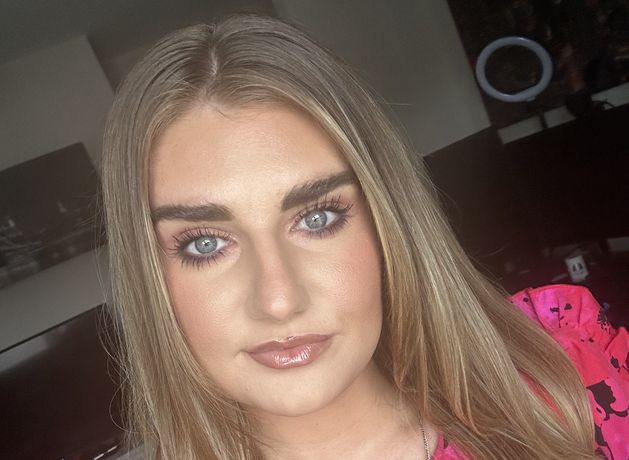
Prior to the statement published by Fórsa that talks had taken place on Wednesday, September 24, Sophie Brady, an SNA from Trim, Co. Meath expressed her anger and concerns in a video posted to TikTok where she spoke about the impact of these guidelines on children who face having their SNAs revoked.
She told the Irish Independent: “It’s just so unfair, they’re literally the most vulnerable people in our society and they just continually get rained on, it’s awful, by the people that are supposed to protect them, this is the system that was put in place from the department and it’s completely failing them.”
The document published by the NCSE stated that there are two phases in the determination of an NCSE review of an SNA allocation to a school.
Phase one of the review is completed by the local Special Educational Needs Organiser (SENO) which involves a review of the significant primary care needs of students in the school, a review of school SNA deployment practice and a request for detail on practices relating to the management of behaviour in the school community.
The second phase is carried out by an SNA review panel who are tasked with analysing the information and detail gathered and presented by the SENO and a determination of the outcome of the review while taking into account the “national profile of need”.
The NCSE have said the role of the SNA review panel is to ensure children with the “greatest level of need receive the greatest level of support” in line with “all national budgetary parameters.”
Included in the NCSE’s proposed guidelines is a reference to “behaviours of concern” as an instance where SNA support “should not be considered as the first response for the management of behaviour.”
Sophie believes that this reference is a huge cause for concern: “They’re saying that “behaviours of concern” don’t qualify for support anymore, so they’re just excluding thousands of kids straight away because a behavioural concern is a child that is really disconnected from their class and they’re not engaging,” she said.

The 2025/26 guidelines for the review of SNA allocations outline that there are plans to decrease the level of care need identified in schools as the care needs of the children could “be appropriately supported with less resources than are currently allocated.”
“They might have mental health things that you’d be concerned about or even things like ADHD are not going to fall underneath the guidelines.”
However, following engagements with Fórsa, the NCSE and the Department of Education have confirmed in evidence to the Committee that they will be writing to schools that there will be “no change or narrowing” of the criteria for SNA supports being provided to children.
The NCSE and the Department also said that SNA allocations to Special Classes will not be affected by any reviews and schools will not required to transfer SNAs from mainstream classes in order to maintain staffing in Special Classes.
Schools will also be able to request additional resources after October 14 if pressing needs are identified.
Sophie said that she found out about the guidelines when the document was posted to an SNA interview preparation page on Facebook and expressed her concerns that this will directly and negatively affect thousands of children across Ireland.
She said: “Kids who rely on a consistent and familiar SNA are going to lose that stability, so they’re going to feel completely unsafe in school.
“Anybody with a child with needs knows that structure, routine, stability, these are all the things that help those kids function and just get through the day and with all of these things they actually do come to fruition, we’re going to see in schools around the country so many more school refusals.”
There’s going to be no relationship trust at all and we’ve built that, some of us for years with one particular child
Sophie said that for many children, an SNA is sometimes the only person that a they feel safe with and rely on them to stay regulated and to feel included.
She said: “There’s going to be no relationship trust at all and we’ve built that, some of us for years with one particular child.
“The NCSE have also come out and said that if there’s a surplus of SNAs in any school, they’re going to lose those posts and be re-deployed next year, I don’t know any school in the country that has a surplus of SNAs, we’re in massive need for more in every single school all the time.”
The NCSE outlines that behaviours of concern should be explored to find the “behind the behaviour” citing communication from the child or young person as to what their reason is.
The section also states that behaviour should be supported “holistically” with “whole school and whole class approaches” along with the individual needs supported by the class teacher with advice and support from a special education teacher “where necessary”.
Sophie said: “The teachers are under so much pressure and stress as is, they have 30 kids in front of them, they cannot give the aid that is needed to the level of care that an SNA one on one would provide, there’s no way a teacher could do that in a classroom full of 30 children.
“The schools are under massive pressure, they’re going to face more admin, there will be shorter timelines, fewer resources and that just means children are going to massively miss out on the help that they need.”
There are currently more than 21,000 SNAs working in Irish schools and yet, according to a survey conducted by Inclusion Ireland in 2024, out of 492 responses from parents of children with a disability, just 14pc said that their child is thriving at school and 22pc are lacking in appropriate supports.
Other findings included that while 41pc of children are having good days and bad days, 4pc are not attending school due to a lack of support and 8pc are experiencing emotionally based school avoidance.
The NCSE stated that approximately 1,400 school reviews had taken place over the last 12 months which Fórsa said demonstrates the need for considerable additional SNA posts to be funded in the upcoming Budget 2026.
Fórsa have said they are not aware at this time of any reductions to mainstream SNA allocations taking place following a request for an exceptional review and no posts have been lost as a consequence of a routine school review.
The agreement reached on implementing a redeployment scheme for the 2026 school year is to provide a system that ensures that should any problems arise, SNAs will be transferred to alternative posts in the same way that teachers can avail of redeployment.