
IN A NUTSHELL
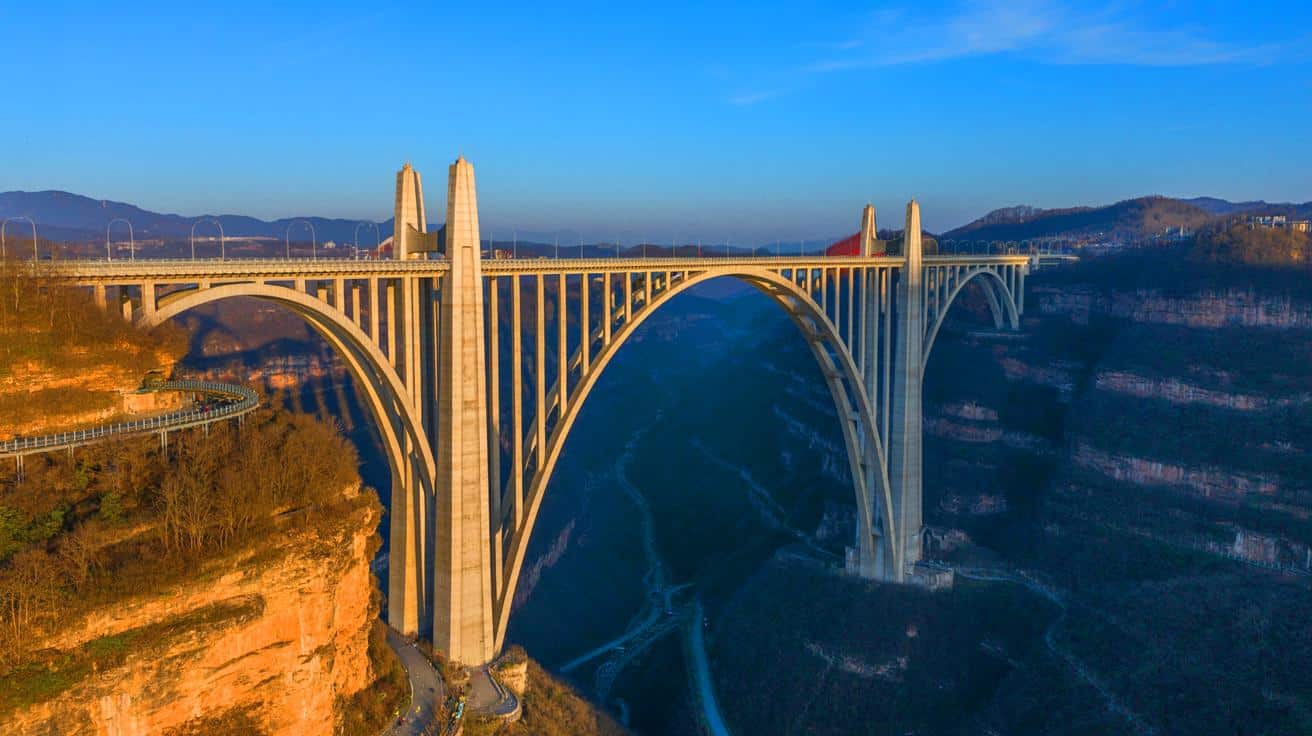
🌉 The Huajiang Grand Canyon Bridge is the world’s highest suspension bridge, towering 2,051 feet above the canyon floor.
🌍 This engineering marvel is expected to transform transportation in Guizhou Province, cutting travel time across the canyon significantly.
🏗️ Built with a suspension and steel truss hybrid design, the bridge has overcome significant environmental challenges.
🗺️ Beyond functionality, the bridge is designed as a tourist destination with features like glass-bottom paths and observation platforms.
China’s Huajiang Grand Canyon Bridge in Guizhou Province is set to become a global landmark in engineering. This monumental structure, towering 2,051 feet above the canyon floor, is the highest suspension bridge in the world. Its completion marks an important milestone in infrastructure development, promising to transform transportation and tourism in the region. The bridge’s construction, which began in early 2022, involved overcoming significant geographic and climatic challenges, but the project is now ready for public use following a successful load test conducted in August 2025. As the bridge prepares to open, it stands as a testament to human ingenuity and ambition, ready to impact the lives of those in Guizhou Province profoundly.
Design and Engineering Features of the Huajiang Grand Canyon Bridge
The Huajiang Grand Canyon Bridge is a marvel of modern engineering, featuring a unique suspension and steel truss hybrid design. This combination allows it to carry significant loads across its expansive span, with the steel trusses weighing approximately 22,000 tons. Such a design not only ensures the bridge’s structural integrity but also sets a new standard for future bridge constructions.
Located on the edge of the Yunnan Plateau and the Lower Yangtze Valley Plain, the bridge had to be engineered to withstand a variety of environmental challenges, including significant temperature fluctuations, strong valley winds, and convective weather patterns. These conditions necessitated advanced wind resistance features and materials that could endure considerable thermal stress. The bridge’s design effectively addresses these challenges, ensuring safety and durability.
To confirm its readiness for public use, the bridge underwent a rigorous five-day load test in August 2025. This test involved simulating real-world stresses with heavy trucks, demonstrating the reliability of the bridge’s jacketing and support systems. The successful completion of these tests has paved the way for the bridge’s opening, reinforcing confidence in its engineering.
The Impact on Transportation in Guizhou Province
The opening of the Huajiang Grand Canyon Bridge is expected to revolutionize transportation within Guizhou Province. Before the bridge, travel across the canyon could take up to two hours on certain routes. The new bridge reduces this journey to a mere one to two minutes, significantly enhancing connectivity across the region. This improvement not only saves time but also boosts economic opportunities by facilitating the efficient movement of goods and people.
The bridge forms a crucial part of the Guizhou S57 Liuzhi–Anlong Expressway, a key infrastructure project aimed at improving regional transportation networks. By connecting previously isolated areas, the bridge will help integrate the local economy with broader national and international markets, fostering economic growth and development in Guizhou.
Moreover, the bridge’s completion is likely to attract new investments into the region, further enhancing its economic prospects. As transportation becomes more efficient, industries such as logistics and tourism are expected to flourish, benefiting from the increased accessibility and reduced travel times.
A New Tourist Attraction
The Huajiang Grand Canyon Bridge is not just an engineering triumph; it is also poised to become a major tourist destination. With features like glass-bottom pedestrian paths and observation platforms, the bridge offers visitors breathtaking views of the canyon, making it a must-visit attraction. These elements are carefully designed to enhance the visitor experience, providing unique vantage points and a thrilling perspective of the surrounding landscape.
Plans for ancillary facilities, such as rest areas, cafés, and a “Stargazing Bar & Café,” indicate the bridge’s role as more than just a transportation link. These amenities are intended to attract tourists and encourage longer stays in the region, thereby promoting local businesses and tourism-related activities.
By integrating tourism elements into its design, the bridge not only serves a practical purpose but also contributes to the cultural and economic vitality of Guizhou Province. As a result, it is expected to draw tourists from around the world, eager to experience its architectural beauty and the stunning natural scenery it showcases.
Ensuring Structural Safety and Durability
The safety and durability of the Huajiang Grand Canyon Bridge were paramount considerations throughout its development. The bridge’s massive steel trusses, critical for supporting its expansive span, required innovative solutions to address issues like thermal expansion and fatigue resistance. These considerations are vital for ensuring the bridge’s long-term stability and safety.
Engineers employed advanced materials and construction techniques to combat the challenges posed by the region’s harsh environmental conditions. These efforts have resulted in a structure capable of withstanding the test of time, even under the constant strain of temperature variations and heavy loads.
The successful completion of the rigorous load testing in August 2025 further validated the bridge’s structural integrity. This testing simulated the kinds of stresses the bridge would face under normal use, confirming that it could safely accommodate the anticipated traffic flow.
The Huajiang Grand Canyon Bridge stands as a symbol of what modern engineering can achieve. It is a testament to human ingenuity, ambition, and the pursuit of innovation in the face of significant challenges. As it opens to the public, it not only promises to transform transportation and tourism in Guizhou Province but also raises questions about the future of infrastructure development in other challenging geographies. How will this engineering marvel inspire the next generation of projects around the world?
This article is based on verified sources and supported by editorial technologies.
Did you like it? 4.4/5 (24)