
Unlock the White House Watch newsletter for free
Your guide to what Trump’s second term means for Washington, business and the world
The British government is set to concede that the UK should pay more for some medicines, in an attempt to protect pharmaceutical exports to the US and arrest a wave of global drug companies pulling investment in Britain.
After weeks of ministerial wrangling, Sir Keir Starmer’s chief business adviser Varun Chandra will travel to Washington next week with a message that Britain is willing to increase its spending on medicines, which has long been a source of contention with the Trump administration.
Officials briefed on the discussions said there was an acceptance that the UK will have to give ground. “Our pricing structure is an issue,” said one. “We have to be more competitive — the world has changed.”
“The way in which we value drugs could perhaps be more sophisticated,” they said.
If the government looked at the formula used to calculate the money spent on drugs by the UK’s National Health Service “slightly differently” it could have material implications for how much is paid for certain medicines, they added.
Earlier this month, health minister Dr Zubir Ahmed told MPs “there is an argument that we re-examine certain components of how we quantify benefit — not only clinical, but economic benefit — from medicines”.
“We want to see a direction of travel where we spend more money on novel medicines, medicines that are disease-modifying and that prevent disease,” he said.
The Trump administration has given drugmakers a deadline of September 29 to respond to its request to voluntarily lower drug prices in the US, or face a policy that pegs US prices to the usually much lower prices in other developed nations including the UK.
Separately, President Donald Trump said late on Thursday that the US would impose 100 per cent tariffs on branded pharmaceutical imports.
But markets shrugged off the threat, partly because many of the major companies could be exempt due to the investments they are making in the US. Total UK pharma exports to the US were worth $6.5bn in 2024, according to official data compiled by Trading Economics.
One UK industry executive said that while large companies may be OK “as long as shovels are in the ground”, small and medium sized exporters may struggle.
On Wednesday, Lord Patrick Vallance, UK science minister, told the Financial Times that “all options” were on the table in terms of UK drugs pricing, after big pharma companies said Britain was uncompetitive and shelved investment in the country.
“We need to fix the commercial environment so that it’s good enough to get those companies back again and benefits patients in the NHS,” he said. He added that this “means probably for medicines, we need to pay a bit more for some of them”.
Chandra will take that message to Washington next week, according to UK government officials, where he is expected to meet senior members of the Trump administration, including in trade and commerce.
“He’s going to discuss the overall trade deal but specifically around pharma and whether we’ve got something that industry can accept as a way forward,” said one.
Starmer and Trump discussed pharma pricing at their Chequers summit during the US president’s state visit last week, but it remains one of the unresolved issues from the outline trade agreement struck in May.
“There has been work on this across government for several weeks,” said one official involved in the talks. “They’ve been trying to establish if there’s an affordable way to improve the commercial environment that is also good for patients. That’s the circle they are trying to square.
“But everyone is basically in line: we can’t be in a situation where we can’t export [to the US] or we have disinvestment here.”
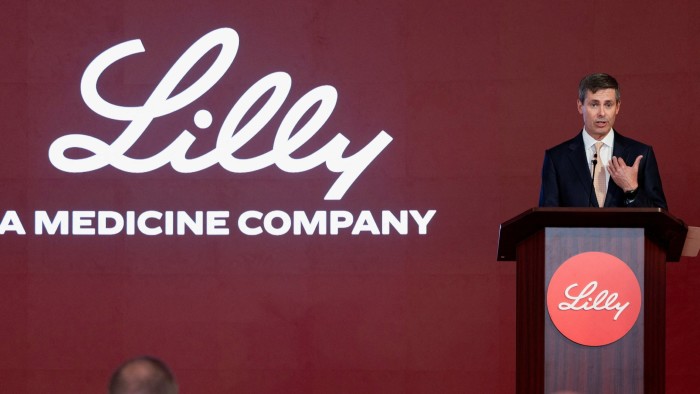
The UK official said the government hoped it could change the mind of US pharmaceutical company Eli Lilly, which has paused an investment in a biotech incubator in London that was part of a £279mn package. But he was less sure about persuading other companies to reverse their decisions.
A change to medicines pricing will impose extra pressure on strained public finances and Whitehall insiders say it is not yet clear whether the extra costs will have to be absorbed by the NHS, or whether the Treasury will allocate more money.
While the industry spat started with tense negotiations over the UK’s clawback tax imposed on drug sales to keep NHS costs under control, officials now say they are discussing reforms to drug pricing more broadly.
There has been discussion among ministers about whether a more generous pricing regime could be linked to securing guarantees on future investment from pharma companies.
Another option would be to create a ringfenced fund targeted at the newest medicines that the government thinks deliver the most value, modelled on the NHS innovative drugs fund or the cancer drugs fund.
A government spokesperson said: “We will always put patients and taxpayers first, striking the right balance between creating an environment where this innovative sector can thrive whilst ensuring best value for money. We are in a constructive dialogue with the US and industry.”