
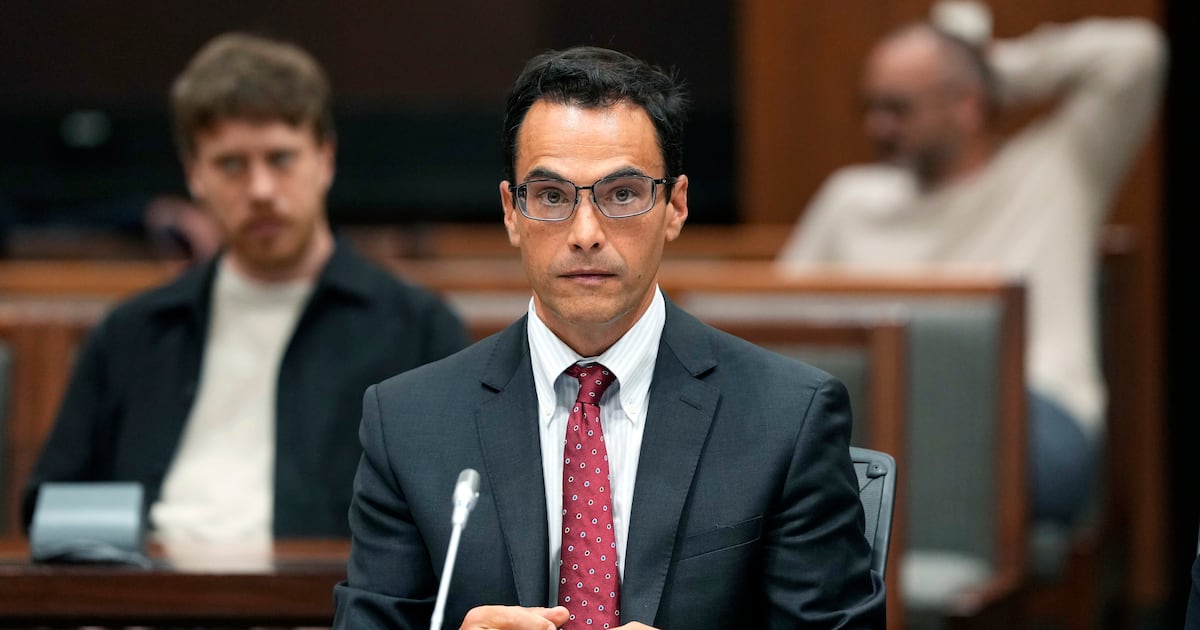
Just weeks before the federal government is set to table the budget, the country’s fiscal outlook has Canada “at the precipice,” according to interim parliamentary budget officer Jason Jacques.
In the latest economic and fiscal outlook, Jacques estimates the Liberals will post an annual deficit of $68.5 billion this year, up from $51.7 billion dollars last year. The interim PBO also projects that the federal debt-to-GDP ratio — one of the government’s fiscal anchors — will increase over the medium-term, and remain above its pre-pandemic level.
In an interview with CTV Question Period airing Sunday, Jacques told host Vassy Kapelos that his analysis “raises significant concerns” about the “sustainability of federal finances.”
Asked what that means in layperson’s terms, Jacques said while Canada hasn’t “gone over the precipice,” it’s “looking out over the cliff.”
“We’re at a point where, based upon our numbers, things cannot continue as they are, and I think everybody knows that,” Jacques said, adding his report contextualizes the anxiety some Canadians are feeling about the economy right now.
“For us, it’s really important to set the table for parliamentarians so they know what to expect, so they have a better sense of the overall context within which they’re going to be presented with budget 2025,” Jacques also said.
The Liberals are expected to table their long-delayed budget — Mark Carney’s first as prime minister — on Nov. 4.
While Jacques wouldn’t specifically detail the worst-case scenario if Canada were to go over the “precipice,” he said it’s “nothing good.”
He said when factoring in the deficit, and Canada’s need to restructure its economy in the face of certain geopolitical issues — for examples U.S. President Donald Trump’s tariff regime — there “isn’t a lot of fiscal space the government has to actually work with.”
When asked how much room to manoeuvre the government has for supports for particularly hard-hit sectors of the economy, Jacques described it as a “narrow path.”
“And it’s going to require both consideration of shifting spending within the federal government, in addition to reducing spending or potentially cutting programs in some areas, as well as potentially some consideration around increases in revenues in order to make sure that Canada is actually able to navigate that very narrow path,” he said.
He also said that will all require “substantial change” on the part of the government.
Carney has described his highly-anticipated budget as one of both “austerity” and “investment,” which has prompted some to question how the federal government can earmark billions of dollars in new spending while also balancing the operational budget in three years.
The federal government last released a full budget in April 2024 with a fall economic statement at the end of last year.
Rising debt-to-GDP ratio ‘considerable cause for concern’
Canada’s rising debt-to-GDP ratio — which Jacques in his fiscal outlook estimates will increase from 41.7 per cent in 2024-25 and surpass above 43 per cent over the next five years — is also “considerable cause for concern,” according to the interim PBO.
The previous Liberal government under former prime minister Justin Trudeau frequently pointed to having the lowest debt-to-GDP ratio in the G7 as proof of fiscal sustainability and responsibility.
“It has been probably, I would say, the most important mainstay anchor for federal budgetary targets over the past 30 years, and certainly looking at the people that lend money to the country, it’s one of the main key indicators that they look at as well,” Jacques said, adding he’s less concerned with how Canada’s faring compared to allied countries than he is about how it’s doing overall.
You can watch Jason Jacques full interview on CTV Question Period Sunday at 11 a.m. ET