
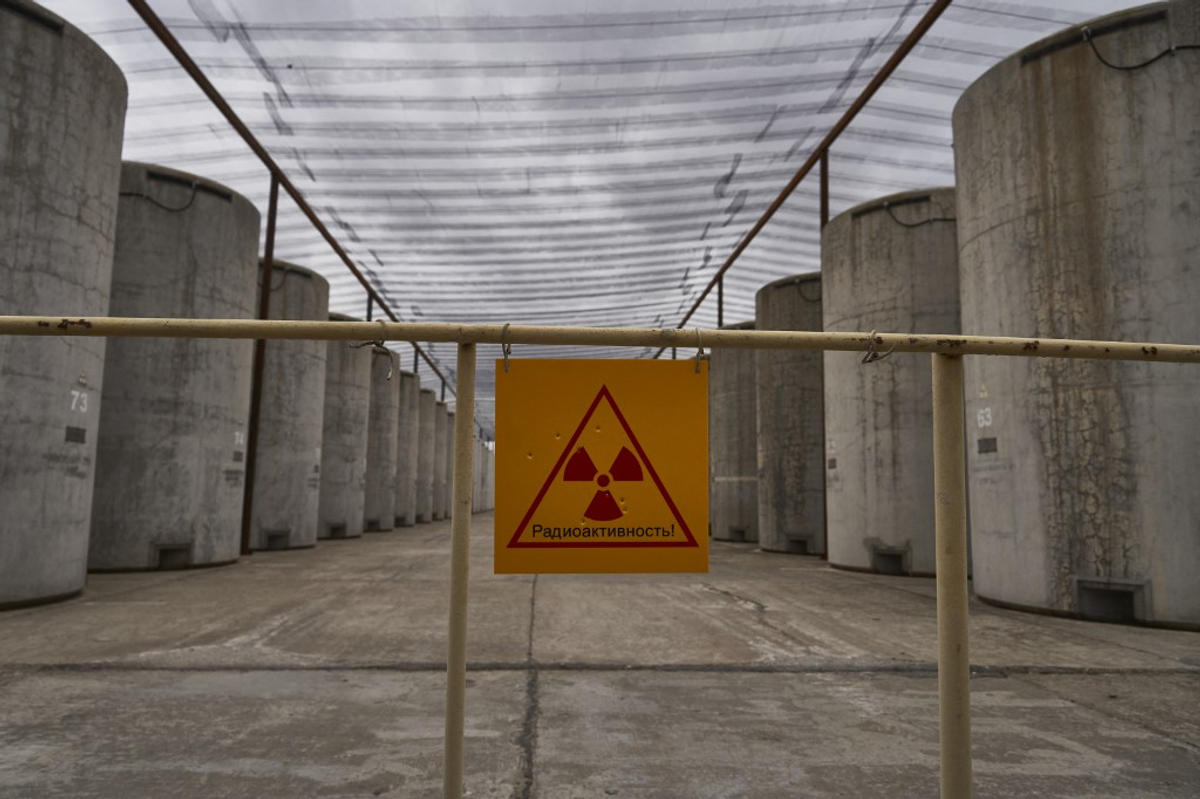
President Volodymyr Zelensky on Tuesday warned that, as the Russian-occupied Zaporizhzhia nuclear plant has been off the grid for a full week now, there is potential of a “critical” situation there.
One of the backup diesel generators used to maintain operations had “malfunctioned”, he said, alerting the nation that the blackout posed “a threat to everyone.”
JOIN US ON TELEGRAM
Follow our coverage of the war on the @Kyivpost_official.
“It has been seven days now. There has never been anything like this before,” Zelensky said in his nightly address on Tuesday. “The situation is critical.”
Though blackouts at Europe’s biggest nuclear power plant are frequent due to its proximity to the war’s front lines near the city of Energodar, along the Dnipro River, this one is the longest so far, which experts warn raises the risk of incidents.
“Emergency diesel generators are considered a last line of defense to be used only in extreme circumstances,” NGO Greenpeace Ukraine said.
The group claimed Moscow could use the crisis “to try and reconnect to the temporary Russian-occupied grid of Ukraine,” to restart one of the reactors later.
Yuri Chernichuk, the Moscow-appointed director of the power station, said in January that Zaporizhzhia could potentially provide electricity to Russian-annexed Crimea, and the southern and eastern parts of Ukraine under Russia’s control, the TASS news agency reported at the time.

Other Topics of Interest
Warsaw Security Forum Kicks Off With Warning – ‘Divided We Fall’
Zelensky and other European leaders, along with senior officials, called for unity – with air defenses, the Baltic Sea, and Russia’s destabilization of its neighbors high on the agenda.
Russia said last week the power plant – which it took control of in the first weeks of the war in 2022 – has been receiving backup power supply since an attack it attributed to Ukraine.
Zelensky accused Moscow of “obstructing the repair” of power lines through airstrikes, saying “this is a threat to absolutely everyone.”
The plant’s six reactors, which before the war produced around a fifth of Ukraine’s electricity, were shut down after Moscow took control of the facility.