
Also on Wednesday, the IDF’s Arabic spokesman announced that people in the south of Gaza would no longer be able to use the al-Rashid coastal road to travel north to Gaza City. The road would remain open for those fleeing south, he said.
Gaza’s Hamas-run Government Media Office condemned the decision, which it said was “part of the ongoing policy of suffocation, siege, and genocide perpetrated by the occupation [Israel] against our Palestinian people in the Strip”.
The IDF has ordered Gaza City residents to evacuate to a designated “humanitarian area” in the southern al-Mawasi area.
Israeli media cited the IDF as saying on Monday that about 800,000 people had fled the city since the plans for the offensive were announced in August, and that between 250,000 and 350,000 people remained.
However, the UN and its humanitarian partners said they had only monitored 397,000 people crossing into southern Gaza as of Saturday.
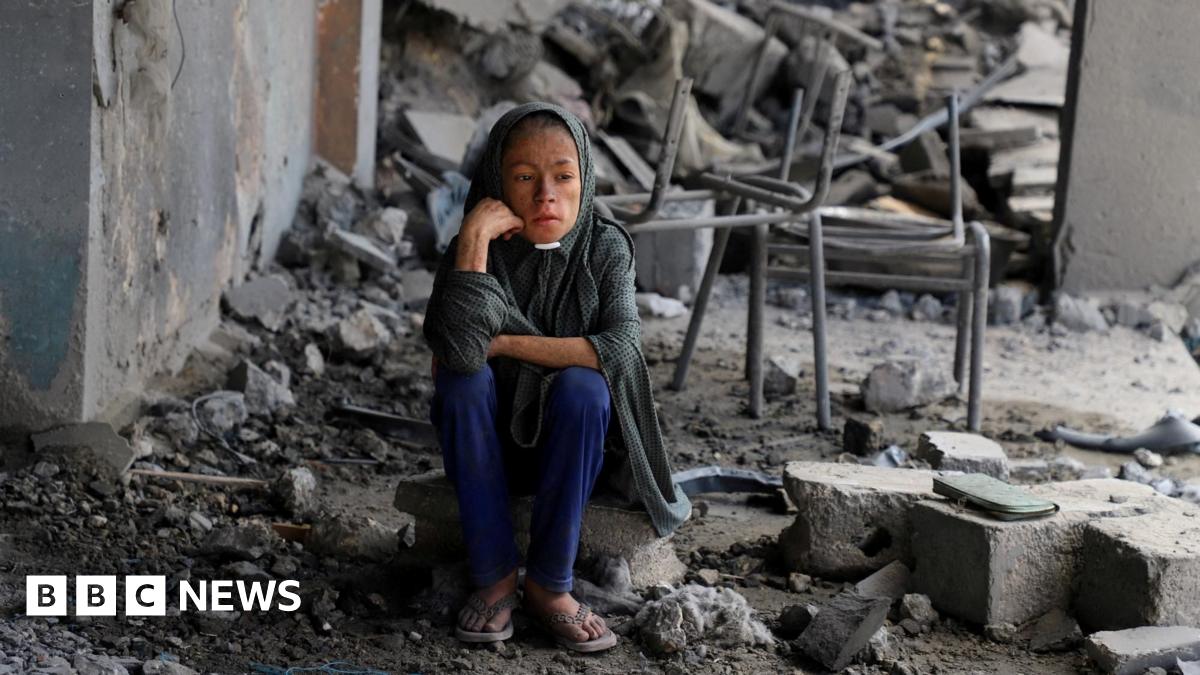
Unicef spokesman James Elder told the BBC that during a recent visit to Gaza City he had witnessed “multiple air strikes in the very short time” and “a mix of children who are emaciated [and] utterly exhausted women”.
“Anyone who could speak English would explain to me that staying in Gaza City is not a choice, that they don’t have the funds to go south. They don’t have the transport. Once they get south, they know there’s no land, and certainly that they don’t have a tent,” he said.
They also knew that conditions in al-Mawasi were overcrowded and unsanitary, and that it was not spared from Israeli strikes, he added.
“They’ve seen what shrapnel does to a tent. They’ve seen tents engulfed by flames. So they’re well aware that safety, be it from the skies or disease from the ground, certainly doesn’t exist.”